
“Progress depends on who is prepared to act.”
Under real-world pressure, ideas are on the clock. Innovation depends on speed, collaboration, and access to the right partners. In Northern Virginia, Virginia Tech has created the conditions that push promising ideas forward, positioning its growing presence in the region at the intersection of government, industry, and academia. From that vantage point, the university’s research is increasingly positioned to influence one of the nation’s most dynamic innovation corridors.
“Proximity matters,” says Virginia Tech President Tim Sands. “When you bring researchers, students, and partners into the same environment, you shorten the distance between discovery and impact.”
A Gateway for Talent and Ideas
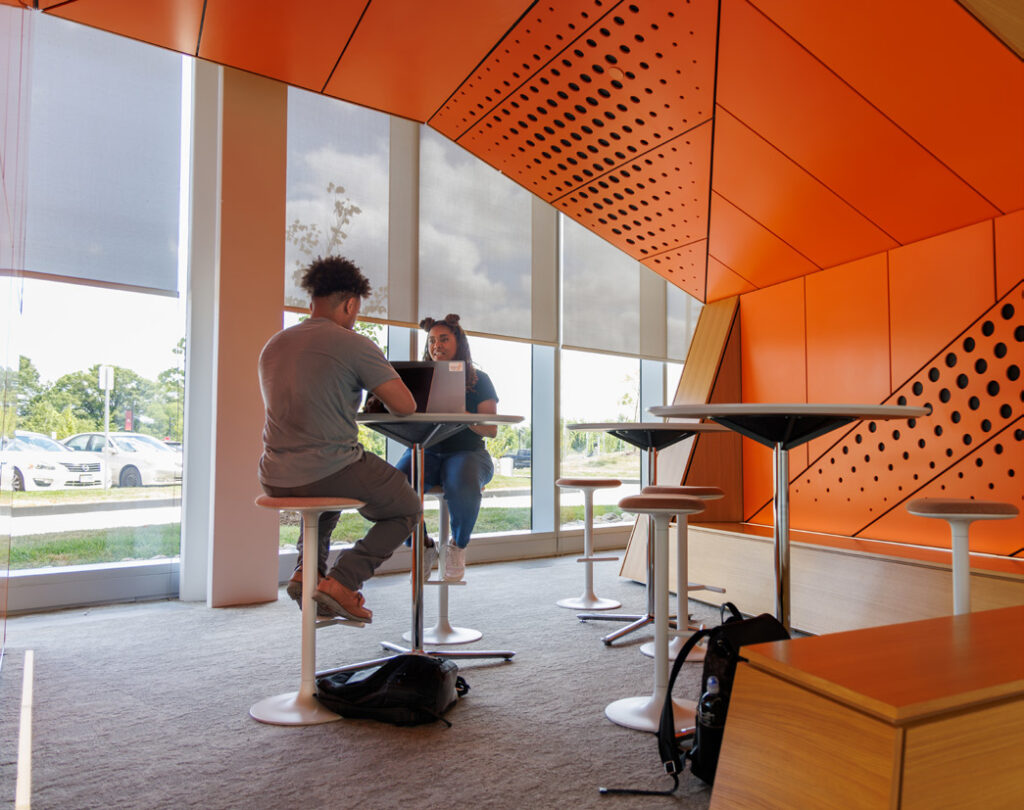
At Virginia Tech’s new Institute for Advanced Computing in Alexandria, graduate students, faculty, and industry partners work side-by-side tackling problems rooted in real-world demand. Rather than separating research from application, the institute’s project-based learning model integrates the two, engaging challenges from federal agencies, private companies, and nonprofit partners.
“We think about innovation as a team effort,” says Lance Collins, vice president of the greater D.C. area at Virginia Tech. “The challenges we focus on require collaboration across disciplines and sectors, shaped by a range of perspectives.”
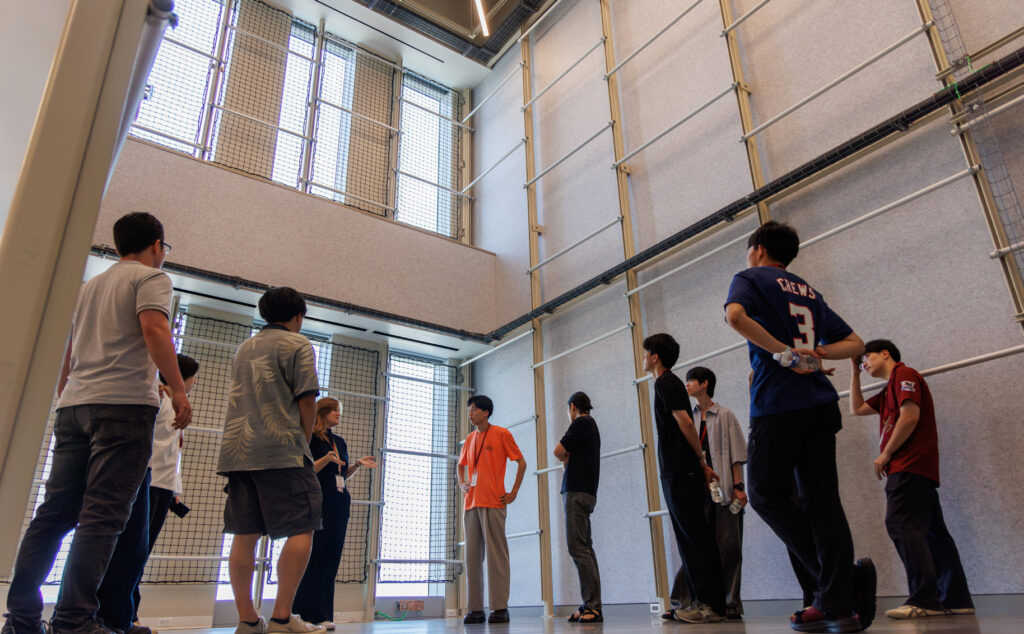
Purpose-built spaces, including a two-story indoor drone testing cage, support industry-level experimentation. Students engage directly with emerging technologies, testing ideas in real time rather than waiting for access beyond the classroom. That hands-on exposure accelerates learning while grounding innovation in practical outcomes.
Applied Innovation in Action
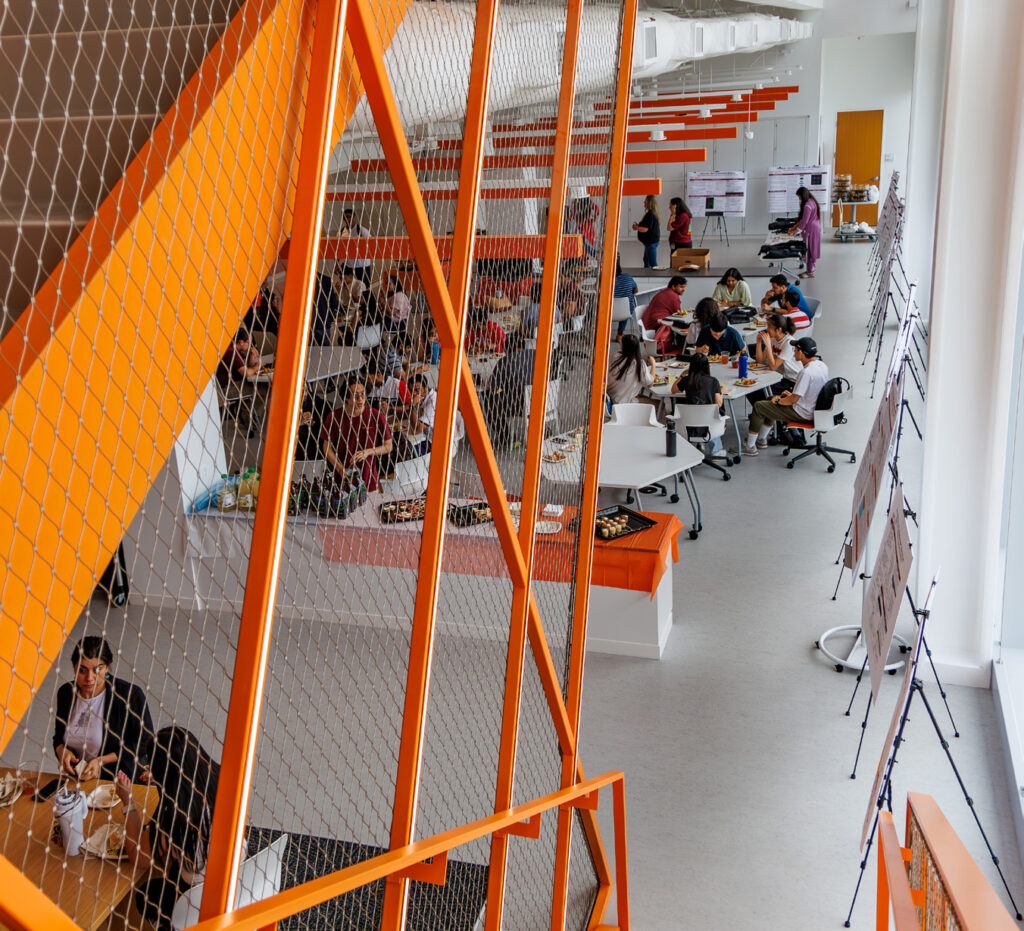
Virginia Tech is bringing academia and industry together to address complex global challenges. Faculty and students lead research in core computing fields such as artificial intelligence, machine learning, and quantum computing, alongside advanced systems and applications including next-generation wireless technologies.
Project-based learning progresses in structured stages, supported by professional engineering, business, and policy expertise. Students move through cycles of iteration and refinement, learning that meaningful innovation rarely results from isolated breakthroughs.
“What excites me most is the way this environment brings people together around shared problems,” Collins says. “When talent, research, and partnerships align, ideas turn into action much more quickly.”
Work often begins with an unsolved challenge posed by an industry or government partner. Teams test potential solutions, refine approaches, and adjust based on feedback. Outcomes matter, and iteration becomes the process. Over time, those cycles compound, transforming early-stage concepts into solutions with measurable impact.
From Investment to Inflection Point
The Commonwealth of Virginia’s investment, catalyzed by Amazon’s HQ2 announcement, accelerated the region’s technological momentum and created new expectations for collaboration and growth. Against that backdrop, the opening of Virginia Tech’s academic building in Alexandria marked a shift toward a model that brings education closer to research and application.
“We saw an opportunity to build something that reflects where the world is heading,” Sands says. “An ecosystem designed to move ideas into impact.”
Students now engage with industry-sponsored projects from the outset, gaining experience that translates directly into workforce readiness. Faculty research responds to real-world demand, creating continuous exchange between discovery and application. Employers increasingly look to Virginia Tech not only for solutions, but also for talent shaped by hands-on, collaborative environments.

Expanding an Innovation Network
Across Northern Virginia, new Virginia Tech initiatives continue to build on that foundation. Programs such as the National Security Institute in Arlington and the forthcoming Smart Construction Lab in Falls Church expand the university’s reach into areas of national and global importance.
Each addition strengthens the network’s capacity to connect research with application while feeding insight back into discovery. “What we are building continues to evolve,” says Sands. “Staying responsive to the challenges in front of us is what keeps the work relevant.”
Looking Ahead
As Virginia Tech grows its innovation network across the greater Washington, D.C., area, its influence extends throughout the Commonwealth and beyond. Collaboration remains central. Access to talent drives momentum, anchored by a clear sense of purpose.
Guided by its land-grant mission, Ut Prosim (That I May Serve), Virginia Tech is advancing a modern model of higher education focused on solving global challenges and delivering impact in communities around the world.
“We are not building for what exists today,” Sands reflects. “We are building for what comes next and preparing the people who will lead it.”
That future is already taking shape, gaining speed through partnerships, projects, and people ready to carry ideas forward.