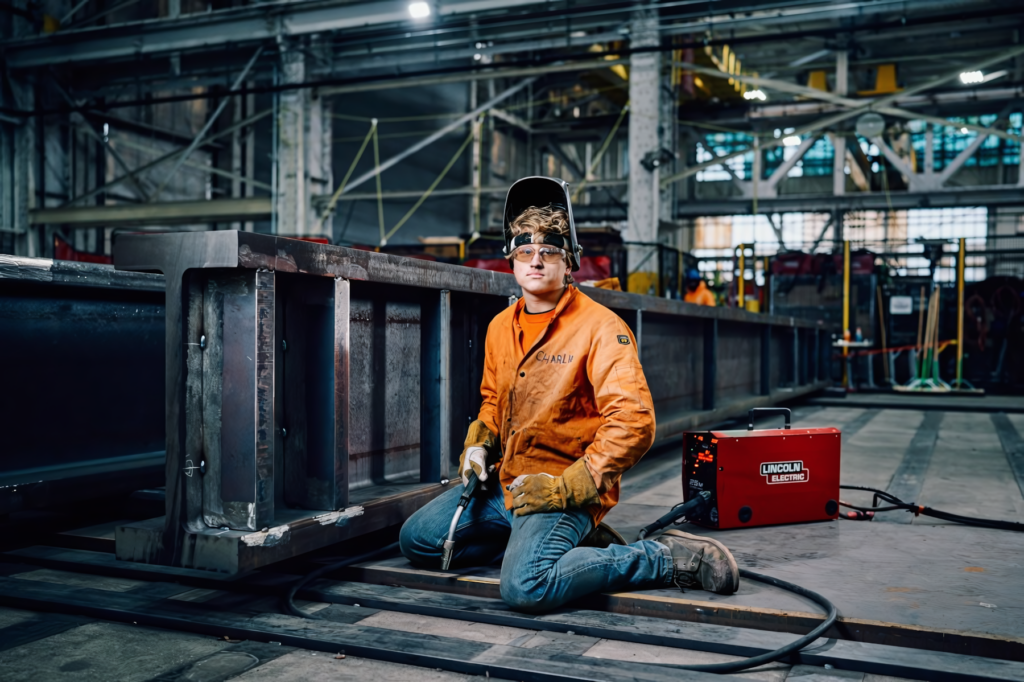

For more than a century, Rhoads Industries, Inc. has quietly evolved alongside the American industrial landscape. What began in 1896 as a small Philadelphia-based operation has grown into a key contributor to the nation’s maritime and defense infrastructure.
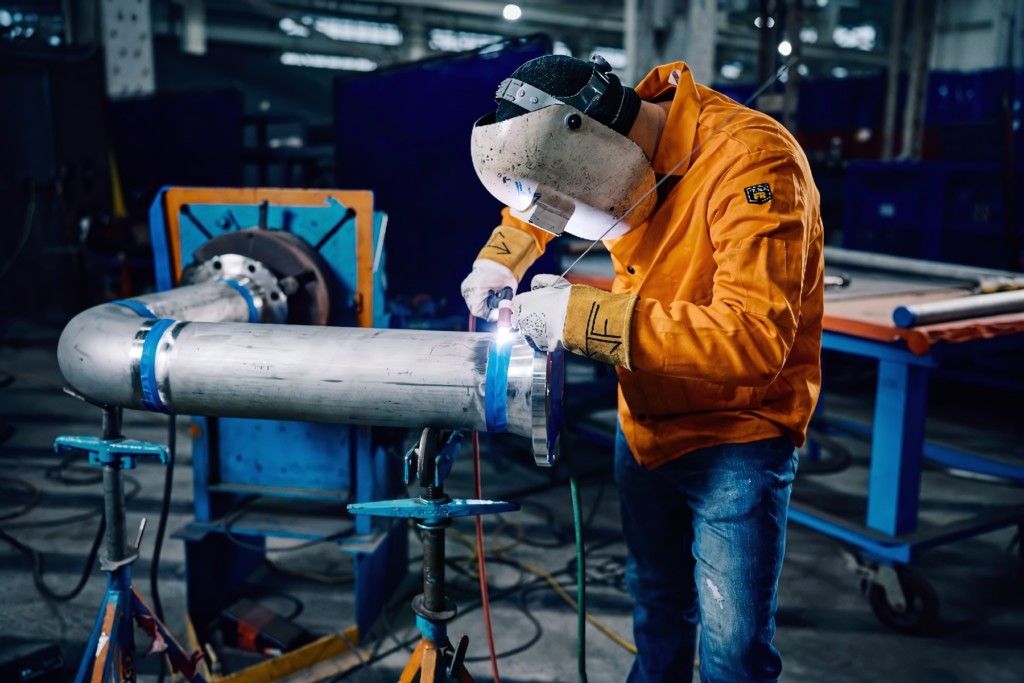
The company’s origins trace back to Samuel Rhoads, whose early patents for a beer keg-tapping device laid the foundation for a long-standing legacy of fabrication and innovation. In its earliest years, Rhoads focused on sheet metalwork, serving local industries with precision and craftsmanship. Over time, that work expanded into heavier, more complex fabrication, shifting from thin materials to steel plate and structural steel as customer needs evolved.
As its capabilities grew, so too did expectations. Rhoads began extending its services beyond fabrication, sending crews into the field to install finished products. Those same customers soon began requesting additional support for piping, equipment installation, and demolition work. The company’s response was consistent: say yes, then figure out how to deliver. That mindset of adaptability became a defining characteristic, shaping Rhoads’ approach for generations.
A Family Business at a Crossroads
By 1980, the business had established itself as a fabrication-focused provider of custom steel solutions for manufacturers across the Philadelphia region. Operating out of a modest facility in Fishtown, it remained a family-run business led by the third generation. At a pivotal moment in its history, differing visions among the two brother-owners led to a split, with one of them leaving to form their own company in Southern New Jersey.
The responsibility of guiding Rhoads forward fell to Dan Rhoads Sr., who recognized that growth would require both expanded capacity and a willingness to think ahead. With support from the Philadelphia Industrial Development Company (PIDC), they relocated to a larger site in Northeast Philadelphia and constructed a new facility on Sandmeyer Lane. Within a few years, rising demand necessitated further expansion, reinforcing the company’s trajectory toward larger-scale industrial work.
A New Generation, a New Direction
The next major chapter began in the late 1990s under the leadership of Dan Rhoads Jr., who brought both financial expertise and a deep operational understanding of the business, guiding the company toward more strategic opportunities. His approach emphasized disciplined investment and long-term positioning, enabling Rhoads to evolve beyond its traditional customer base.
A pivotal opportunity emerged with the closure of the Philadelphia Naval Base in 1996 and its subsequent transformation into the Philadelphia Navy Yard. There development of more than 1,200 acres into a mixed-use commercial and industrial park gave rise to the Philadelphia Navy Yard.
In 1998, the Norwegian shipbuilder Kvaerner took over operations of the refitted shipyard and began commercial shipbuilding in the city. In its early years, Kvaerner faced a shortage of skilled labor as work increased. PIDC suggested reaching out to Rhoads, beginning a period where the company supplied welders and fitters to support ship fabrication and assembly. This exposure to larger-scale work proved critical in expanding Rhoads’ capabilities.
Planting the Flag at the Navy Yard
Around 2000, Dan Rhoads Jr. recognized the need for a physical presence at the Navy Yard. He secured Building 16 (B16), a 90,000-square-foot facility designed for heavy industrial work. In its early years, Northrop Grumman occupied part of the space as a sub-tenant—an early relationship that would later prove significant.
Operating at the Navy Yard provided deeper insight into the Navy’s ongoing work. The Naval Surface Warfare Center Philadelphia District (NSWCPD), home to the Navy’s marine engineering operations, maintained a strong presence at the Yard. Rhoads identified an opportunity to support its land-based test sites (LBES), leveraging its fabrication, installation, and outfitting expertise.
In the mid-2000s, Rhoads secured a multi-year contract to support the Navy’s LBES fabrication and installation needs, marking its first entry into government contracting. Recognizing the complexity of working with the federal government, Dan assembled a team of experienced advisors with backgrounds in the Navy and government operations.
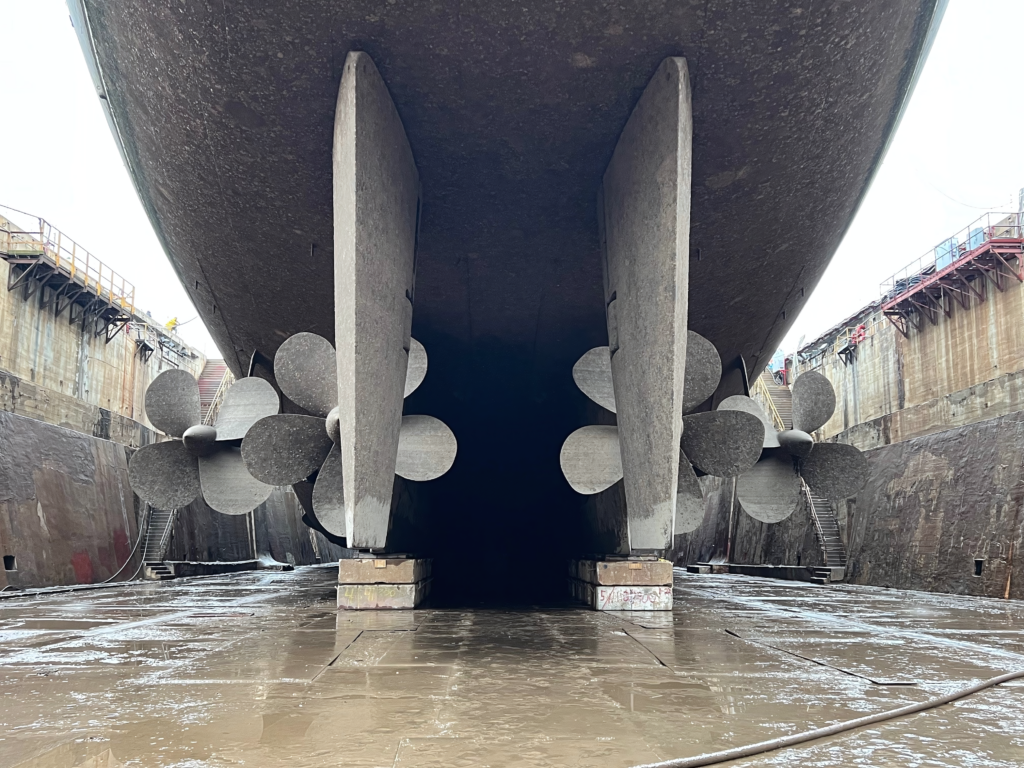
In 2010, Rhoads expanded into commercial ship repair and overhaul by leasing Dry Dock #2 and associated piers. This move further diversified the company’s capabilities within the maritime sector.
A $100 Million Bet on the Future
As development at the Navy Yard continued, B16 became surrounded by Urban Outfitters’ expanding headquarters. In 2013, Rhoads sold B16 and an adjacent building. Rather than stepping back, Dan chose to reinvest.
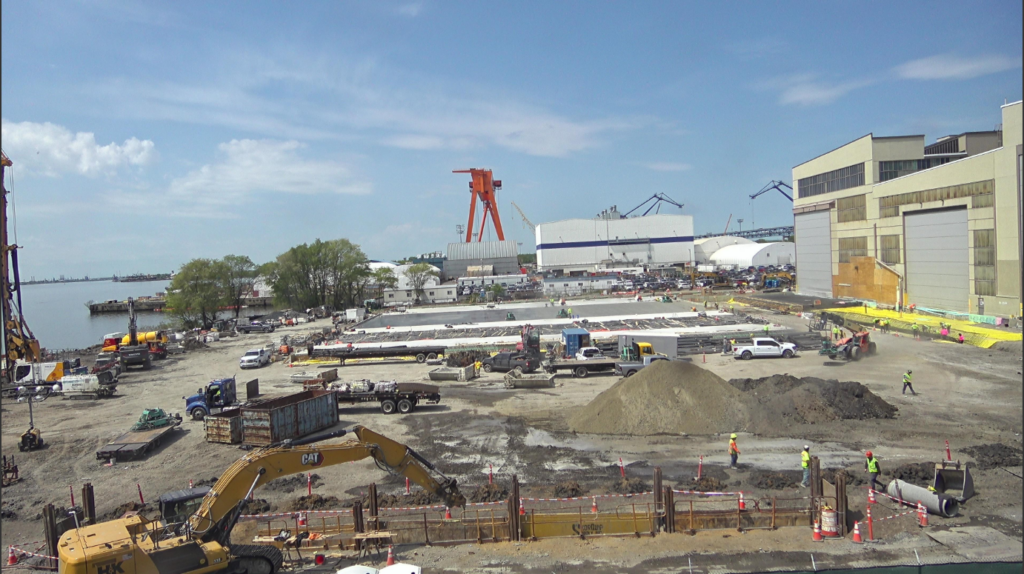
Rhoads acquired Building 57 (B57), a significantly larger 300,000-square-foot facility. The building required extensive renovation, and over the next decade, Rhoads acted as its own general contractor while completing as much work internally as possible. More than $100 million in capital was invested to bring B57 to its current state, funded through a combination of internal resources, traditional/non-traditional financing, and grant awards from the Commonwealth.
It was the kind of commitment that separates companies that endure from companies that plateau.
Submarines, Defense Contracts & National Purpose
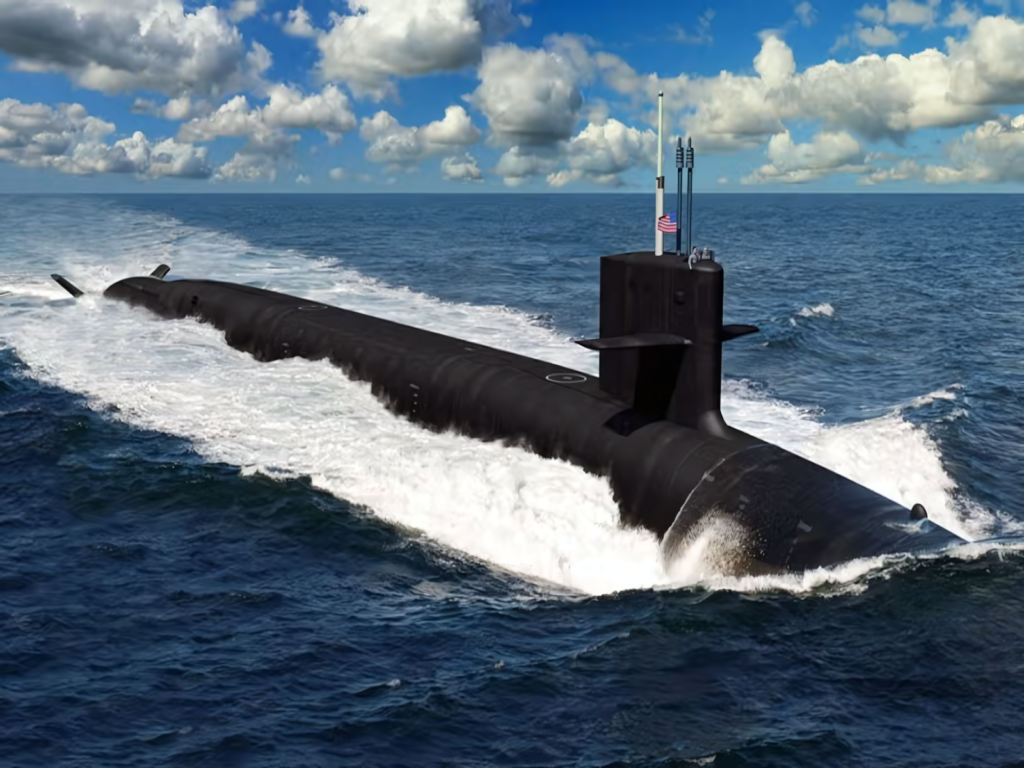
In the mid-2010s, Northrop Grumman selected Rhoads as its Philadelphia partner for assembling electric propulsion units for the Navy’s Columbia-class submarine program. Under a long-term arrangement, Northrop leased space in B57, while Rhoads provided the skilled labor for assembly. The successful delivery of early units significantly strengthened Rhoads’ standing with the Navy.
As the Navy increased investment in its fleet, major shipbuilders were required to outsource work at an unprecedented scale. After several years of discussion, Rhoads secured a contract with General Dynamics Electric Boat in 2021. Backed by a strong performance record, demand for its services quickly increased.
Today, government and defense-related work accounts for the largest share of the company’s revenue. Its workforce has grown to approximately 750 employees and is projected to reach 1,200 in the near term. The company has also expanded its footprint, acquiring additional ship repair facilities and gaining direct access to the Delaware River.
Building the Workforce of Tomorrow
Rhoads has also played a role in workforce development, supporting the Navy’s Talent Pipeline Project in Philadelphia. The program connects schools, students, and employers, promotes careers in skilled trades, and commits businesses to hiring graduates. For Rhoads, it’s not just good citizenship. It’s good business: building the talent pipeline that the company itself depends on.
What Comes Next
Ongoing investments continue to support growth. The redevelopment of Pier 6A (directly behind B57) is nearing completion, and construction is underway on a new 90,000-square-foot facility focused on outfitting submarine components. Plans for an additional facility dedicated to steel processing are also in development, further expanding the company’s capabilities.
Today, Rhoads Industries represents a new chapter in American manufacturing. What began as a small sheet metal fabrication shop has evolved into a rapidly growing, Department of Defense-focused provider of fabrication, assembly, and outfitting services. Its success reflects both strategic foresight and calculated risks in pursuit of long-term growth.
Those decisions have enabled Rhoads to create high-quality, career-oriented jobs while playing a critical role in supporting the nation’s defense infrastructure at a pivotal moment in its history.