
PIPEAID IS BUILDING THE INFRASTRUCTURE INTELLIGENCE LAYER BENEATH SMART CITIES
PipeAid transforms underground inspection videos into trusted maps with AI-backed condition results. By digitizing historic and new records into a standardized view of asset conditions, PipeAid helps cities save time, prioritize limited budgets, and move from reactive repairs to proactive infrastructure management.
From a Real-World Field Problem to Award-Winning Innovation
Josh Ford knows what it is like to work in the city trenches.
Winter winds. Summer heat. Long days, late nights, and the unexpected emergency that can pull a utility team into action without warning.
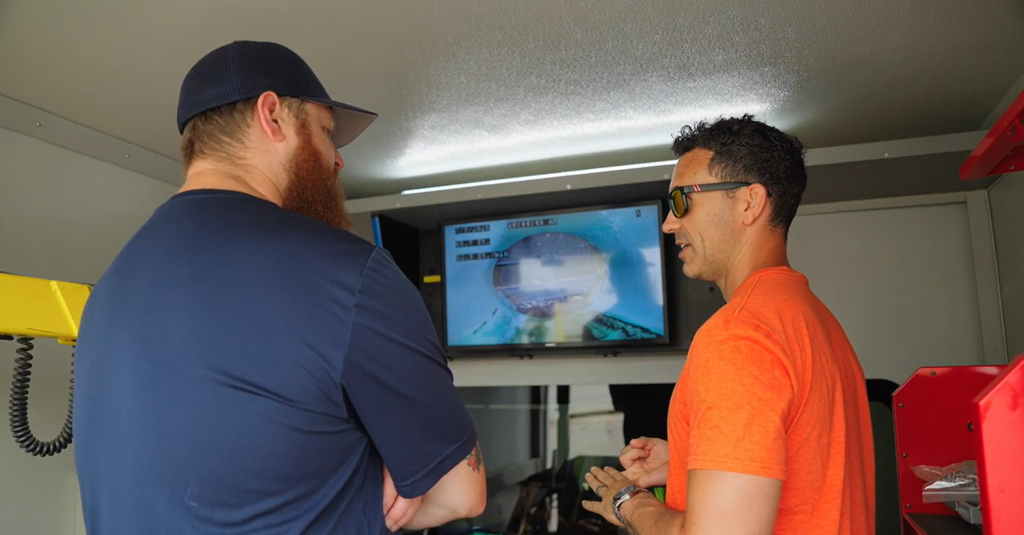
As a civil engineer, Josh worked alongside field crews using an inspection process largely unchanged for decades. When a pipe needed attention, crews would shut down roads, open manholes, send CCTV cameras underground, and capture footage of the infrastructure below.
Sometimes that footage was manually coded on site from a field truck. Other times, someone back at the city office reviewed and coded it again. The process relied on human interpretation, and two people could document the same pipe differently.
From there, the information might become a report or the start of a design project. Or it might become a video sitting on a shelf, kept “just in case.”

The “Aha” Moment
When you are moving from one urgent job to the next, it is hard to see that the process itself is broken. For Josh, that changed when his career took him from the field into the city office.
Suddenly, he could see the entire workflow.
He saw money spent when budgets were tight and hours of footage reviewed manually while other work waited. He saw inconsistent coding, and valuable information captured but never turned into something cities could use. Once he saw the process end to end, he could not unsee it.
Driving Change with Personal Aspiration
As machine learning reshaped other industries, Josh wondered whether it could solve a problem he knew firsthand.
So, he taught himself how.
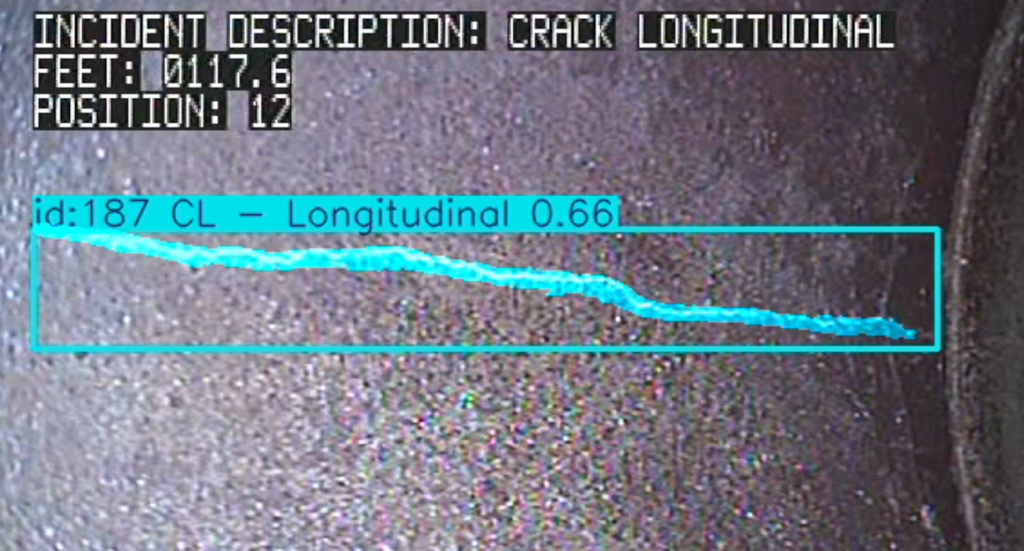
What began as an effort to automate manual coding evolved into a computer vision model trained to recognize and classify conditions inside underground infrastructure. Josh started with 20 defects, using NASSCO industry standards and his own field experience to decide which conditions mattered most. Before long, the model could detect and code pipe defects with fi0% accuracy.
But in the age of AI, simply identifying a defect was not enough. The data had to become useful.

Turning Data Into Intelligence
Even good inspection data was hard to use when it lived in legacy databases and PDFs. That is where GIS entered the chat. Josh had used it throughout his career, and cities already relied on it for nearly everything above ground. Why not underground infrastructure?
By building a digital twin of the sewer system from standardized, AI-generated inspection data, delivered through platforms utilities already use, PipeAid makes patterns and problem areas visible. Any department can use the data to compare conditions, prioritize maintenance, and direct limited budgets with a clearer picture of what is happening beneath their streets.
For a city to become truly intelligent, it could not simply collect more data.
It had to know the data was accurate, where it was, what it meant, and what to do next.
Scaling in the Age of AI
As artificial intelligence accelerated, so did PipeAid. For cities to rely on it, the technology had to perform consistently across every pipe, material, and inspection.
That meant building a team. With Andrew Staufifier, CEO, leading PipeAid’s growing innovation team, the company took Josh’s technology into a new phase of maturity: expanding its training data and measuring performance with an F1 score, which weighs both how often the model correctly identifies a condition and how reliably it avoids flagging one that isn’t there.
When infrastructure decisions carry significant cost, speed alone is not enough.
The information had to be trusted.
The Value of the Human in the Loop
For many technology companies, the ultimate goal is full automation. PipeAid takes a different view: the near-term goal is using technology to make people better at their jobs.
Josh learned that lesson in the field. Pipes are tricky. Lighting and camera angles can distort what is visible, and different pipe materials have nuances best interpreted by a trained human eye. Human validation is not a weakness in the system. It is part of what protects accuracy.
That is why PipeAid sees claims of 100% automation as a red flag. Its approach combines computer vision performing repetitive work at scale,
NASSCO-trained expertise guiding how the system evolves, and human quality control validating results before they support real-world decisions.
The same philosophy extends to customers. Call the PipeAid office, and the person on the other end of the line? A human. Because technology works best when people feel supported by people who understand their world.
What began as one engineer trying to solve a frustrating field problem has evolved into an award-winning technology company with a much larger mission.
Not simply automating an old process.
But helping cities unlock the intelligence hidden beneath their feet.
To find out more about PipeAid and the cities they’ve helped to map, visit Pipeaid.com.
330 Rush Alley, Suite 310, Columbus, Ohio 43215
Email: hello@pipeạid.com
pipeaid.com