

As the nation celebrates its semiquincentennial, Penn Medicine’s Pennsylvania Hospital marks its own milestone anniversary year with a new museum. This immersive experience highlights the hospital’s unique role in the history of medicine—while still actively making history.
For nearly three centuries, Pennsylvania Hospital has been at the forefront of innovation. As part of Penn Medicine, that legacy continues today.
At the time of the hospital’s founding in 1751, the mere idea of having a designated place to take care of people in the colonies was groundbreaking. It was the first chartered hospital in the region that—25 years later—would become known as the United States. And Pennsylvania Hospital, like all of Penn Medicine, has continued to innovate based on the needs of the community, expanding into a large network of clinical and research facilities, providing cancer care, outpatient practices, specialty treatment centers, and more.
It’s this expansion that Benjamin Franklin—who became co-founder of Pennsylvania Hospital in the same year that his other esteemed institution, the University of Pennsylvania, opened for students—would be proud of. After all, he said, “When you’re finished changing, you’re finished.”
In 2026, as the United States celebrates its semiquincentennial, Pennsylvania Hospital is marking its own milestone birthday with immersive experiences in a newly opened public museum in its original historic Pine Building. Nestled in a modern health care campus, this unwavering Philadelphia fixture continues to serve as a reminder of its celebrated 275 years of history—and counting—every day.
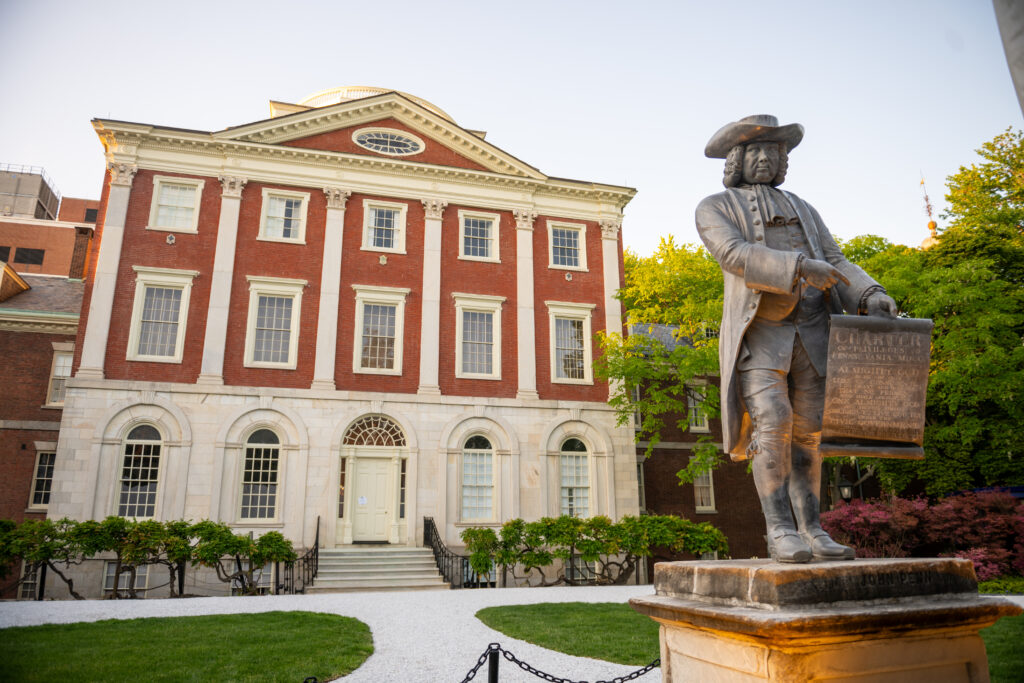
The historic hospital on Pine Street
It started with a conversation with Benjamin Franklin, as many great Philadelphia sites do.
Prior to opening a private practice in the city, Thomas Bond trained to be a physician in Europe, where he encountered the voluntary hospital movement. It was a new way of taking care of people who were both poor and sick.
In the early 18th century, the colonies had Almshouses, shelters that offered clothing, food, and care for those experiencing poverty or illness in exchange for labor. Many relied on family medicinal “recipes,” like drinking hot broth or tea when feeling unwell. Seeing an actual physician required a paid house call. As Bond observed, a lot of people could not afford to hire one, leaving afflictions untended.
A hospital could provide people care in their communities, while also offering aspiring doctors a place to train.
The idea of building a hospital in Philadelphia garnered interest but no financial contributions, until Franklin, one of Bond’s friends and an influencer of his time, endorsed the project. “People inquired what Franklin thought of the idea. Bond didn’t think his friend had an interest in medicine,” said Stacey Peeples, lead archivist and curator of Pennsylvania Hospital’s Archives. “As we know, everything was Franklin’s interest.” Serving as a hospital co-founder with Bond, Franklin made connections to get the funding.
Pennsylvania Hospital was chartered on May 11, 1751, with its home in a rented house on Market Street until land was purchased in 1755. On a half block of 8th and Pine Street, once considered a rural area, the Pine Building opened its doors in 1756. The first of three sections—now referred to as the east wing—it provided men’s and women’s wards to address physical and mental health.
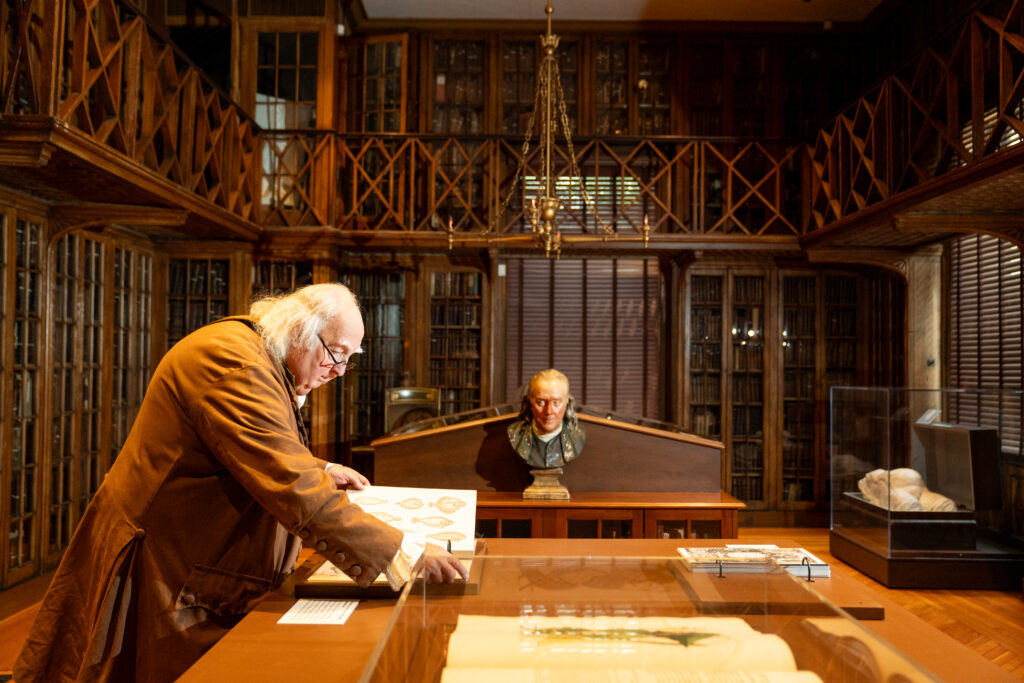
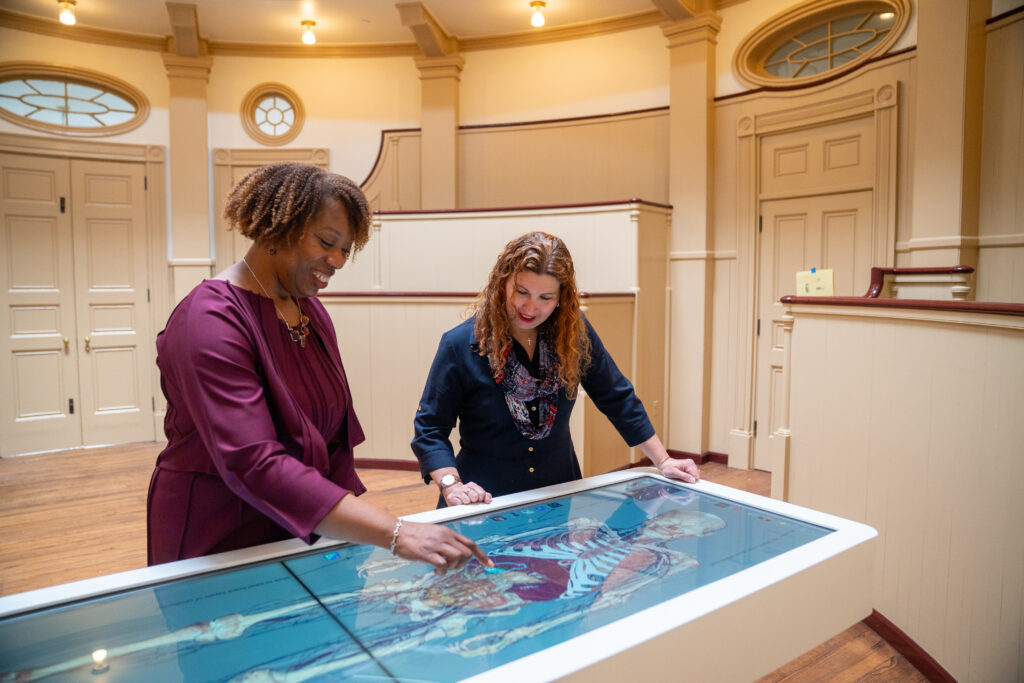
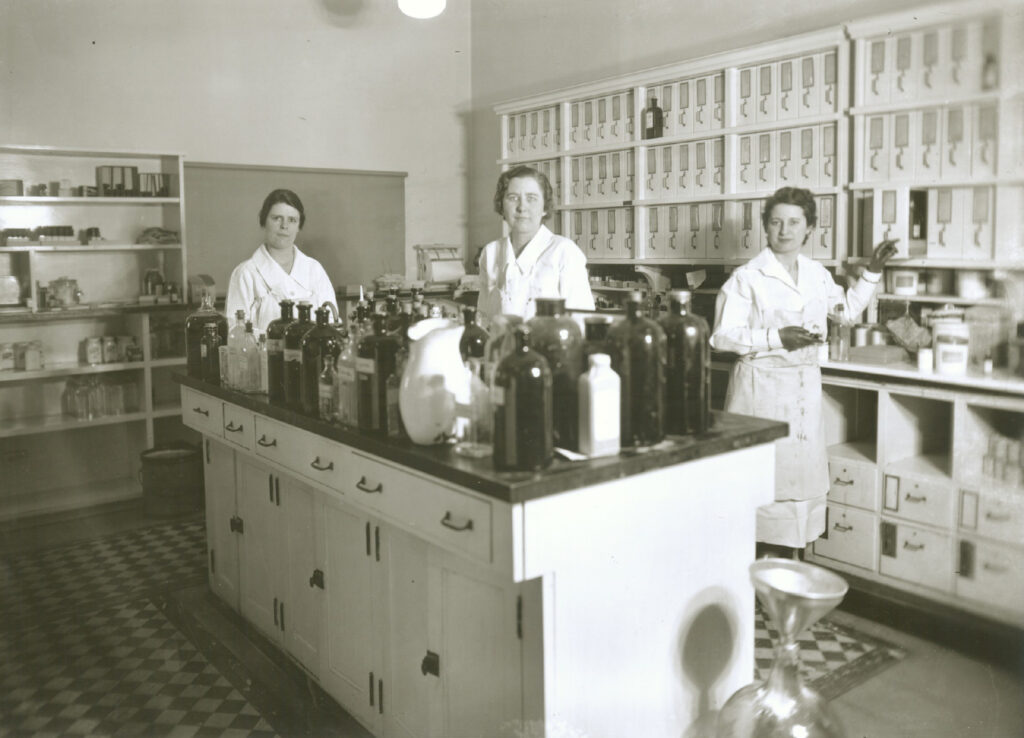
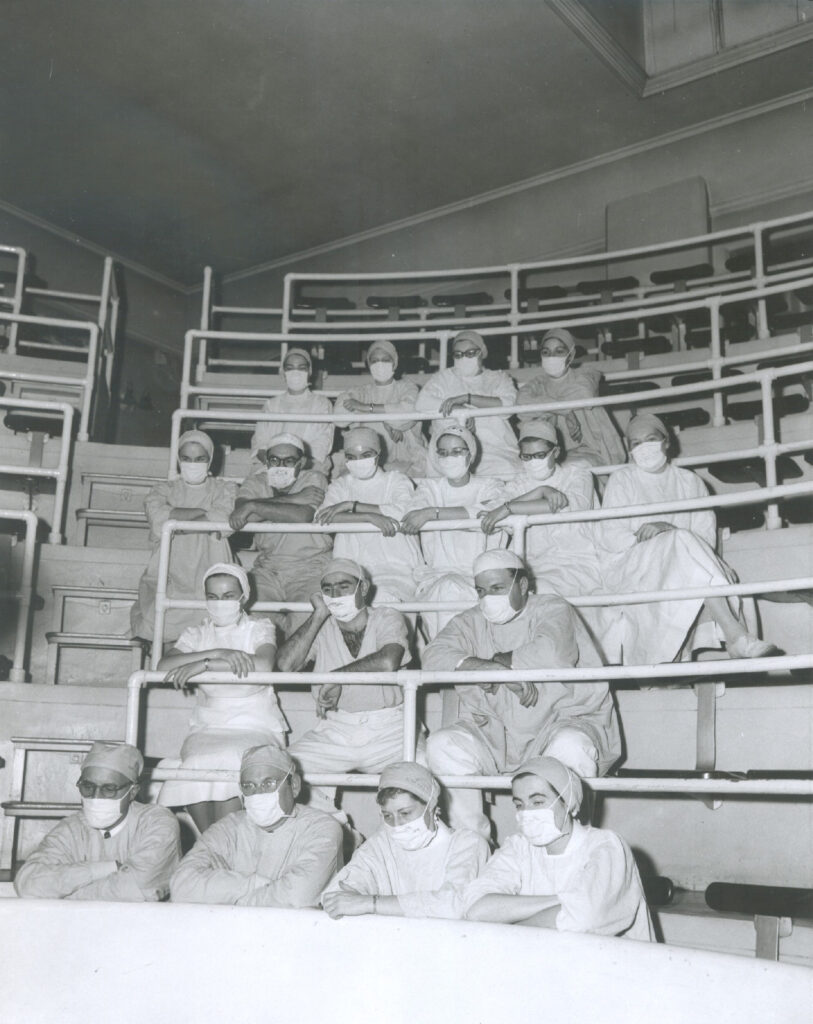
Transformation persists within the Pine Building, which over the centuries has been home to historic, national firsts: the first medical library in 1762; the first elaboratory, or apothecary (original pharmacies) in 1764; and the first surgical amphitheater in 1804. The oldest existing one in the U.S., the amphitheater’s circular design with tiered seating allowed students to observe operations. A skylight was the only source of lighting for procedures.
“It’s amazing to think about who has walked these halls before us—the footsteps we follow and the knowledge once shared here,” said Pennsylvania Hospital Chief Executive Officer Alicia Gresham. “This was all cutting-edge back then. Now we are doing and talking about things they couldn’t even have imagined.”
Enter the Pennsylvania Hospital Museum
“For people to have any interest in history, it needs to be told as a story.”
As the curator and lead archivist at Pennsylvania Hospital, Peeples has spent 25 years bringing stories to life for visitors and scholars.
This spring, she has taken that storytelling to a new level by curating interactive exhibits, restored clinical rooms, and original artifacts, all developed into public museum exhibits in partnership with exhibit design consultant Healy Kohler.
The transformation of the hospital’s original Pine Building into a museum opens opportunity to share memories of the past and for future generations to carry those stories forward.
“If we were to only have dates and names, people may gloss over that,” Peeples said. “We want people to remember our history.”
A hidden gem
People may already know Pennsylvania Hospital as the first chartered hospital in the United States, or that Benjamin Franklin was involved in its creation, “but there’s so much they don’t know,” said Gresham, the hospital’s CEO. “We’re this hidden gem, and we want to share our story with the world.”
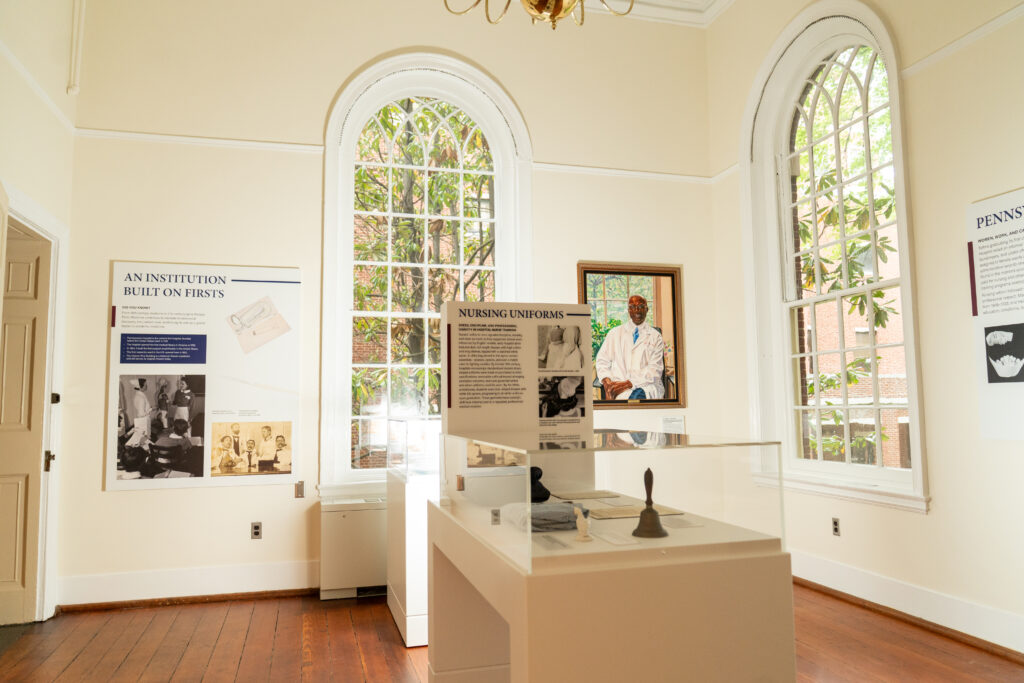
The Pine Building has evolved over time—the east and west wing hospital wards are now offices—but its Great Court has stayed true to its original appearance. Paperwork and manuscripts in the hospital’s Archives allude to the Great Court’s function as an administrative space.

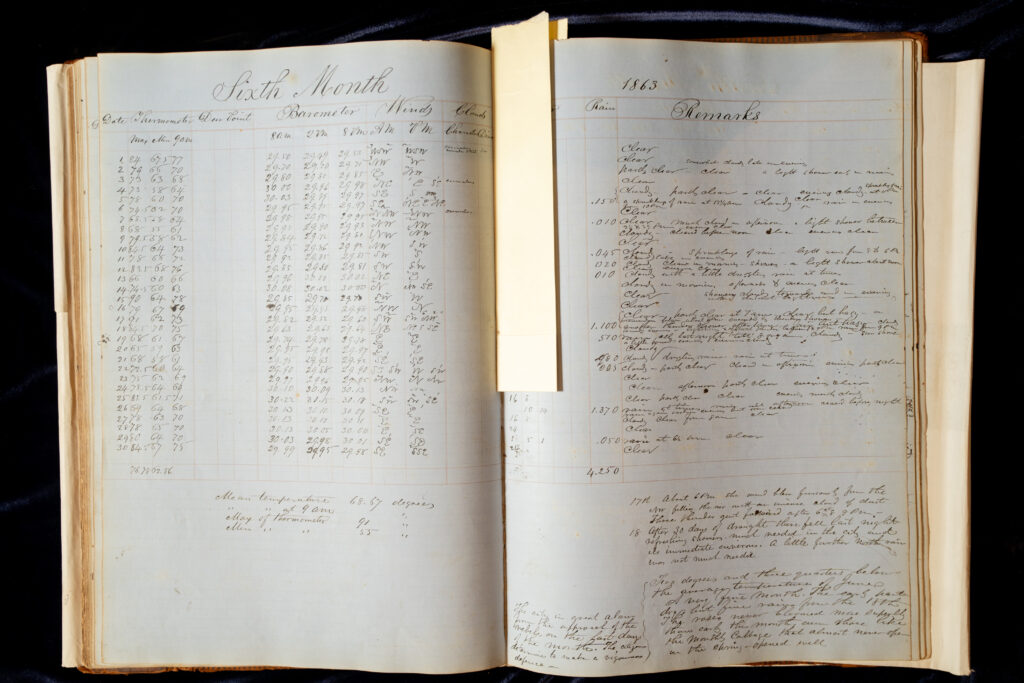
Now, the Pennsylvania Hospital museum displays some of these contents, including admission slips and casebook records, along with a matron’s log. This book of informal records has been like an excavation site for Peeples and her team of volunteers. It’s an active project, unearthing the names of individuals from the earliest days of the hospital who could have been lost to history. These included many women and staff from a wide range of racial and ethnic backgrounds. There were bricklayers and groundskeepers hired for construction, and cooks who bought butter and mutton for the hospital staff.
“It’s an artifact we can always relate to,” Peeples said. “All roles are important—it takes every single person to keep a hospital going.
The apothecary, restored
Among its myriad “firsts,” Pennsylvania Hospital had the first associated Apothecary facility. The apothecary, or pharmacist, would prepare medicines from plants for patient care on a large marble slab surrounded by shelves and drawers of ingredients.
In this newly restored space, visitors can step into the role of the apothecary through the museum’s interactive exhibits—to not just read about its history, but to engage and be a part of it.
Supporting the community through strife
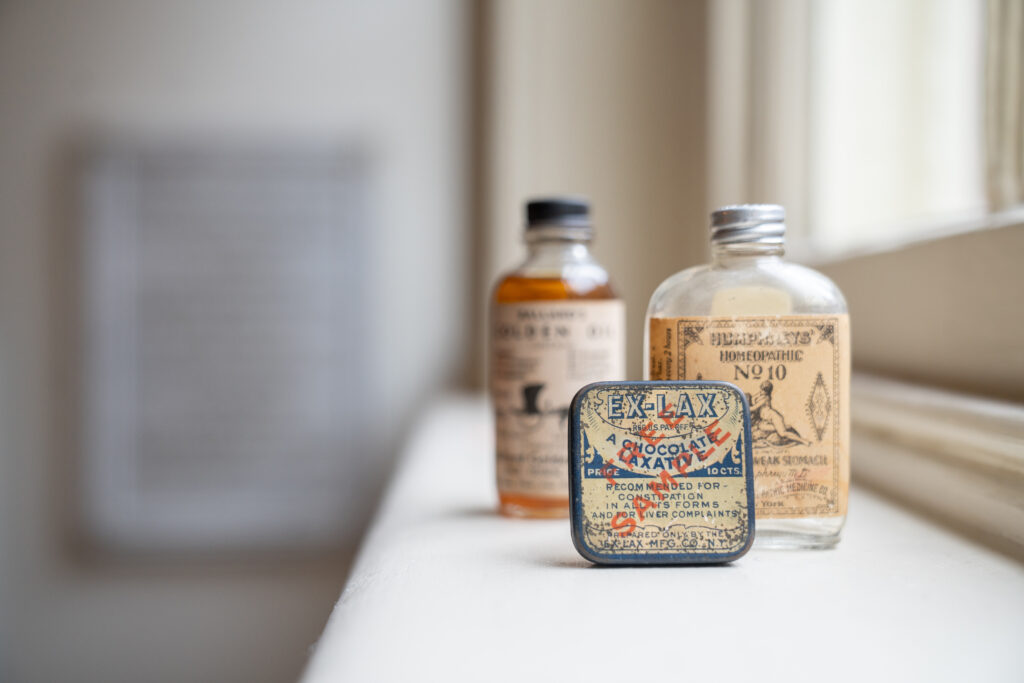
Pennsylvania Hospital has stood through tremendous conflict—epidemics and infectious outbreaks, from yellow fever to the COVID-19 pandemic, and wars spanning three centuries.
In a gallery space focused on the theme of “Perseverance,” museum visitors can hear stories from doctors and nurses at the front lines for themselves when opening a door with audio recordings of letters sent during the First and Second World Wars.
“We chose different voices that fit the tone and best represented the writer of each letter,” said Peeples. “It’s an impressive variety ofcorrespondence, and much more personal in nature to hear it as a firsthand account.”
Firsts and feats
Medical “firsts” are not exclusively at Pennsylvania Hospital—they are celebrated throughout Penn Medicine as a whole. Penn’s Perelman School of Medicine is the nation’s first medical school, the Hospital of the University of Pennsylvania was the first teaching hospital associated with a medical school, and Penn scientists have pioneered numerous revolutionary biomedical firsts including the first FDA-approved cell and gene therapies and the technology behind the first mRNA vaccines.
Pennsylvania Hospital has achieved national and global recognition for the Penn Medicine Center for Transfusion-Free Medicine, one of the few programs of its kind in the country, offering surgical care and advanced treatments like stem cell transplants without the use of donated blood products. At the museum, visitors can open a door and hear audio from the center’s medical director, Patricia Ford, MD, speaking about its leading care for bloodless medicine.
“Pennsylvania Hospital is a jewel in the crown of Penn Medicine,” said Gresham. The museum’s gallery focused on remarkable firsts “shows where we started and how we continue to innovate today.”
Mental health and maternal care
Pennsylvania Hospital was a pioneer of treating mental illnesses at a time when behavioral health was not understood like physical illness. Physician Thomas Story Kirkbride, who led the Institute of the Pennsylvania Hospital in the mid-1800s, practiced “moral treatment,” a practice that valued daily activity over confined or restrained care. The Institute replicated a home environment to allow for an easier transition back to patients’ homes. One approach was using a “magic lantern”—an early slide projector lit by candles that presented photographs of faraway places around the world and local sites around Philadelphia. The artifact, on display in a Pennsylvania Hospital museum gallery focused on mental health, was designed to be a reward for patient cooperation, as opposed to the “punishment” ideology of earlier centuries.
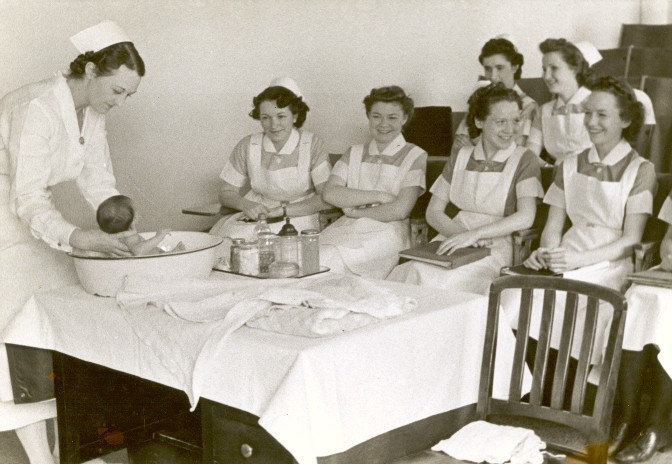
The hospital’s longstanding history in maternal health, and Penn Medicine’s ongoing innovations, are also a point of pride. Pennsylvania Hospital was the first U.S. hospital to deliver a baby in 1765. Flash forward—maternity care teams at the hospital now deliver more than 5,000 babies annually and continue to advance women’s health. In 1983, the hospital had its first in-vitro fertilization pregnancy, and in 2019, the Hospital of the University of Pennsylvania had its first birth from Penn Medicine’s uterus transplant clinical trial. At the museum, visitors can hear audio from present-day physicians that detail these medical marvels.
“A baby born in a hospital was cutting-edge at the time,” Gresham said. “Now we’re doing uterine transplants to help families carry and deliver babies. How amazing is that?”
Many, many books
A bibliophile’s dream, Pennsylvania Hospital’s historic library is a dark-paneled room with thousands of books from floor to ceiling. “Some say it reminds them of Beauty and the Beast,” Peeples said. “They’re in awe and want to go through the whole collection.” Museum visitors can peruse the botanical and anatomical illustrations in reproductions of rare books; the original books on the shelves can be accessed by researchers upon request.
The oldest surgical amphitheater
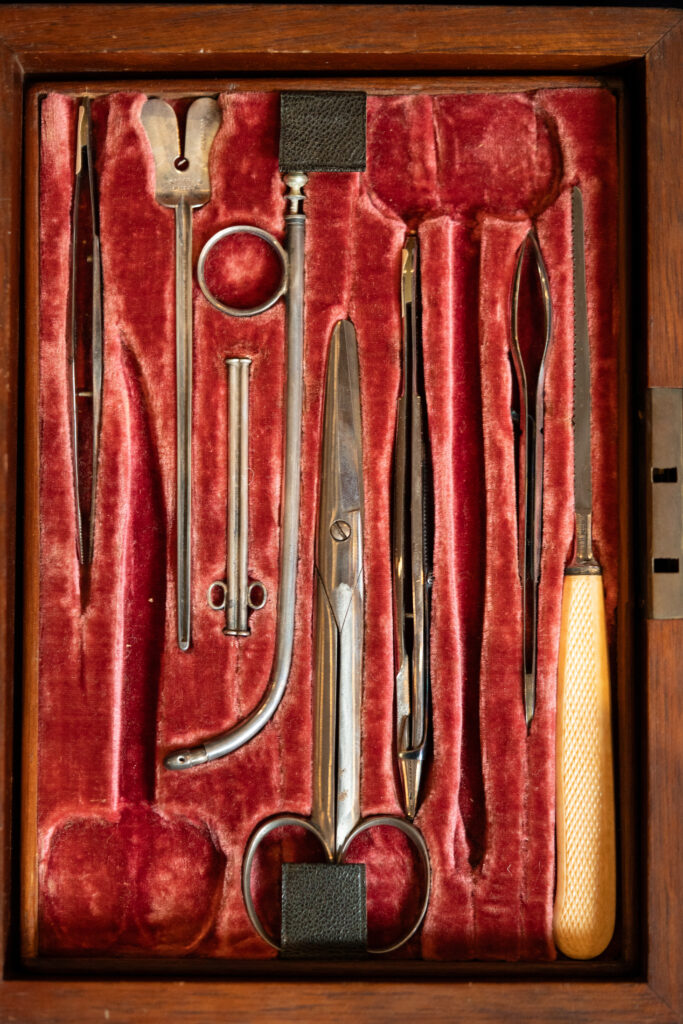
Completed in 1804, Pennsylvania Hospital’s surgical amphitheater was once a gathering space for aspiring doctors to observe operations, from tumor removals to limb amputations, all before the widespread use of anesthesia. Antique stethoscopes and surgical instruments are on display in the amphitheater space at the museum.
Past meets present
The modern Pennsylvania Hospital now extends far beyond the Pine Building. The hospital’s current modern buildings have been kept up to date to support Penn Medicine’s state-of-the-art care and pioneering procedures. For example, neurosurgeons at Pennsylvania Hospital are leading studies of a brain-computer-interface that could help restore motor function to patients with spinal cord injuries, and pioneering uses of deep brain stimulation to treat intractable psychiatric diseases.
“Our strategy starts with identifying what we do well and asking: How do we build on that? How do we carry it into the future?” said Gresham, the hospital CEO. “Part of our success has been our ability to solve problems as needs arise—providing care during wars, responding to the drug crisis and the AIDS epidemic, and advancing mental health and women’s health. Caring for our community is rooted in our history, and we are carrying that legacy forward.”