A new construction method has to earn its place on a Canadian Prairie jobsite. It must work for the crew, suit the conditions and meet the demands of the project. That practical test guides Gardon Construction’s approach to innovation.
From its beginnings on the Prairies, Gardon has grown into a second-generation, family-run commercial construction company with more than four decades of experience. Based in Manitoba and working across Western Canada, its work spans construction management, restoration and rehabilitation. The people and lessons behind that history shape what comes next.
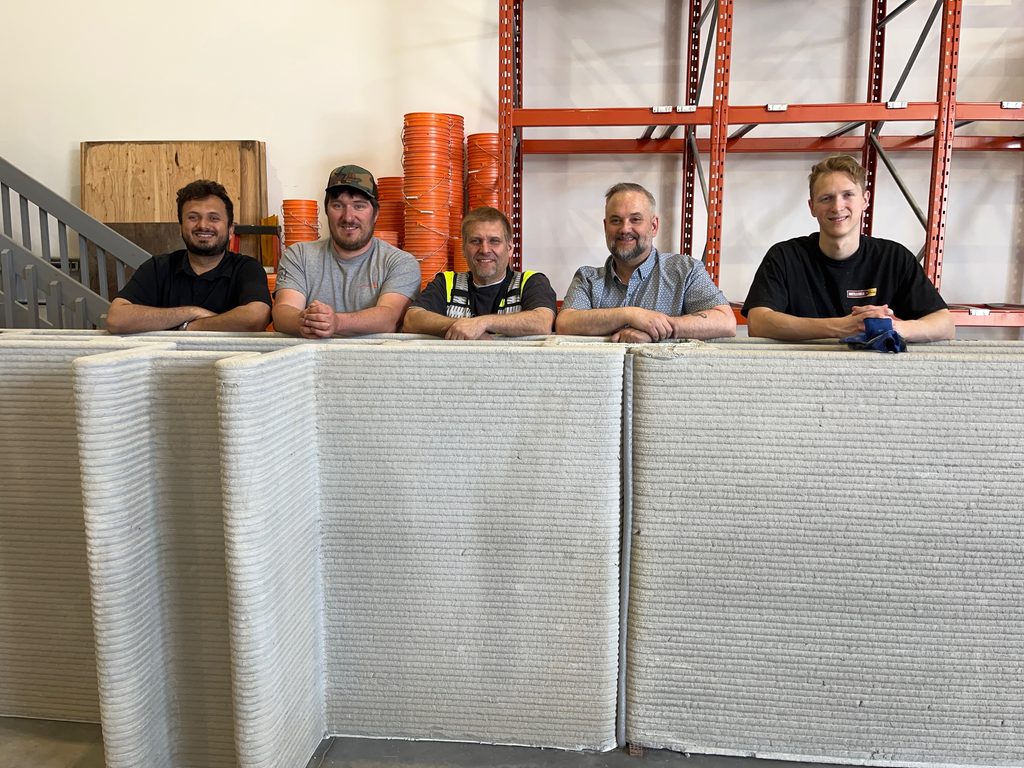
Through Gardon Innovation, the company brings that experience to robotics, digital design and advanced materials. An exploration of 3D concrete printing has become a broader investigation into how equipment, materials and construction methods can work together on site.
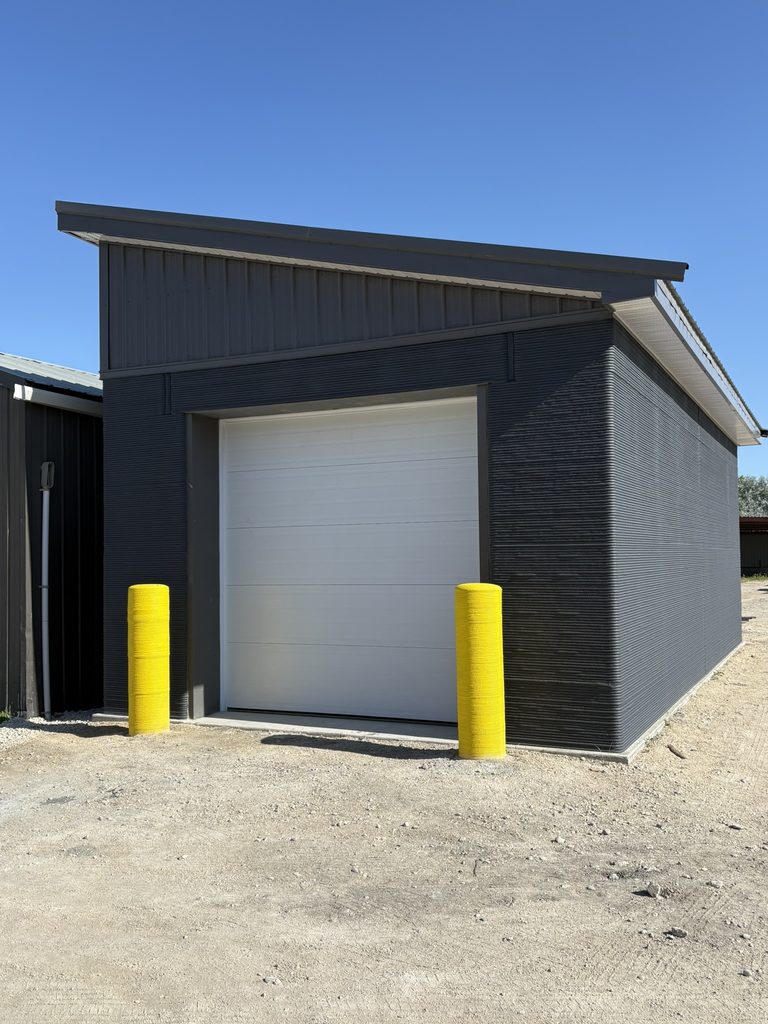
Manitoba gives that investigation a demanding setting. Temperature affects material behavior and curing; sequencing and protection influence how work gets done. Crews need a process they can understand, control and repeat. That work has already moved beyond small-scale demonstrations into a full-scale pilot build under Manitoba winter conditions. In Manitoba, cold weather is not simply a constraint on construction innovation. It is part of the research question.
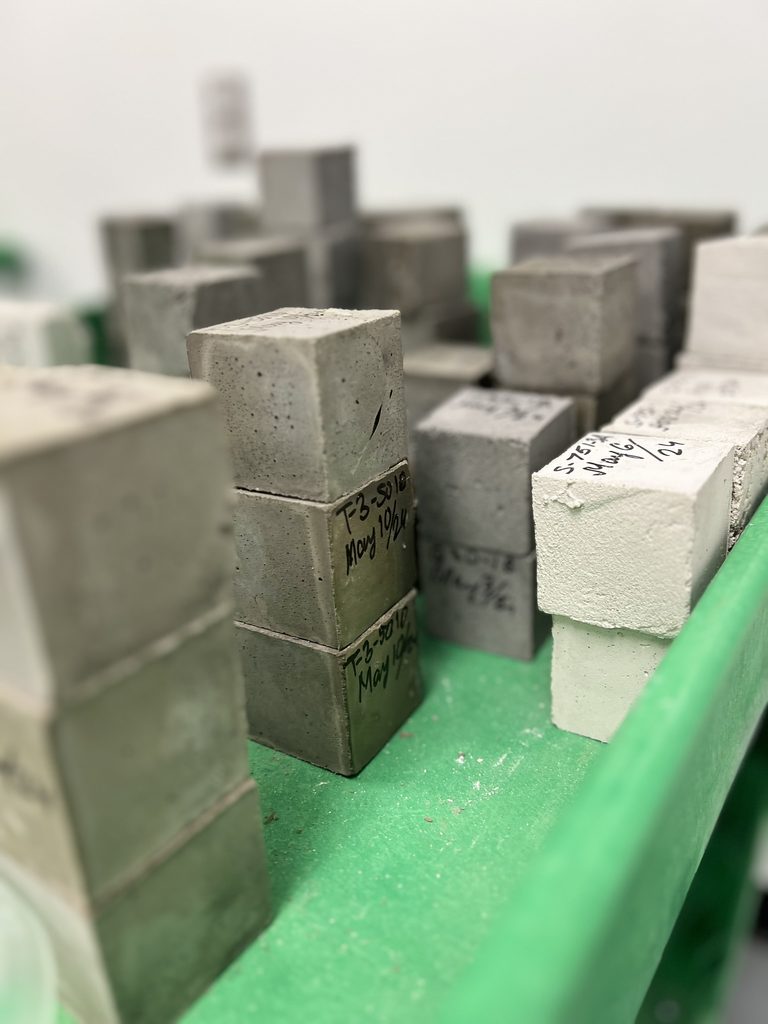
With academic, engineering, material and technology partners, Gardon is studying material performance, reinforcement, sensing and quality assurance. The questions reach beyond whether concrete can be printed in winter to how a finished assembly will perform over years of exposure. Those are different challenges, and both need evidence.
CONNECTING RESEARCH WITH THE JOBSITE
Gardon’s restoration work gives the search for more resilient infrastructure a practical foundation. Experience with maintenance and repair informs questions about how new components should be detailed and evaluated.
Shoreline and protective infrastructure are among the potential applications. Gardon is investigating where additive construction could address specific site needs, with durability, structural demands and comparison against established methods guiding the assessment.
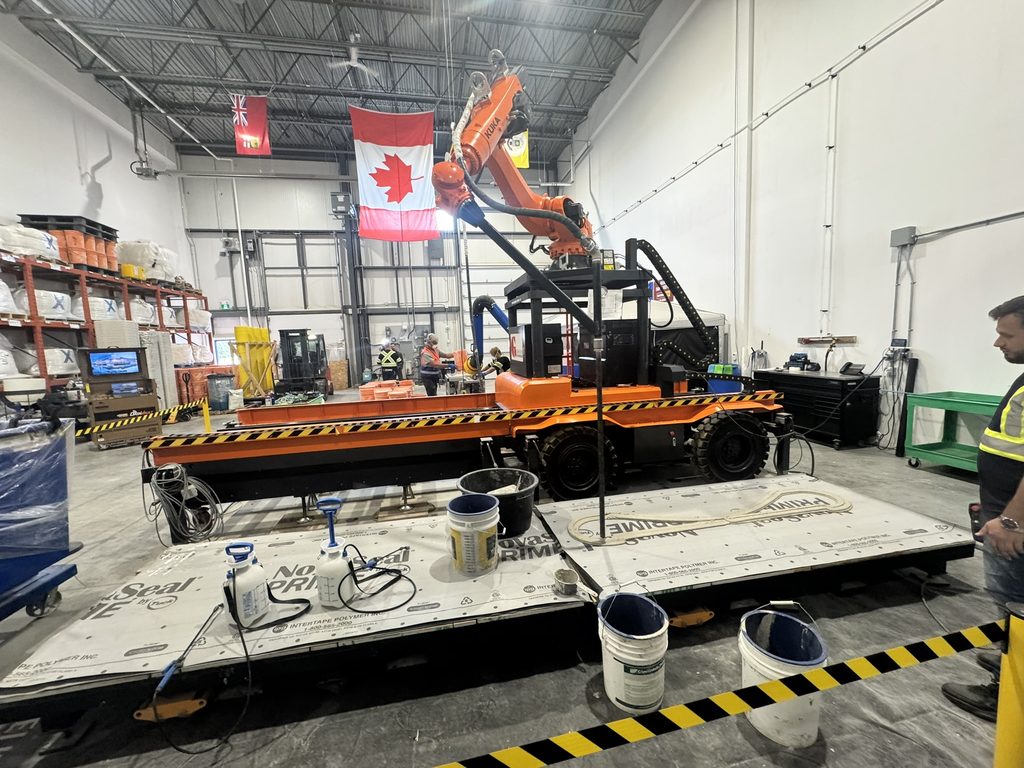
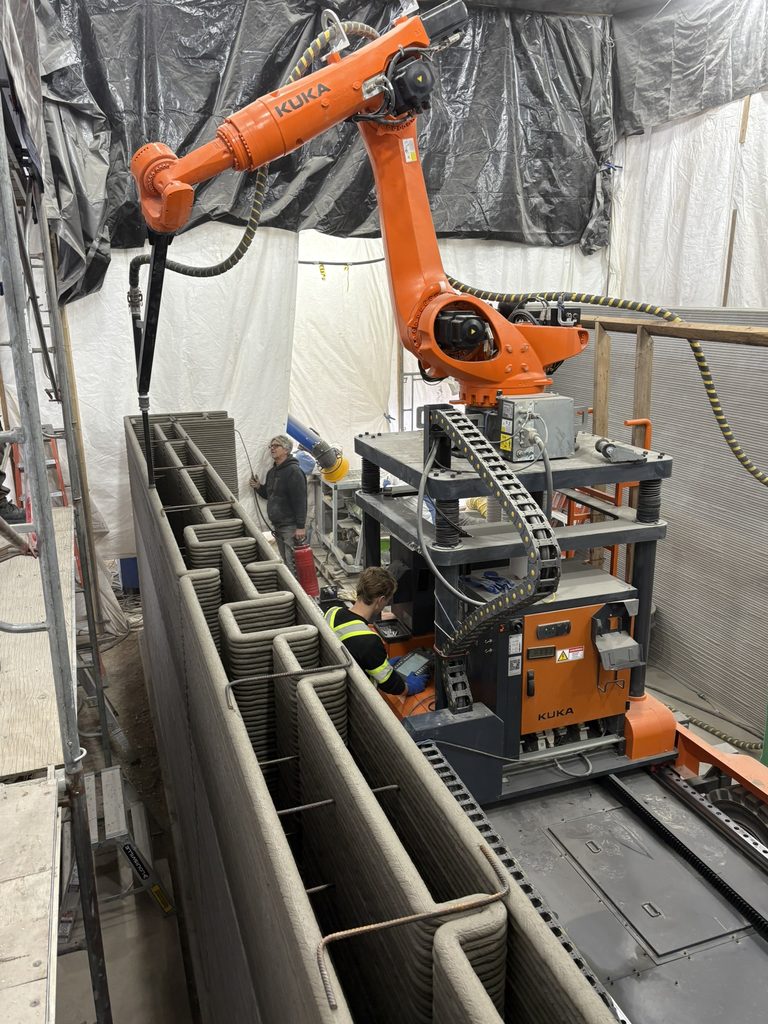
The equipment presents its own construction challenge. Developing construction-scale robotic systems means bringing material preparation, pumping, digital toolpaths and controls into a coordinated process. Moving a robot is one task; making the whole operation useful to a crew is another.
Transport, setup, working reach and maintenance all matter. So do safe operation, training and the judgment of people who understand construction. Gardon’s integration work considers how those requirements fit together before a system can become a dependable site tool.
BUILDING CONFIDENCE THROUGH CODES AND STANDARDS
That work also extends beyond the jobsite. Gardon’s engagement with codes and standards organizations across North America brings a contractor’s perspective to how additive construction is evaluated and documented. Connecting field experience with these discussions helps identify the evidence designers, owners and approval authorities need to assess emerging methods. For Gardon, contributing to that understanding is an essential part of developing the technology.
LOOKING TOWARD THE NEXT APPLICATIONS
Housing is one potential longer-term direction. Printed walls would have to work within a complete building, alongside foundations, insulation, moisture protection and building services. Future projects will depend on suitable performance, approvals and a repeatable construction process, with cost and schedule benefits established through evidence.
Smaller products offer nearer opportunities to learn. Furniture, planters, streetscape elements and architectural components give Gardon ways to investigate production, finishes, pricing and customer response. They also open the work to architects, designers and artists whose ideas can help reveal useful applications.
Across these different scales, Gardon’s operating philosophy remains consistent: Builder First. Research Backed. Standards Aware.
The experience has been humbling and inspiring. Each challenge reinforces how much remains to be learned and how much progress depends on crews, researchers and partners bringing different knowledge to the same problem. Gardon sees possibility in that shared effort: construction methods that could better serve the people who build and the communities that depend on their work.
Gardon looks ahead with hope and excitement, and with respect for the work still to be done. Its crews and partners will help determine where these methods can make a practical difference. The company hopes the lessons learned today will give the next generation of builders more ways to meet the challenges ahead.
“We approach innovation as builders first. The question isn’t whether
a technology is exciting; it’s whether it can solve a real construction
problem safely, reliably and repeatedly.”
— Jeff Olafson, CEO, Gardon Construction