“Workplaces should move in rhythm with the people who use them.”
Within modern workplaces, the rhythm of work continues to shift. Movement between focused effort and shared discussion unfolds throughout the day as organizations reconsider how their environments support that flow of activity. At the center of that shift sits Circadia, helping institutions design workplaces that move in step with the evolving rhythm of modern work.
In Lenexa, Kansas, Circadia guides organizations through integrated workplace design and delivery projects that reshape how environments support daily work across healthcare, education, and other professional environments.
Behind each project sits a practical understanding that physical space influences how people experience their work. The environment surrounding a team can strengthen collaboration, support concentration, or slow progress when design falls out of alignment with daily activity.
“Great spaces should feel intuitive,” says CEO Ed Wills. “When a workplace aligns with how people naturally move through their day, performance improves, and collaboration becomes easier.”
That principle carries through every stage of the organization’s work, from early design conversations to the long-term life of the environments it helps create.
A Century of Experience Reimagined
Across more than a century of workplace design, accumulated experience continues guiding the organization’s work today. Two companies helped shape that foundation while influencing workplace design throughout the Midwest. Scott Rice began operations in Kansas City in 1925 as a Steelcase dealership.
Color Art opened in St. Louis in 1946 as a print company before expanding into workplace design services. As work styles changed over the decades, environments began shifting toward interaction and flexibility rather than layouts organized around fixed desks. A merger in 2003 brought those parallel histories together under one company. Combined expertise expanded capabilities in workplace design and implementation. Demand for integrated environments grew as organizations sought partners capable of guiding projects from design through completion.
A defining moment arrived in 2025 with the introduction of the Circadia brand. Inspiration for the name comes from the rhythms that influence how people live and work, reflecting a belief that environments perform best when they move in harmony with the people using them.
“Circadia captures how we think about design,” Wills explains. “Workplaces should support the rhythm of daily life rather than forcing people to adapt to rigid environments.”
Designing Around People
Within a workplace, patterns of movement influence how people interact throughout the day, often following the structure created by the surrounding environment. Work rarely follows a fixed routine. Periods of concentration shift into discussion and shared problem-solving as ideas develop. Within each project, a human-centered design methodology guides the organization’s approach, drawing on research
and practical experience.
Understanding how people interact within a space begins with careful observation. Insight gathered during that process guides design decisions long before materials or furnishings enter the conversation.
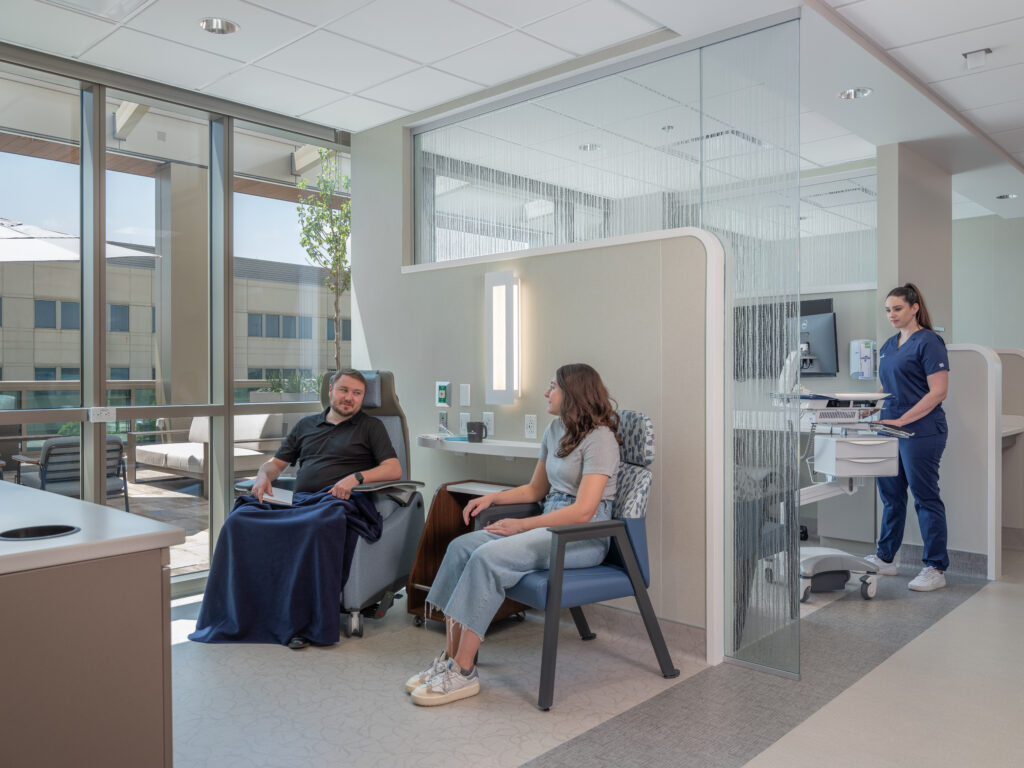
Environments created through this approach allow teams to move naturally between concentration and collaboration while maintaining continuity across the workplace. “We focus on outcomes rather than individual products,” he says. “Furniture plays a role, but the goal involves creating environments that help organizations achieve their mission.”
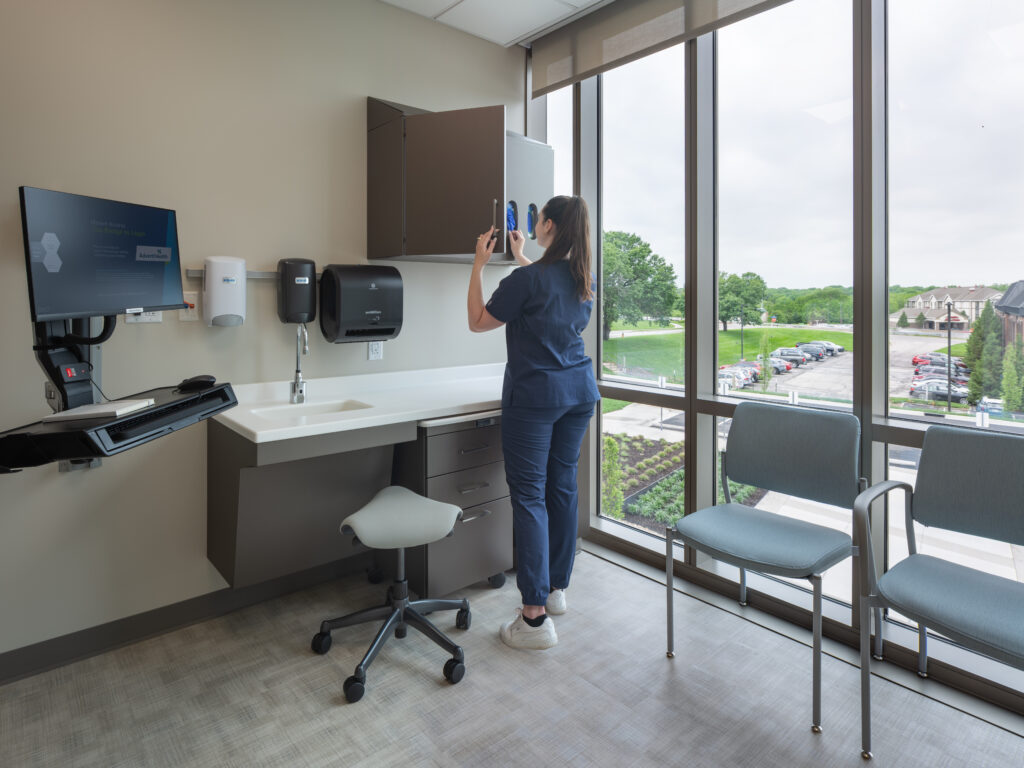
Healthcare and education environments highlight the importance of that philosophy. Coordinated care inside hospitals depends on constant interaction among caregivers while maintaining a setting that supports patients and families. Learning environments within educational institutions rely on spaces that encourage engagement while allowing students to explore ideas through conversation and reflection.
Research, project experience, and continued dialogue with healthcare professionals and educators help shape environments that respond to real operational challenges and remain relevant as needs evolve. Design decisions grounded in those realities produce environments capable of evolving alongside the institutions they serve.
Integrated Solutions for Complex Spaces
Beyond visual design, workplace environments depend on coordinated planning across multiple disciplines. The organization addresses that complexity through an integrated delivery model that connects design with workplace implementation inside a unified process. Clients gain a partner capable of guiding a workspace from early concept through completion while remaining involved as needs evolve.
Long-term sustainability benefits from that approach. Material choices emphasize durability, while adaptable environments allow organizations to adjust spaces as operational needs change. “We think about the long-term life of every space we create,” Ed explains. “A well-designed environment should continue delivering value long after installation.”
Continued collaboration with clients helps workplaces remain effective as organizations grow and adapt.
Collaboration Across the Innovation Ecosystem
Innovation takes shape through collaboration across a wider ecosystem, where ideas are shaped through shared expertise and tested in practical environments. Through collaboration with industry partners and researchers, the organization explores new technologies and evolving design strategies that improve how environments function.
Insight from healthcare leaders and educators brings practical understanding into the design process, while collaboration with manufacturers introduces workplace systems capable of supporting evolving patterns of work. Ideas move through cycles of testing and refinement, allowing innovation to take shape within real-world environments rather than remaining theoretical. Research and installation
expertise then translate those ideas into environments designed to perform today while remaining capable of adapting to future needs.
Designing the Next Generation of Workplaces
As organizations rethink how people collaborate and deliver services, expectations for workplaces continue evolving. Hybrid communication, advancing technology, and shifting workforce expectations encourage environments capable of responding quickly to new demands.
Experience developed across decades of workplace design positions the organization to guide institutions through those transitions. “Organizations perform best when their environments support their people,” he says. “Our work focuses on helping clients create spaces where teams feel connected and ready for what comes next.”
Across the region, Circadia continues shaping workplaces designed to move in rhythm with the people who use them.