

CARBON REFORM TURNS EVERYDAY HVAC INFRASTRUCTURE INTO A PLATFORM FOR ENERGY SAVINGS, CLEAN AIR, AND CARBON REMOVAL
Most climate solutions feel far removed from everyday life. Direct air capture, industrial-scale carbon removal, next-generation infrastructure – these approaches matter, but they often feel inaccessible or years away from practical use. Carbon Reform started with a simpler observation: buildings account for roughly 40 percent of global emissions, and their ventilation systems move tonnes of CO2 daily just as part of normal operations. If climate technology could tap into that existing flow, it wouldn’t need to wait for new infrastructure to be built.
The opportunity came into focus by looking at the pressures buildings face every day: rising energy costs, nonstop ventilation demands, aging HVAC equipment, and a steady wave of new performance regulations with few practical paths to compliance. Carbon Reform saw that these operational pressures and the climate problem converged in the same place: the ventilation and HVAC systems that keep air circulating through buildings.
These systems are among the largest energy consumers in any building, running constantly to maintain air quality and temperature. Rather than forcing a choice between immediate needs and climate goals, the company built technology that addresses energy costs, air quality, and emissions as one integrated solution, making climate technology accessible.

A System Built for Real Buildings
The team built the Carbon Reduction System, a modular solution that integrates directly into existing HVAC equipment. It improves the air quality inside the building via the Carbon Capsule®, advanced contaminant removal technology, and reduces reliance on over-ventilation in buildings. By making it possible to rely more on clean indoor air and less on constant outdoor intake, the system slashes the energy required to heat, cool, and dehumidify ventilation air.
To make outside air reduction possible while maintaining healthy indoor environments, the system uses advanced filtration and purification, including a CO2 capture medium that removes carbon dioxide and stores it permanently. The system also reduces volatile organic compounds (VOCs), dust and allergens, and pathogens like viruses and bacteria. The result is lower energy use, cleaner indoor air, and ongoing carbon removal, all working together.
The impact has been substantial. Buildings using the system have seen significant reductions in HVAC energy use – up to 80%, third-party verified through metered data. That translates directly to lower utility bills and hundreds of tonnes cut from building emissions each year, while solving ventilation challenges at the same time. For utilities, the technology creates a new way to reduce demand from within existing buildings rather than just adding more supply.
Carbon Reform now works with utility companies and large building operators to validate performance and weave the technology into broader energy planning efforts. The system is deployed across commercial and institutional facilities where energy savings, air quality improvements, and emissions reductions work together to solve multiple challenges at once.
Philadelphia and Beyond
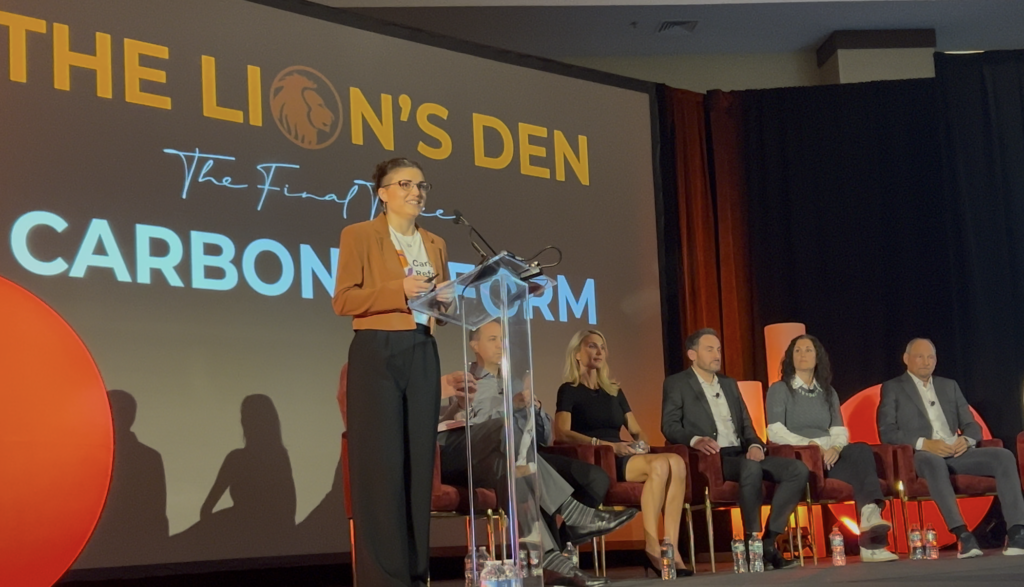
Carbon Reform’s choice to build in and near Philadelphia was strategic. The city sits at the center of a corridor from Boston to Virginia where building performance standards are driving investment decisions, and it’s emerging as a hub for climate tech with access to universities, utilities, and clean energy talent. Founded by materials science and chemical engineers Jo Norris and Nick Martin, the company combined expertise in R&D and operations to build technology for real-world conditions. While teams remain based in Philadelphia and Delaware, deployments are expanding across the country as more markets adopt performance standards.
What’s emerging is a fundamental shift in how buildings and energy systems work together. For decades, grids managed demand by adding supply. Now, Carbon Reform is proving buildings can actively reduce strain on the grid while cutting costs and emissions. As the company scales beyond early commercialization, the potential for global impact is coming into focus as a practical solution already working today.
Climate technology doesn’t have to be inaccessible or years away. By starting with existing systems and real challenges, Carbon Reform shows that meaningful climate solutions can be built into everyday operations, solving for people and the planet at the same time.