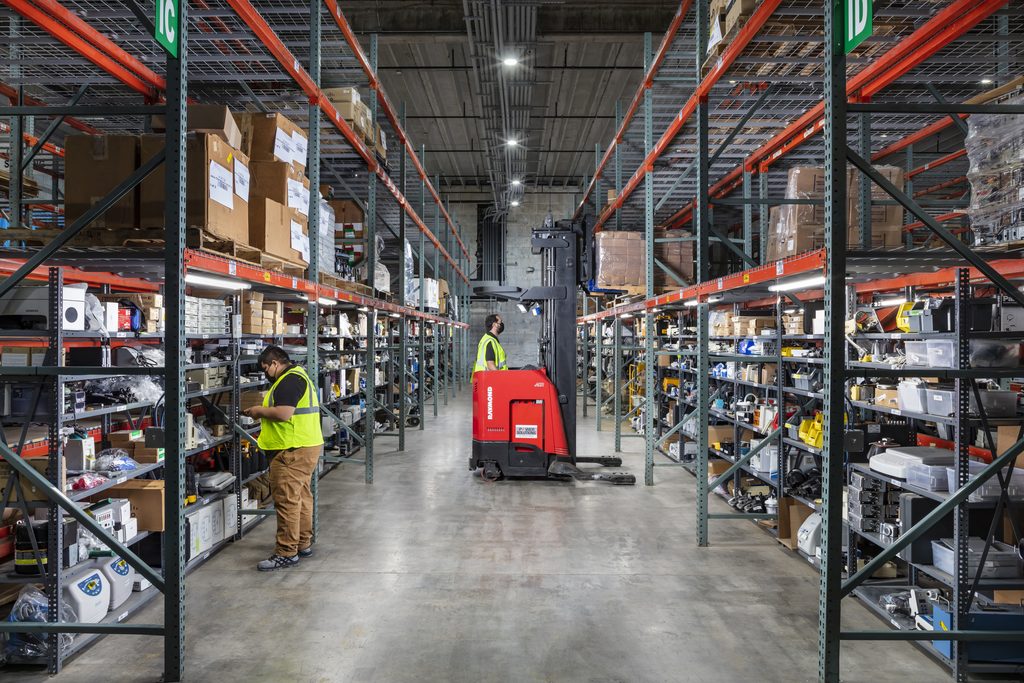
Every technology upgrade creates a second question: what happens to the equipment it replaces? A server can leave a data center while it still has years of useful life ahead of it. Laboratory equipment can be replaced while retaining considerable value. Even infrastructure overtaken by the latest generation of technology may be exactly what another market needs.
Since 1998, C2 Management has been finding that value. Starting largely through eBay, the Northern Virginia company built its early business around finding buyers for surplus technology and equipment that others might have overlooked. Behind that work was a simple idea: valuable equipment should not become waste simply because its first owner is finished with it.
Over time, surplus resale developed into a much broader asset-recovery operation. Today, the company helps organizations recover value from technology, data center infrastructure, laboratory and medical equipment, industrial assets and other complex surplus equipment through reuse, resale, redeployment and responsible recycling. Guiding that approach for years has been a phrase that still captures it simply: “Reuse is the highest form of recycling.”
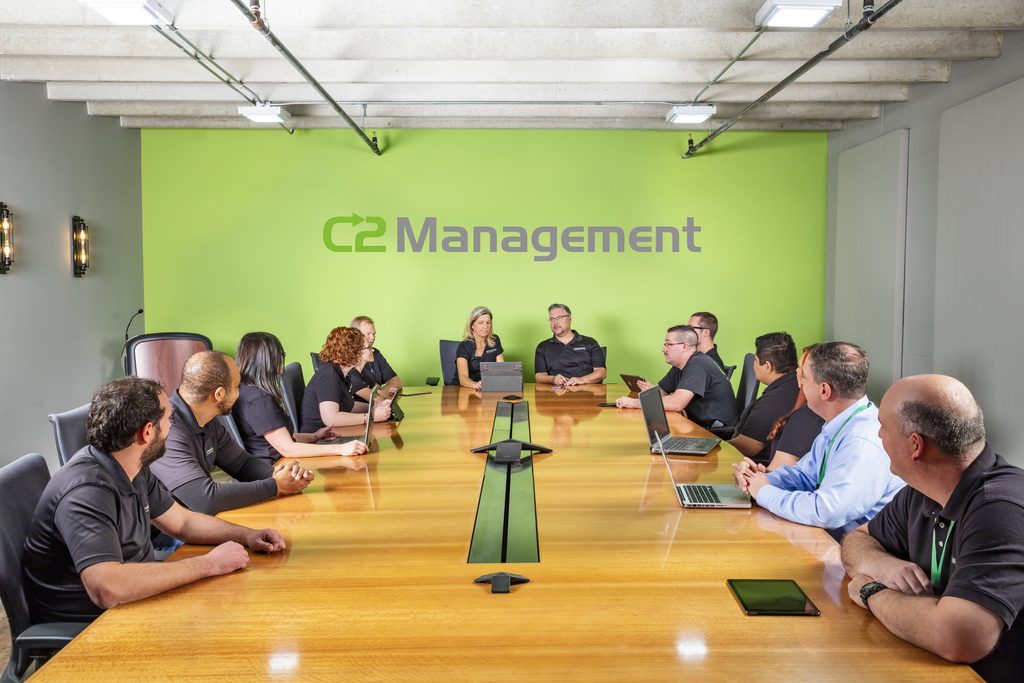
Finding Value Beyond the First Use
Instead of viewing asset disposition primarily as a waste-management problem, the company approaches it as an investment-recovery opportunity. Equipment is evaluated for its highest and best use first, with recycling reserved for assets that no longer have a viable secondary life.
Through early work with the federal government came greater demands around security, accountability, compliance, and dependable execution. As operations grew, the commitment to formal environmental and data-security standards grew with them. R2 certification followed in 2011, with R2v3 certification, including Appendix D, achieved in 2023.
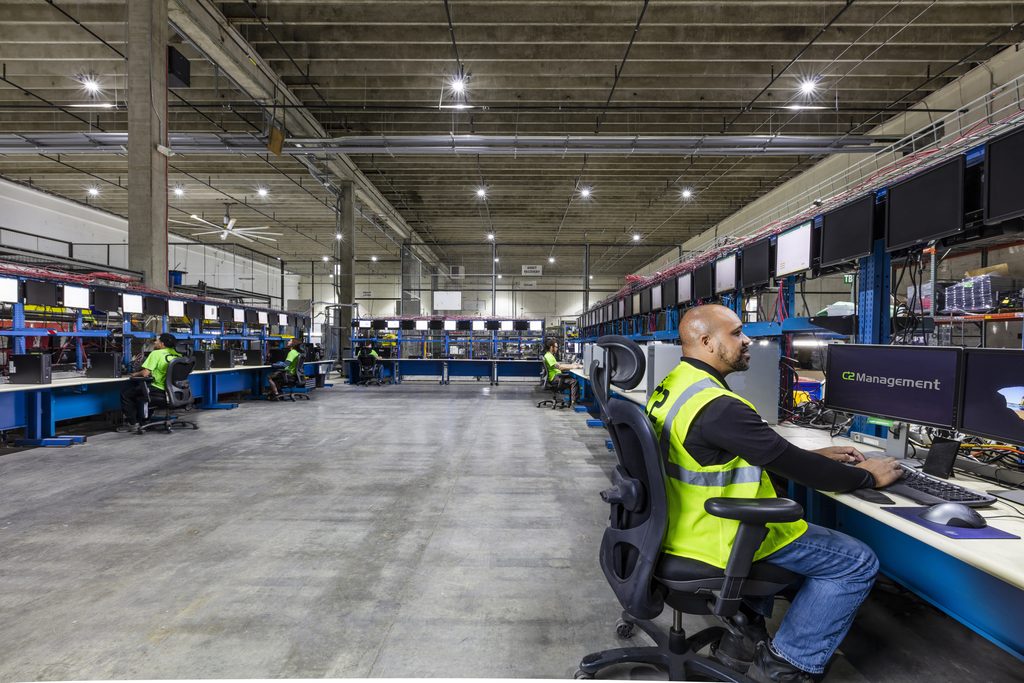
That experience now extends into some of the fastest-growing sectors in the economy, including data centers, hyperscale computing and pharmaceutical operations. Alongside the growth of its asset-recovery work came another part of the company’s evolution: finding better ways to do it.
“Innovation means continual improvement and finding new ways to create value,” says President Chris Hansen. “Sometimes that means process engineering. Other times, it means identifying new markets, new technologies or new uses for equipment that might otherwise be overlooked.”
Thinking Bigger
As early as 2006, proprietary technology was being developed to support operations, with software built to improve asset tracking, workflows, valuation, remarketing and decision-making. A particularly important turning point came with ShredBox, an ambitious combination of software, automation and hardware created to address challenges within the electronics recycling industry.
Although ShredBox did not become the commercial success initially envisioned, its influence inside the company went much further. “ShredBox showed us that a relatively small company could create something genuinely innovative,” he says. “It gave us the confidence to think bigger and to realize that innovation does not have to come from a huge R&D department.”
Out of that experience came a broader view of what innovation could mean. It did not have to be a new product. A better process, a market for an overlooked asset, or a more effective way for employees to access information could change how the organization worked just as meaningfully.
Since 2023, artificial intelligence has accelerated that thinking dramatically. AI is now integrated into tools designed to identify opportunities, analyze equipment and markets, improve internal processes, support sales decisions, and uncover new sources of value.
Opportunity in the AI Revolution
Beyond its use inside the organization, AI is also changing the opportunity ahead for the asset-recovery industry. “The pace of change in AI hardware is unlike anything we have seen before,” Chris says. “Huge amounts of high-value infrastructure are being deployed, but that equipment is also being refreshed at an incredible pace. At the same time, secondary-market buyers are eager for technology they often cannot purchase new because initial demand is outpacing supply.”
For the company, that creates an important position between two markets. Across Northern Virginia, continued growth in data centers, cloud infrastructure, federal technology and AI means increasingly sophisticated systems can be replaced while they still retain substantial productive and financial value.
On the other side are businesses, researchers and secondary markets capable of continuing to put that equipment to use. Connecting the two allows assets to remain productive even as their original owners move toward the next generation of technology.
“The faster technology evolves, the more important sophisticated reuse and investment recovery become,” he says.
Building C2 IQ
Beyond its traditional industry, another possibility is taking shape through the C2 IQ ecosystem. The growing collection of AI-enabled business tools is being designed to simplify functions such as training, compliance, sales, marketing, opportunity identification, document management, and operational workflows.
Initially, many of those applications are being built around challenges within the organization itself. Longer term, the vision extends to making useful technologies available to other organizations facing similar problems.
For Chris, part of that potential comes from giving small and mid-sized companies access to capabilities that previously required large technology teams and budgets.
“Our goal is not simply to use AI,” he says. “It is to turn technology into practical tools that help people make better decisions, work more efficiently and continually create more value.”
From an eBay seller in 1998 to an asset-recovery company building its own AI ecosystem nearly three decades later, C2 Management’s journey reflects the same principle that drives its business today: always look for the value others have not yet recognized.
“Always look for the value others
have not yet recognized.”