Deanna Hansen never set out to build a global wellness brand. In 1995, she was a newly Certified Athletic Therapist in Winnipeg, building a thriving deep-tissue practice working with clients from many walks of life. She developed a loyal client base, with many clients returning over the years. Yet Hansen’s own body was struggling. She was living with chronic pain, inflammation, and panic attacks of her own, despite the success she was helping others find.
The turning point came not in a clinic, but in the middle of one of her worst anxiety attacks, when she instinctively pressed her hand into her own abdomen.
“For years, I dedicated my life to helping others heal while my own body continued to break down,” Hansen recalls. “Everything changed through one simple moment – my hand resting on my own abdomen. In that instant, I realized the body had been communicating with me all along. The answers weren’t somewhere outside of me. They had always been within, waiting for me to listen.”
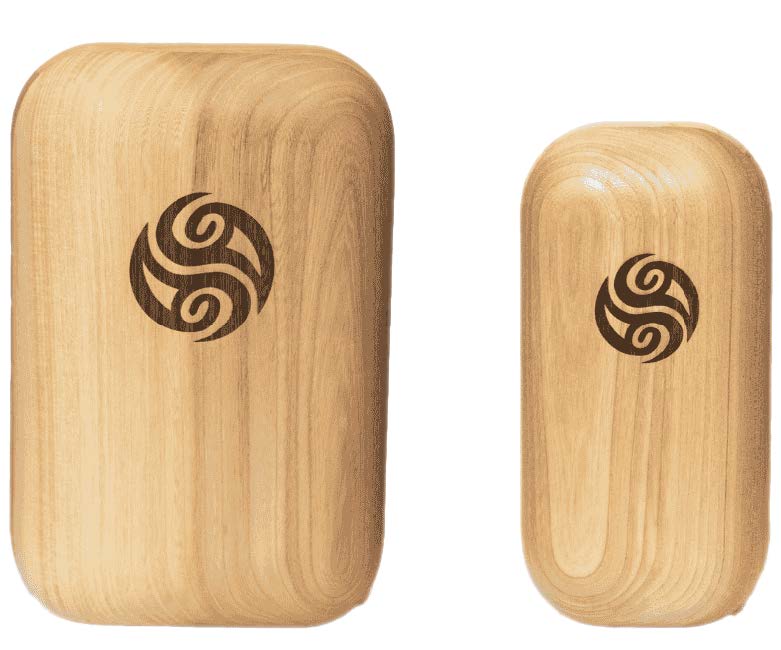
That moment became the seed of what she would eventually call Fluid Isometrics and Block Therapy. What Hansen came to believe, and later built an entire practice around, is that fascia is far more than structural connective tissue: it’s a body-wide network surrounding and supporting organs, nerves, blood vessels, and muscle. In her view, this tissue can become increasingly restricted over time, and she believed that creating space within the fascia could become an important part of a person’s self-care practice. She took what she had spent years doing with her hands in the treatment room and translated it into something anyone could do at home, using a simple handcrafted wooden tool that became known as the Block Buddy. Combined with diaphragmatic breathing and step-by-step protocols, the method turned deep tissue work into a daily self-care practice, part meditation, part movement, part bodywork, doable in as little as five minutes a day.
Nearly three decades later, Block Therapy has grown from that one Winnipeg practice into a self-care system used by people pursuing a wide range of goals, from general mobility and stress management to athletic performance. The company’s product line has expanded from the original Block Buddy into tools like the Block Baby and Block Paddle, along with starter kits, membership programs offering ongoing live classes, and intensives that bring the community together both virtually and in person.
Hansen’s vision has always been teaching and educating, not just treating. “I never wanted people to depend on me for healing,” she says. “My vision has always been to teach people how to understand and care for their own bodies, so they can become active participants in their healing rather than relying on someone else’s hands.”
That philosophy shaped the Block Therapy Academy, a certification pathway for instructors and bodyworkers around the world. “Every instructor who learns this work extends its reach far beyond what my own two hands could ever accomplish,” Hansen notes. “That is how healing becomes a movement; one person reconnecting with their own body, then inspiring another to do the same.”
That instructor network, paired with a steady cadence of community classes, seasonal challenges, and live events, has turned Block Therapy into as much a movement as a company, one still rooted in Winnipeg, where its wooden blocks are produced locally, and still expanding, with new offerings in development.
What began as one therapist’s search for relief from her own chronic pain has become a self-care practice used by thousands, built and still headquartered in Manitoba.