

Winnipeg, Manitoba, is a city defined by its trees. It has the largest urban elm canopy in North America. However, maintaining this canopy requires constant vigilance against the devastating impact of cankerworms and Dutch Elm Disease.
Cankerworms feast on elm, ash, maple, linden, oak, fruit, and ornamental trees, often leaving them completely stripped of leaves. While trees can produce a second set of leaves mid-summer if needed, this survival mechanism severely weakens their health. Repeated defoliation year after year triggers limb dieback and leaves the trees highly susceptible to fatal insect attacks and diseases, most notably Dutch Elm Disease. Left unchecked, it can wipe out an entire neighbourhood’s tree canopy.
It was within this environmental niche that Schmidt Tree Banding was started. Chris Schmidt founded the company at the age of ten, with the simple goal of making a few dollars to buy Slurpees that summer.
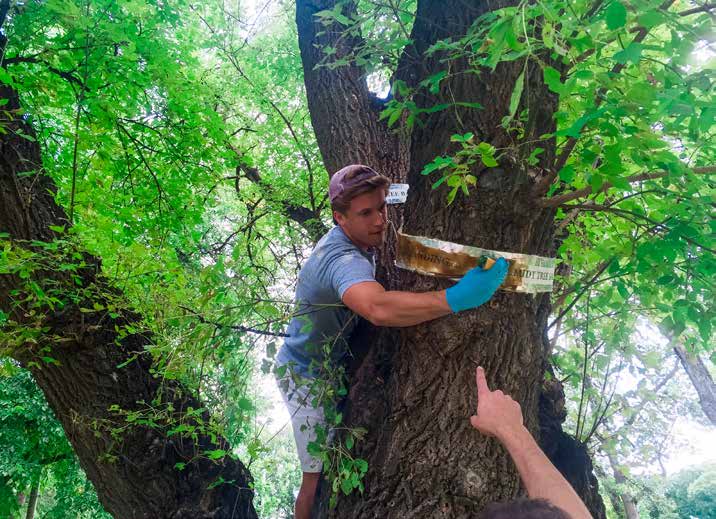
Tree banding works by installing a band coated with an ultra-sticky compound called Tanglefoot to physically intercept wingless female cankerworm moths as they crawl up the tree trunk to lay their eggs. This disrupts the moth’s breeding cycle and shields the canopy from the defoliation that would leave it vulnerable to disease.
A Lean Operation
What began as a childhood hustle quickly evolved into a masterclass in boot-strapped execution and localized saturation. Operating in a highly crowded market, Chris utilized an aggressive market-entry strategy: offering the service at half the competitors’ prices. With this offer, he achieved a 75% sign-up rate through door-to-door sales.
To maintain profitability at a lower price point, Chris managed every aspect of the business, from sourcing supplies and managing cash flow to execution, customer service, and the manual application and removal of the bands.
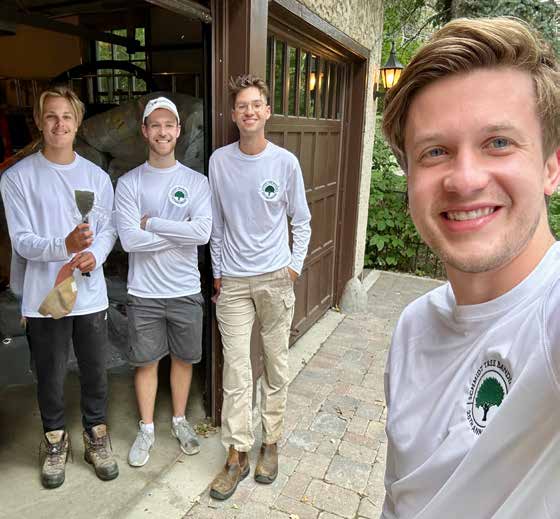
“I’ve never claimed to be the smartest person in the room,” Chris reflects. “But from the beginning, I knew I could outwork anyone. Tree banding wasn’t just manual labour—it was a foundational lesson in execution. If you can solve a problem, provide excellent customer service, and outwork your competitors, the market is yours.”
By focusing on extreme quality control and door-to-door relationships, the company bypassed traditional marketing costs entirely. Chris treated customer satisfaction and word-of-mouth as his primary growth engine. However, after running the entire operation solo for 11 years, scaling required a shift.
Recognizing that pen, paper, and spreadsheets would no longer suffice, Chris built a proprietary customer relationship management system. The software was so efficient that it allowed him to manage the administration of thousands of customers entirely on his own, meaning he only needed to hire seasonal help for the manual application and removal of the bands.
A Great Team
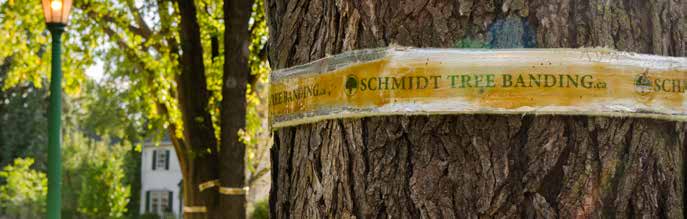
Chris brought on a close-knit team of friends, including key team members Jonah, Caden, and Ian, establishing an early benchmark for workplace culture. The deep trust, camaraderie, and shared work ethic of that crew made the seasonal operation a true privilege to run, reinforcing a foundational belief that business success requires a great team.
A 21-Year Legacy
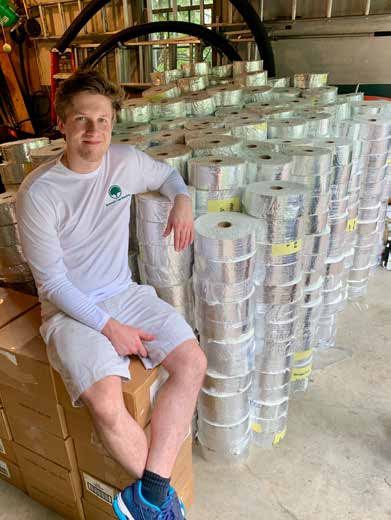
Schmidt Tree Banding protects over ten thousand trees each year and has a customer return rate of 99%. After 21 years of continuous operation, the company was acquired in 2024, marking the end of a significant chapter in the preservation of Winnipeg’s urban forest.