The Bellwether District and Philadelphia’s New Hub for Innovation
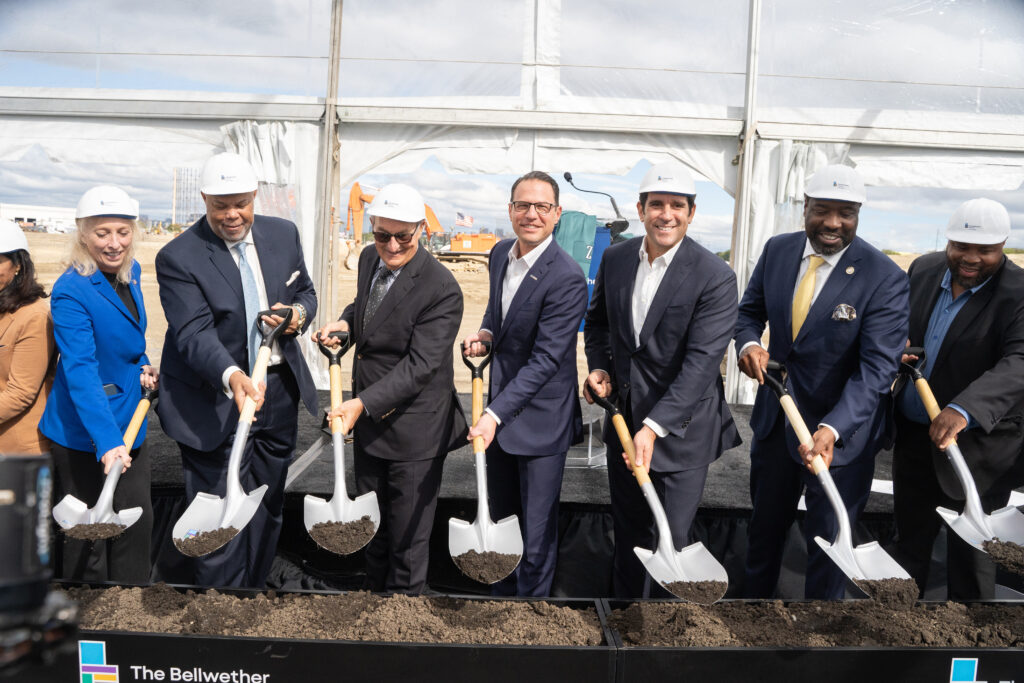
On 1,300 acres in South and Southwest Philadelphia, a former oil refinery is being transformed into one of the most ambitious redevelopment projects in the United States, with more than 14 million square feet of innovation and industrial space planned. For over 150 years, the site was used for petroleum-related storage and refining, growing to become the largest refinery on the East Coast. Now known as The Bellwether District, the site is being reimagined by HRP Group (HRP), a vertically integrated, multi-strategy real estate investment company specializing in complex redevelopment projects.
Philadelphia has long been defined as a city of firsts. The birthplace of American democracy 250 years ago, Philly was also home to the nation’s earliest public library, university, hospital, medical school, and newspaper – institutions that helped shape the country’s intellectual and civic foundation. The city also established the first American stock exchange, underscoring its central role in the nation’s economic development. Pennsylvania more broadly marked a turning point in global industry with the drilling of the first successful oil well in Titusville, sparking one of the earliest oil booms in American history.
“We see this as a once-in-a-generation opportunity and one of the most strategic pieces of property East of the Mississippi. It’s one that can be redeveloped to meet the new economy. This is going to be its own ecosystem – a much healthier ecosystem.”
– HRP Group CEO Roberto Perez –
The Bellwether District builds on this legacy of innovation and reinvention. The site, formerly the Philadelphia Energy Solutions Refinery, is being repositioned as a state-of-the-art industrial and innovation campus designed to support critical economic sectors including e-commerce, life sciences, advanced manufacturing, and logistics. Rather than replicating past industrial models, the redevelopment is aligned with the needs of a modern, technology-driven economy.
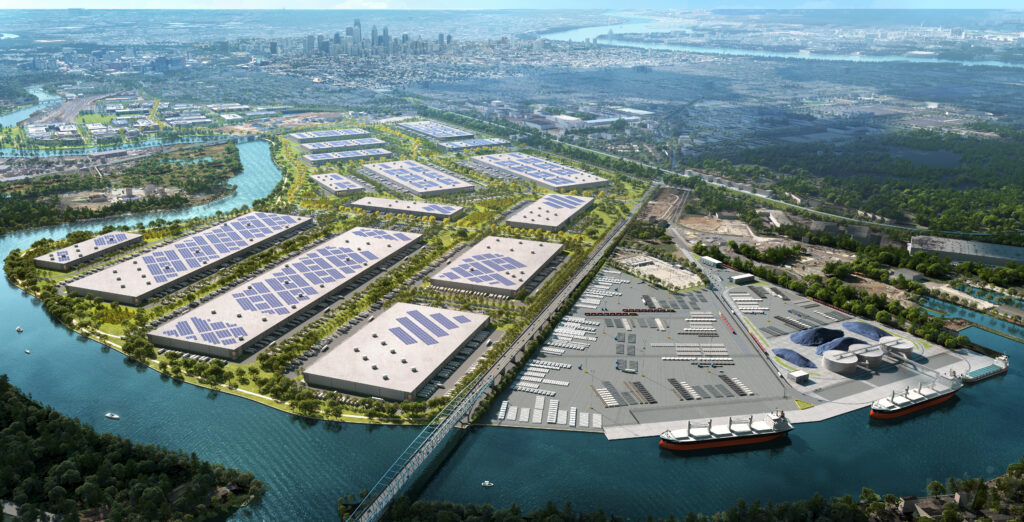
HRP is in the business of transformation, reimagining complex sites across the United States for emerging economic uses. As an owner, operator, and developer, the firm’s expertise spans modern logistics facilities, lifescience ecosystems, and large-scale mixed-use projects. The Bellwether District represents one of its most significant undertakings to date.
“I am super excited by the size and scale of the [Bellwether] project… Not only are they transforming a huge piece of the city with an unmatched vision, but their success will mean that Philadelphia is a whole lot closer to being the number-one city in the country for biotech and life sciences.”
– Philadelphia Mayor Cherelle Parker –
The sheer scale of the campus is rare within a major American city. Located at the center of the Eastern Seaboard, The Bellwether District offers direct access to maritime ports, rail lines, highways, and air transport, connecting global supply chains to Philadelphia’s workforce and consumer markets. Its contiguous footprint allows for large-format development while remaining integrated within the urban landscape.
The name “bellwether,” defined as one that takes the lead or initiative, reflects both the city’s historic role and the project’s aspirations. For more than 250 years, Philadelphia has served as a proving ground for new ideas, institutions, and industries. The redevelopment of this 1,300-acre site continues that trajectory.
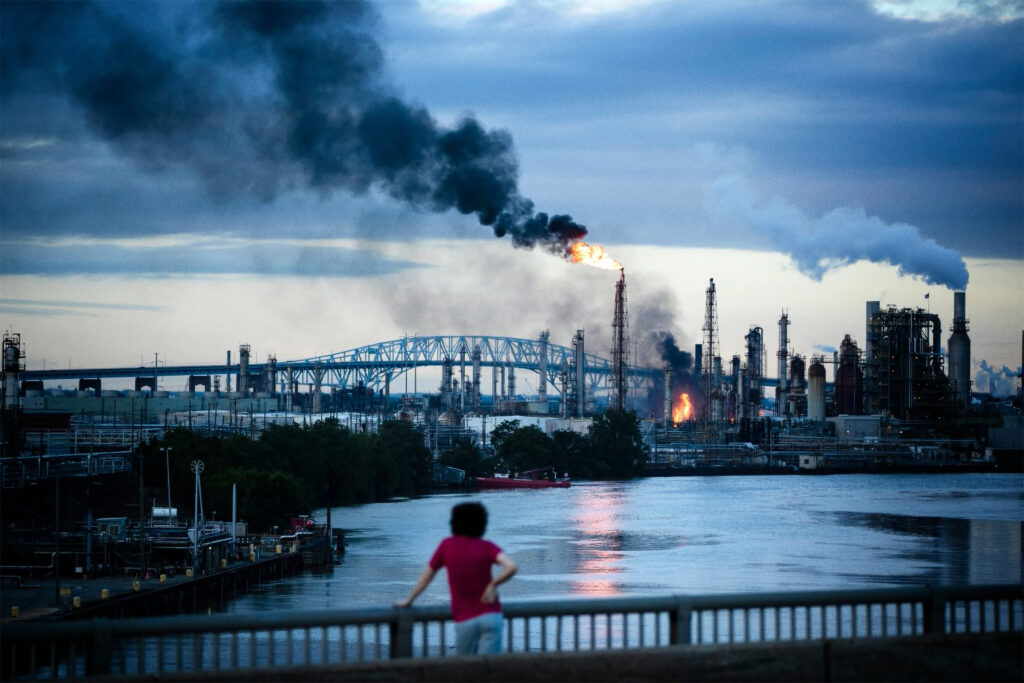
A generational project, The Bellwether District aims to convert a legacy industrial property into a next-generation employment hub. By pairing scale, infrastructure, and location with contemporary design and sustainability principles, the project is positioned as a lynchpin of Philadelphia’s next industrial chapter.
The Bellwether District represents more than a redevelopment effort. It reflects a broader narrative of adaptation – from heavy industry to innovation economy – and reinforces Philadelphia’s enduring identity as a city capable of redefining itself for the future.
BY THE NUMBERS:
- 950 miles of pipeline removed
- 350 tanks demolished
- 390K+ tons of materials reused or recycled
- 4M cubic yards of soil moved for resiliency
- 14M+ SF of new buildings planned
- 20K+ construction jobs projected
- 10K+ permanent jobs projected
- 10K new tree plantings planned