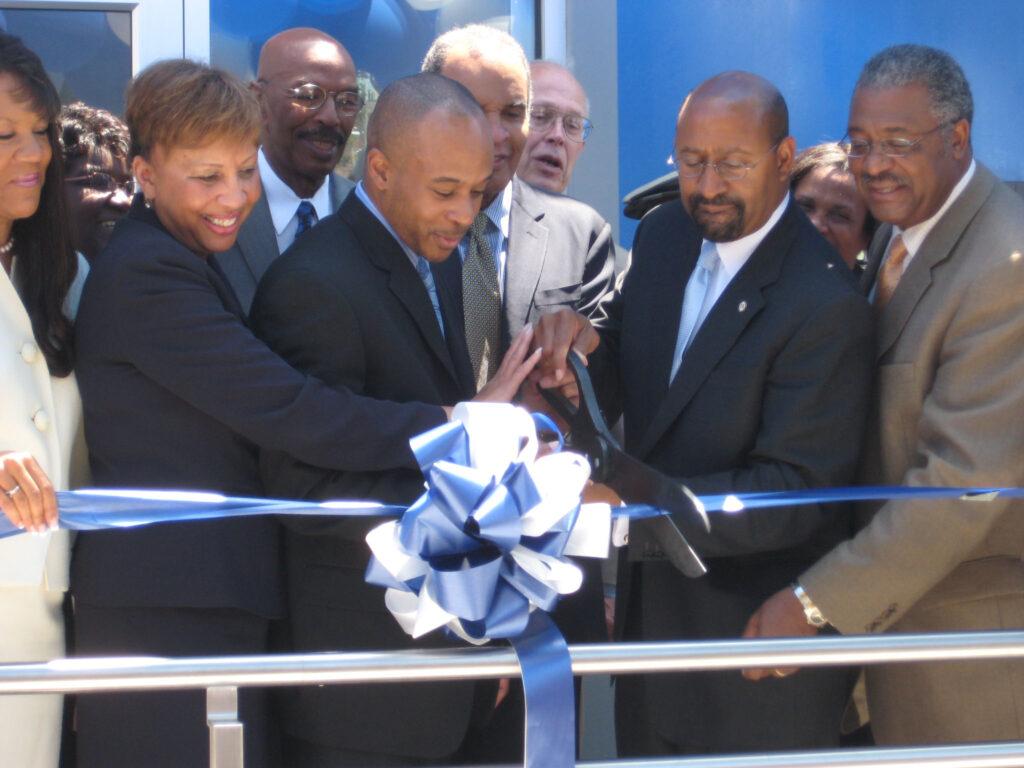
Since opening in 1992 under founder Dr. Emma C. Chappell, United Bank of Philadelphia (“the Bank”) has upheld its mission: driving economic inclusion and opportunity in urban communities. Philadelphia has always been a city of visionaries and entrepreneurs, but vision does not turn into a successful business without capital. As one of the few independent banks and CDFIs in the city, United Bank of Philadelphia is uniquely positioned to help small businesses access the resources they need most. Whether that’s personal guidance, educational materials, digital access, flexible savings and business accounts, or the money to expand, the Bank is there to help businesses that need it the most. A purpose-driven institution is a powerful force for change.
For Evelyn F. Smalls, President and Chief Executive Officer of United Bank of Philadelphia, helping close the access-to-capital gap has shaped much of her professional journey. This commitment deepened as she spent years working in community development and banking, reinforcing her belief that financial institutions influence how opportunity spreads across a city.
“Access to capital can transform ambition into opportunity,” she says. “When people gain the resources to pursue their ideas, the entire community benefits from the results.”
In many Philadelphia neighborhoods, small businesses serve as economic anchors, creating and retaining jobs, revitalizing communities, increasing the tax base, and providing essential services to local residents. Supporting that kind of growth guides the institution Mrs. Small now leads, founded to expand economic opportunity in communities historically overlooked by traditional financial systems.
Supporting local entrepreneurs often leads them to reinvest in their own communities, thereby creating a full-circle business ecosystem. Profits circulate among nearby suppliers, service providers, and property owners. These economic relationships boost neighborhood stability and attract further investment.
Community Banking and Local Knowledge
Community banks, like United Bank of Philadelphia, play a critical role in urban revitalization. Large national banks operate globally, while local and regional lenders remain closely connected to customers within their geographic footprint. These connections guide lending in ways large banks often cannot replicate. Entrepreneurs discuss plans with professionals who know local conditions. Financial histories receive valuable context. Lasting relationships help lending align with real business needs. As one of the few banks headquartered in Philadelphia and one of the city’s Community CDFIs, United Bank of Philadelphia operates with a unique business perspective. “When you truly understand a community, you understand its opportunities as well as its challenges,” Mrs. Small explains. “That knowledge allows financial institutions to support entrepreneurs in ways larger organizations often overlook.”
Community banks recognize potential often overlooked by conventional lending models. They appreciate that local business owners bring deep industry knowledge, strong relationships, and a thorough understanding of their neighborhoods’ needs. When lenders take the time to understand this, they can make financial decisions based on more than just a standard checklist, supporting entrepreneurs and local growth and benefiting both the business and the community.
Strengthening Philadelphia’s Entrepreneurial Economy
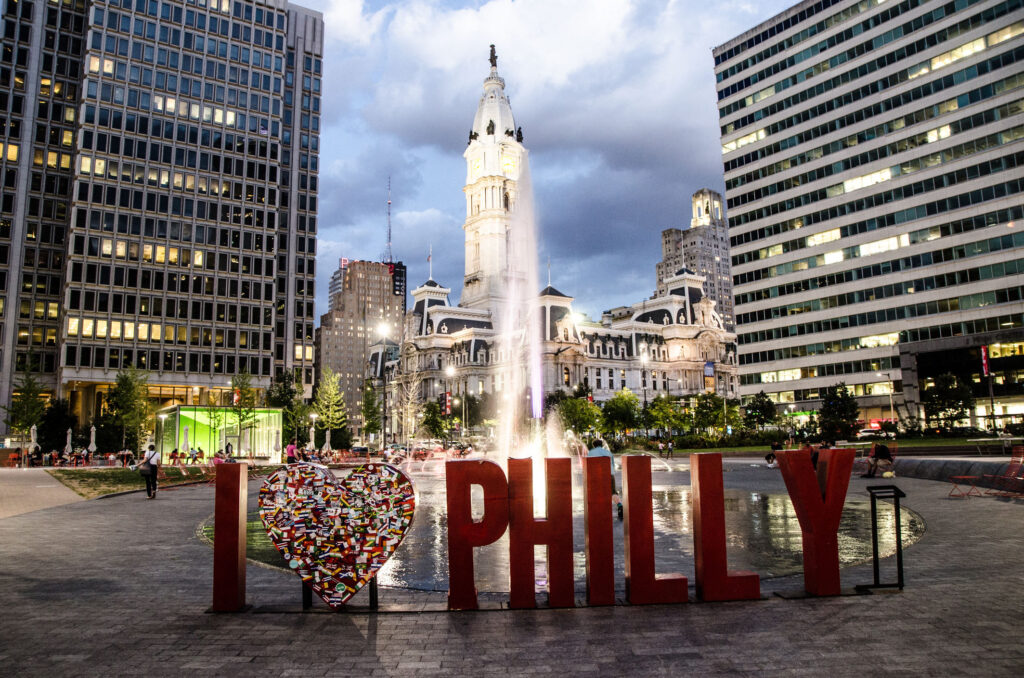
Manufacturing was once the largest driver of Philadelphia’s economy, but as it declined, the city had to reinvent itself. No longer defined by manufacturing, the city now thrives in healthcare, education, technology, hospitality, and professional services. And small businesses drive much of this change. Behind each enterprise stands a founder willing to take risks in pursuit of something better and a financial partner who trusts their vision. “Entrepreneurs are problem solvers,” Mrs. Smalls says. “They see possibilities where others see obstacles, and that mindset fuels the vitality of the city.”
Philadelphia’s entrepreneurial landscape continues evolving as women and founders from diverse backgrounds and industries launch new ventures. From technology startups to neighborhood retailers and creative ventures, businesses across many sectors contribute to the city’s economic energy. Access to capital allows many of these founders to move beyond early planning and begin building organizations capable of creating new jobs and sustaining long-term community growth.
Dr. Chappell founded the Bank with a commitment to keep United Bank of Philadelphia as an important contributor to the Philadelphia economy. Inso doing, the Bank forged many long-term multi-sector partnerships with local corporations and universities that support small businesses including marketing programs and advisory services. In addition, the Bank works in collaboration with other financial institutions to expand its lending capacity with loan participations. The current Executive leadership team continues to embrace the vision and inclusive spirit of collaboration of Dr. Chappell that extends the Bank’s reach and economic impact in the Philadelphia region.
For example, Drexel Athletics and United Bank of Philadelphia launched a unique cause marketing campaign to elevate small businesses in West Philadelphia called the “Small Biz Starting Five.” The program engages and identifies five local small business owners and provides them with support, tools, and capital to help their businesses thrive. Partnerships like this can further expand the Bank’s ability to support more small businesses in the region. Working together, everyone wins!
Leadership and Economic Empowerment
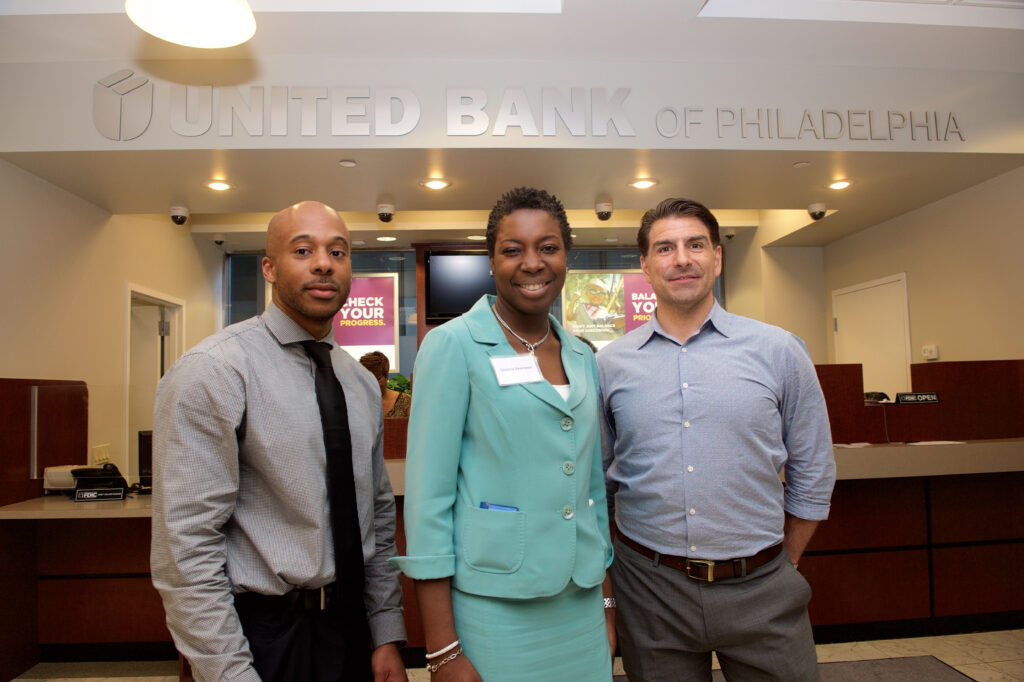
Mrs. Smalls’ experience in community development finance shapes her leadership approach. Her work connects institutions with efforts to expand economic participation and addresses the real challenges that underserved communities face in accessing financial solutions. Economic development requires disciplined management alongside awareness of local realities. Lending decisions must balance sound financial practices with recognition of opportunities to economically empower disadvantaged communities. As Mrs. Smalls states, “When financial institutions stay connected to those they serve, they become true partners in advancement.” The experience Mrs. Smalls gained at First Pennsylvania Bank complimented her passion for economic development and the diversity of financial services. The exposure to the realities of banking and community development elevated awareness and needs with a more thoughtful approach to change. Having direct engagement with banking executives provided a clear vision of how to proceed with balancing banking and economic development to ensure broader and sustainable outcomes.
Lender-borrower relationships develop through consistent engagement and transparency. Trust is built and strengthens the financial environment for local entrepreneurship.
Leadership in community development banking often involves listening as much as providing guidance. Conversations with entrepreneurs, nonprofit leaders, and residents help identify where financial support can produce lasting impact.
Expanding Access to Financial Systems
Across the United States, economic mobility often depends on access to financial services. Communities historically excluded from mainstream banking frequently face barriers to obtaining loans, investment capital, or financial guidance, or are forced to rely on predatory lenders.
Community banks exist to address these challenges by supporting local projects that invest in such areas as affordable housing, healthcare facilities, and other vital services. Financial education programs often offered by community banks also help expand economic opportunity.
As Brenda Hudson-Nelson, CFO at United Bank of Philadelphia, states, “Economic progress becomes stronger when more people have the chance to participate. Communities thrive when entrepreneurs, families, and organizations gain access to the tools they need to grow.” United Bank of Philadelphia remains committed to partnering with those determined to shape a brighter future for their neighborhoods. By continuing to prioritize inclusive growth and local empowerment, the Bank helps lay the groundwork for vibrant, resilient communities in Philadelphia and beyond.
A Future Powered by Opportunity
As Philadelphia continues to evolve with new industries emerging and entrepreneurs shaping the next generation of businesses, growth will come not only from large corporations but also from neighborhood enterprises, startups, and community-driven initiatives.
Access to capital, combined with long-term financial relationships, allows entrepreneurs to transform ideas into businesses that strengthen local economies. For Mrs. Smalls, the purpose behind the work remains clear. “Philadelphia has always been a city of resilience and creativity,” she says. “When people gain the financial support needed to pursue their ideas, communities gain the chance to grow stronger.”
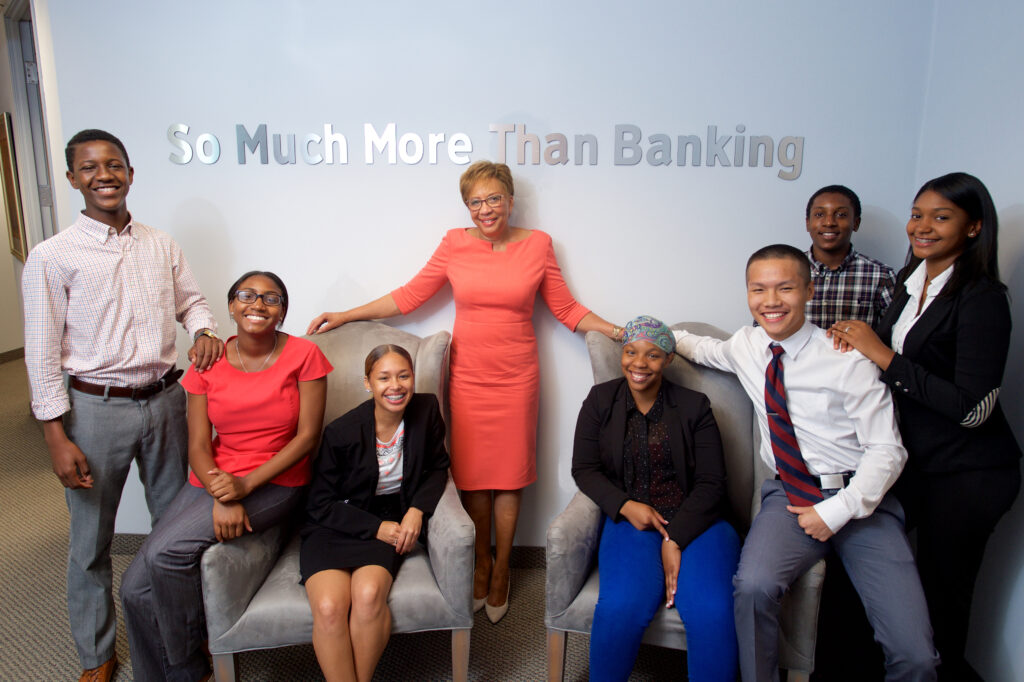
Through leadership grounded in community development finance and a mission focused on expanding financial access, the Bank continues to ensure that opportunity reaches communities throughout Philadelphia. United Bank of Philadelphia is so much more than Banking, it’s IMPACT!
PTTI and United Bank of Philadelphia: Creating Skilled Job Opportunities in Philadelphia Together
At United Bank of Philadelphia (“the Bank”), our leadership and dedicated staff share a deep commitment to strengthening Philadelphia’s small business community. One powerful example of this commitment is our partnership with Mr. Sherman McLeod, founder, CEO, and President of Philadelphia Technician Training Institute (PTTI). Through vision, determination, and the right financial support, Mr. McLeod transformed his dream into a thriving technical training institution that now helps Philadelphians prepare for high-demand careers across the region.
When Mr. McLeod approached the Bank with his vision for PTTI, it closely aligned with our mission to support community-centered economic development. A Drexel University graduate and longtime advocate for economic empowerment, Mr. McLeod understood firsthand the challenges for communities with limited access to stable career pathways. Growing up in one of Philadelphia’s neighborhoods with few job opportunities, he recognized the urgent need to create training programs that lead to meaningful employment in skilled trades and technical industries.
His successful corporate career at Johnson & Johnson Medical also helped shape his vision for PTTI, and he launched the institute with a clear purpose: to provide practical, hands-on education that leads directly to employment. PTTI offers classes in welding, advanced manufacturing, piping technology, concrete masonry, construction, automotive technology, electrical work, HVAC, sterile processing, and other high-demand industries. PTTI reports one of the highest job placement rates in America, demonstrating the strength of its program.
United Bank of Philadelphia worked closely with Mr. McLeod to understand both his short-term needs and long-term goals. To help launch and grow the business, the Bank extended financing that allowed PTTI to expand its operations and strengthen its foundation. With Mr. McLeod’s leadership and UBP’s support, PTTI has grown into a pivotal workforce development institution that has helped more than 7,000 graduates move toward sustainable careers.
In addition, the Bank’s financing helped Mr. McLeod acquire ownership of PTTI’s historic building, the former Berean Institute. This acquisition was completed with his business partner and childhood friend, Donal Jackson, who serves as PTTI’s Director of Education. Together, they helped preserve a historic property while positioning PTTI for long-term growth and stability.
Developing other powerful relationships has helped PTTI expand its mission beyond the traditional classroom. The management at the Philadelphia Correctional Center made a bold decision to educate its inmates in HVAC, providing participants with practical technical training to reduce recidivism.
The institute has also rapidly scaled its career development capabilities beyond its physical campus using world-class virtual reality technology. Through this innovation, PTTI can prepare more students for technical careers across America, inside inner cities, and across rural communities.
Reflecting on the relationship, Mr. McLeod shared, “United Bank of Philadelphia brings a personal touch to their client relationships. They take the time to understand the customer’s needs, their experience, and their vision, and make decisions based on more than just a standard checklist.”
Our partnership with PTTI reflects the purpose of United Bank of Philadelphia: to provide banking solutions that empower local businesses, expand opportunity, and generate positive social impact. By combining financial resources with the vision of entrepreneurs like Mr. McLeod, the Bank is helping build a stronger and more hopeful future for Philadelphia.