When Dr. Jim Kyung-Soo Liew founded SoKat in 2014, the problem he set out to solve wasn’t a shortage of AI innovation. It was separation. Research was accelerating inside the world’s leading universities. Yet much of that intelligence stalled before it reached the institutions that needed it most. Federal agencies responsible for national security, financial stability, and public infrastructure were asking a different question: How does this actually work, securely, at scale, under real pressure?
SoKat was built to operate in that gap. Not by softening academic rigor, but by carrying it across the divide into production.
“In the classroom, I often tell my students that brilliant research doesn’t change lives unless it’s applied,” Jim says. “From the beginning, our focus at SoKat has been translation. Taking the strongest AI thinking and building systems that survive real environments, with real consequences.”
That focus has shaped SoKat into one of Maryland’s most formidable operational AI firms. Founded in 2014 and focused on federal mission work since 2017, SoKat is headquartered in Baltimore, Maryland, and is certified as an SBA8(a), WOSB, and EDWOSB small business. It is trusted by federal agencies and commercial partners who cannot afford hype, opacity, or experimental dead ends.
An Academic Engine, Rebuilt for Reality
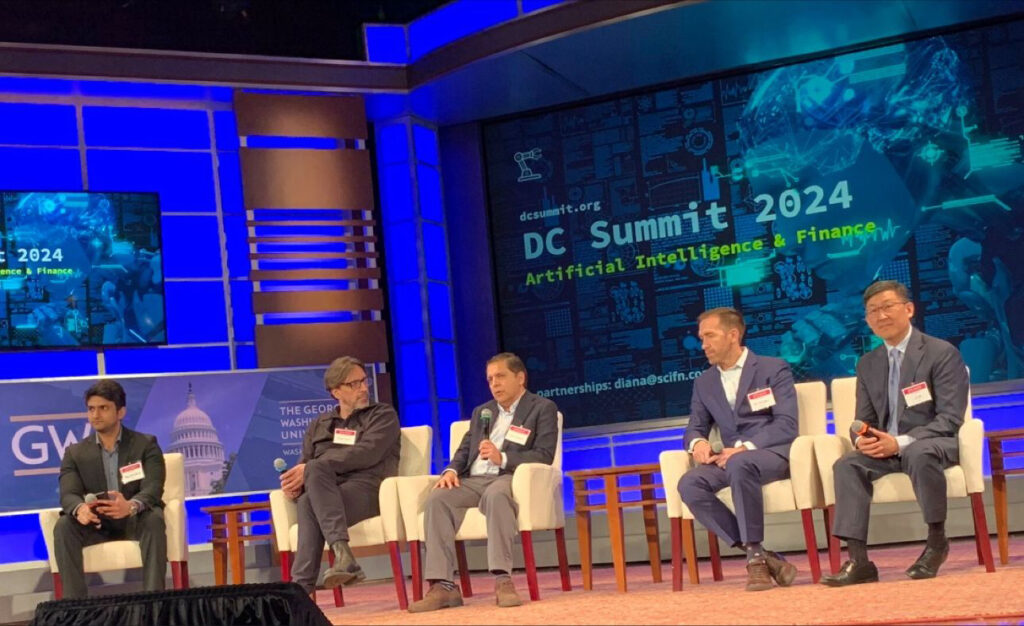
SoKat’s strength begins with its people. Its leadership bench includes faculty from Johns Hopkins University, and its engineers are largely drawn from the same ecosystem. But this is not academic homogeneity. Team members come from astronomy, applied mathematics, statistics, computer science, quantitative finance, and law.
Jim himself exemplifies that dual identity. He is currently adjunct faculty at the Johns Hopkins Whiting School of Engineering, teaching AI Finance in the school’s Executive Education program, whose inaugural cohort is composed of senior banking executives from the largest bank in Cameroon. Previously, Jim taught for more than 13 years at the Johns Hopkins Carey Business School, where he earned the Dean’s Award for Faculty Excellence from 2015 through 2019 and was recognized as one of the top quantitative finance professors in the United States. He formally retired from Carey in December 2025 to focus on SoKat and the Whiting executive program.
“Real missions don’t live inside a single discipline,” Jim explains. “I remind executives that you need people who understand data at a deep level, architect secure systems, grasp regulatory realities, and still push the frontier. The discipline is in combining all four.”
Operational AI, Not Lab Experiments
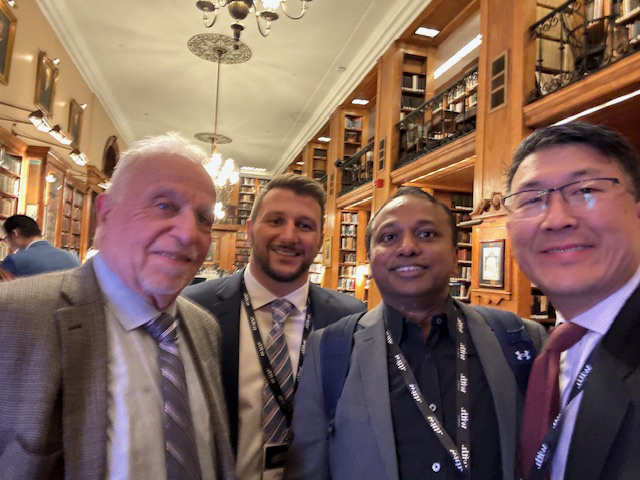
At the core of SoKat’s work is what the company calls Operational AI. Not lab demonstrations, but systems engineered to endure, built from day one to meet NIST-aligned security mandates, mission objectives, and enterprise scalability requirements.
That approach was validated in 2025, when SoKat was named an awardee on a U.S. Department of the Treasury Office of the Chief Information Officer multiple-award IDIQ for AI-powered coding and AI chat tools, selected from a competitive field of 28 bidders. The vehicle, with a total potential value exceeding $50 million, recognized SoKat’s ability to deliver secure, usage-based, explainable AI systems suitable for enterprise-wide federal deployment.
“This wasn’t about novelty,” Jim notes. “It was about trust. Proving that AI can operate inside the strictest environments without compromising security, compliance, or transparency.”
The Treasury IDIQ joined a track record built through open, head-to-head competition: the GSA Applied AI Challenge for Large Language Models (2023), the IRS Pilot Award (2022), VA Mission Daybreak (2022), the VA National AI Institute Tech Sprint (2021, first in Patient Experience), the ACT-IAC Igniting Innovation Award (2021), and the GSA AI/ML Challenge (2020). Each was earned through rigorous, juried competitions in applied AI and machine learning, where SoKat’s solutions were benchmarked against some of the most capable federal contractors and academic teams in the country and won on performance.
Educating the C-Suite: Where AI Success Begins
One of Jim’s strongest convictions is that successful AI adoption begins at the top of the organization.
“Organizations that extract real value from AI are the ones where senior leadership understands the technology deeply enough to set strategy, not just approve budgets,” Jim says. “When the CEO, CFO, and board speak fluently about models, data, and risk, adoption accelerates and ROI follows.”
He points to JP Morgan’s Jamie Dimon and his ambition of building a truly agentic bank as a defining signal. “Dimon has set the standard. Other leaders across banking, insurance, healthcare, and defense will need to step up in the same way. AI literacy at the executive level is no longer optional.”
SoKat is positioned to meet that need. Through its executive education partnerships, advisory engagements, and the AI Finance program at Johns Hopkins Whiting, SoKat helps senior leaders quantify ROI, identify the right first use cases, and build the internal muscle to scale.
Trust Is Engineered, Not Assumed
As AI systems grow more capable, they also grow more opaque. SoKat has taken a firm stance against that trajectory. Explainability is not optional. Models are auditable. Decisions can be traced. Performance is measured not in benchmarks alone, but in real mission outcomes.
“Our clients answer to oversight bodies, leadership, and the public,” Jim notes. “If AI can’t be explained, it can’t be trusted. And if it can’t be trusted, it won’t last. That is the first principle I teach, and the first principle we engineer to.”
That philosophy underpins initiatives such as SoKat’s collaboration with the Treasury Department’s Office of the Comptroller of the Currency (OCC) through the OCC AI Solutions Lab, where mission-aligned systems are developed and refined with stakeholders well before deployment pressure sets in.
Leadership and Culture
SoKat is led by CEO Susan An, Esq., an attorney with a JD from the University of Maryland and experience spanning federal compliance, hedge fund governance, and technology commercialization at Johns Hopkins Technology Ventures. A member of the SBA Emerging Leaders program in Baltimore and an Orange Slices AI Engage Federal Financials honoree, Susan brings a rare combination of legal rigor and operational discipline to SoKat’s federal practice. Inside the company, innovation is driven by conversation, not hierarchy. The culture rests on three principles: open exchange of ideas, deep commitment to client service, and the absence of ego. Titles matter far less than clarity of thinking.
“We see talent development as national infrastructure,” Susan notes. “If AI is going to play a lasting role in government, we need people who understand responsibility as deeply as performance.”
Maryland Roots, National Impact
Headquartered in Baltimore, SoKat sits at the center of one of the nation’s densest concentrations of federal agencies and research institutions. Its impact is unmistakably national and increasingly essential.
“AI isn’t optional anymore,” Jim says. “But responsible, secure, effective AI is still rare. Educating leaders, engineering trust, and delivering mission outcomes. That is the curriculum, and that is the work.”