

Inside the moments when neurological decisions cannot wait, information becomes one of medicine’s most valuable tools. Helping clinicians gain that information faster has driven Longeviti from its earliest days, leading to technologies designed to make real-time brain imaging more accessible than ever before.
“What drives us every day is the belief that people deserve to understand their neurological health in real time,” says CEO and co-founder Jesse Christopher. “Our platforms help patients and caregivers manage complex neurological conditions through affordable, instant ultrasound imaging and other advanced neuro technologies.”
Challenging Long-Held Assumptions
Some of the earliest prototypes emerged in a home garage, where Jesse and the founding team began testing ways to overcome obstacles that had limited neuroinnovation for years. Experience gained inside large corporate environments was paired with an entrepreneurial willingness to experiment, build, and refine ideas wherever progress could be made. Those unconventional beginnings eventually evolved into FDA-cleared neurotechnology platforms developed alongside surgeons, engineers, programmers, and clinical specialists.
“We’ve always believed in being pragmatic,” he says. “Don’t talk about it. Be about it. One in five people will experience a neurological disorder during their lifetime, so we wanted to build technology that makes a real difference rather than simply discussing what could be done.”
Thousands of patients have already benefited from the organization’s technologies, reflecting a philosophy that measures innovation by patient impact rather than ambitious ideas alone.
Making Brain Imaging More Accessible
Helping physicians gain faster, clearer insight into what is happening inside the brain has guided the organization’s work from the start. For decades, neurological imaging has depended largely on MRI systems that are expensive to install, confined to specialized facilities, and unavailable in many situations where immediate answers matter. Although ultrasound has long offered enormous potential, producing reliable images through the skull remained an obstacle that limited its use in neurological care.
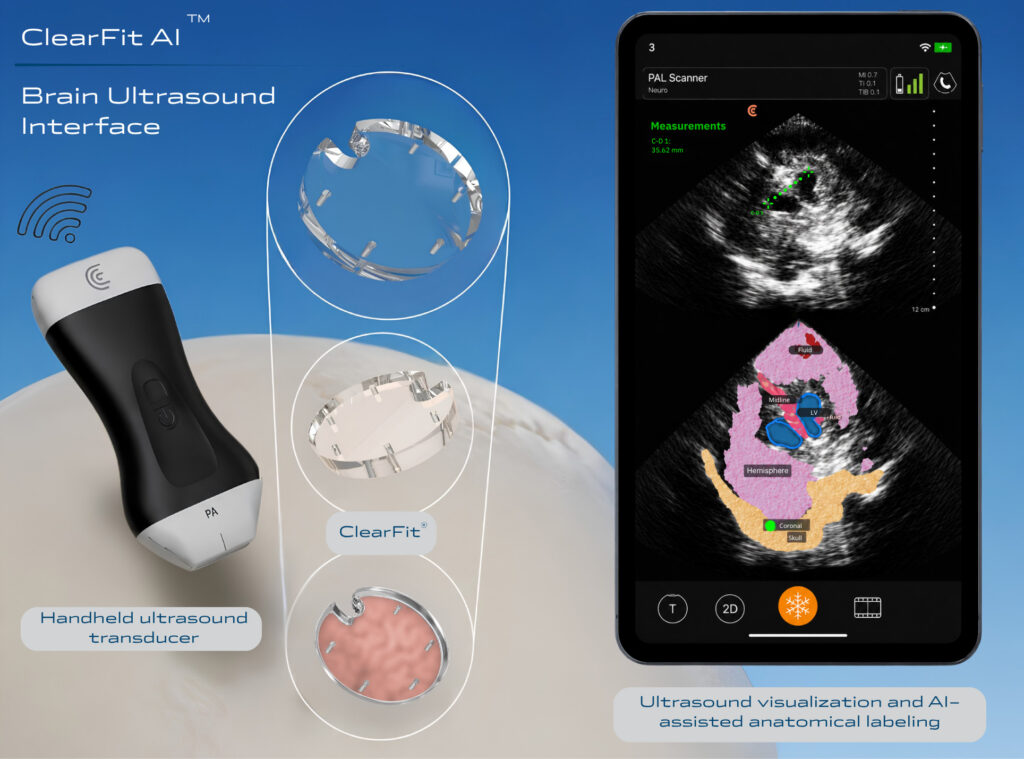
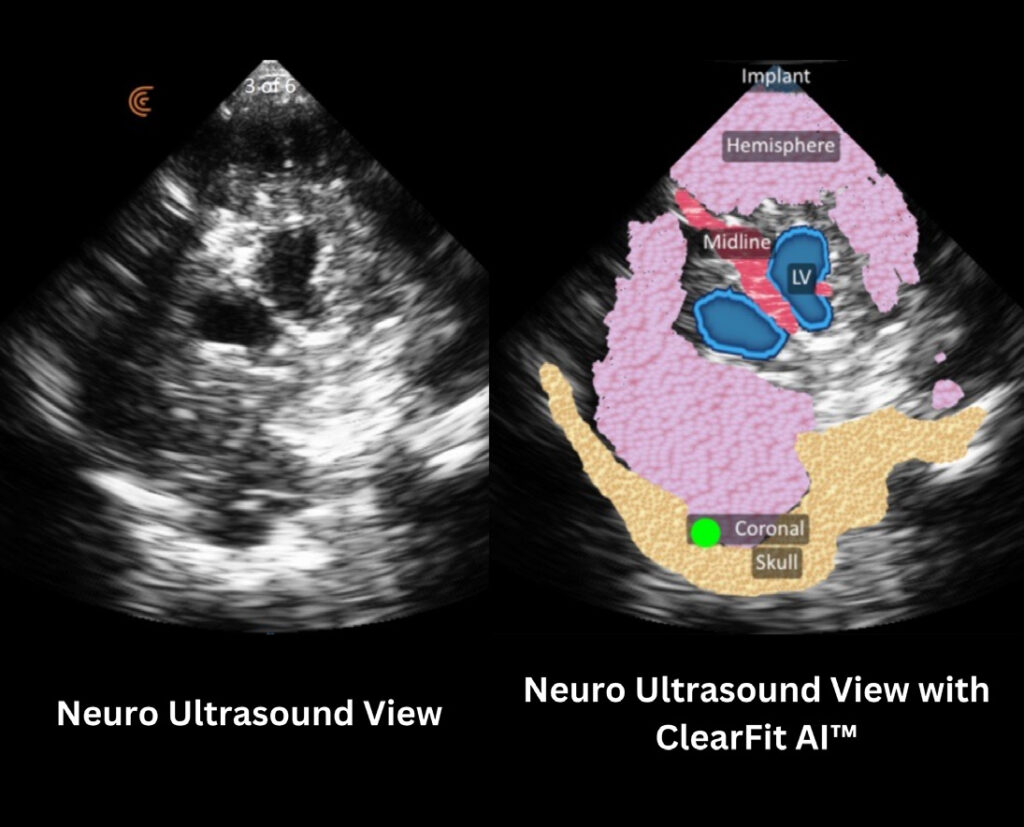
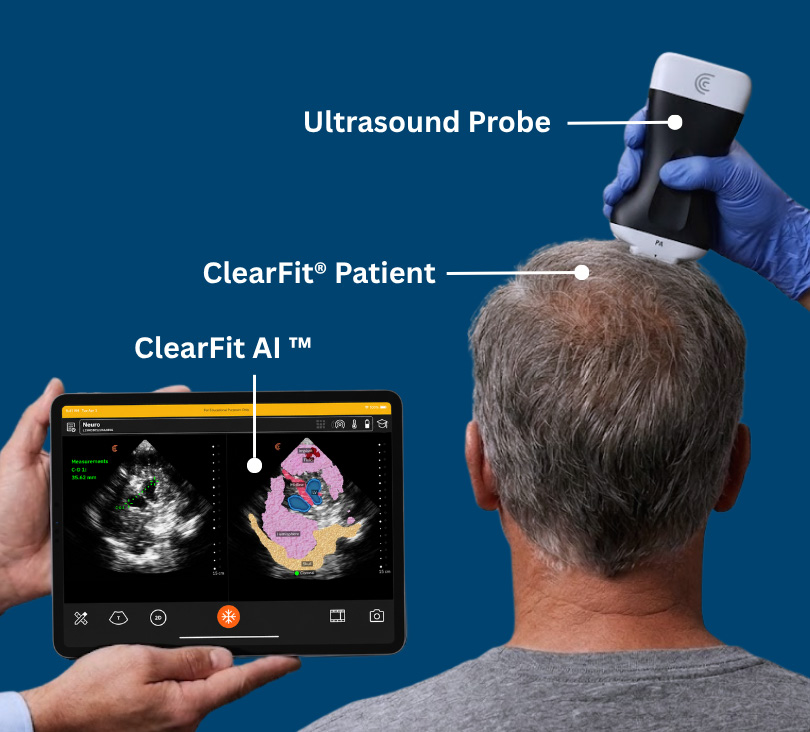
The company’s ClearFit platform overcomes that challenge through handheld ultrasound technology enhanced with artificial intelligence. Operating wirelessly and delivering images directly to devices as familiar as a smartphone, the platform allows clinicians to observe the brain while patients remain mobile. AI-generated overlays help interpret what appears on screen, supporting faster clinical decisions without requiring patients to enter an MRI suite.
“Before this, observing a living, active brain in real time simply wasn’t practical in most clinical environments,” he explains. “Now we’re putting that capability into a handheld device that fits in the palm of your hand.”
Another important advantage comes from reducing reliance on repeated CT scans, limiting radiation exposure while giving physicians another tool for evaluating neurological conditions in real time.
Building Confidence One Milestone at a Time
Bringing new neurotechnology into hospitals and clinics required far more than a promising idea. Multiple FDA clearances, dedicated Centers for Medicare & Medicaid Services reimbursement for the ClearFit platform, and a growing patent portfolio have each expanded the organization’s ability to reach more clinicians and patients. Every milestone has required years of testing, validation, regulatory review, and close collaboration across the healthcare community.
“In healthcare, trust is earned over time,” he says. “There are no ethical shortcuts. Every milestone represents years of work, testing, validation, and collaboration.” That same discipline continues guiding each new platform from early development through clinical adoption.
Contributing to Maryland’s Innovation Economy
Many employees joined the organization early in their careers and have since advanced into increasingly specialized engineering, technical, and leadership roles as it has grown. Their progression reflects a broader commitment to developing talent while strengthening Maryland’s life sciences community.
Collaboration has become equally important as universities across the United States and around the world now work alongside the organization, bringing internationally recognized neurosurgeons, scientists, engineers, and researchers into projects based in Baltimore. New initiatives with the Big Ten Neuro Consortium unite 18 universities to deepen understanding of blood management technologies, while collaborations with Duke University, Vanderbilt University, and Johns Hopkins University continue advancing research involving adult hydrocephalus patients.
“Some of the biggest advances happen when great institutions work together,” he says. “Our role is to build platforms that allow those collaborations to create measurable improvements for patients.”
Looking Toward the Next Generation of Care
Research already underway points toward applications that reach well beyond today’s technologies. Jesse believes those advances could improve care for people living with Parkinson’s disease, Alzheimer’s disease, oncology-related neurological conditions, and other complex disorders.
“Trust comes from consistently producing meaningful results,” Jesse says. “We want to keep building technologies that improve patients’ lives today while making even greater advances possible tomorrow.”
Each step forward reflects the same commitment that shaped the organization’s earliest prototypes: solving practical clinical problems with technology that physicians can use where and when it matters most. By expanding access to real-time neurological imaging and continuing to push the boundaries of portable neurotechnology, Longeviti is helping redefine how brain health is understood, monitored, and managed.

Jesse Christopher, CEO and co-founder