
From transportation networks to environmental stewardship, KCI’s multidisciplinary team is redefining what it means to engineer progress.
The architectural, engineering, and construction (AEC) industry is constantly evolving at a rapid pace, driven by advancements in technology, sustainability, and design thinking. As cities grow and infrastructure needs intensify, firms are embracing innovation to deliver smarter, safer, and more resilient solutions. Among the leaders shaping this transformation is KCI Technologies (KCI), a multidisciplinary firm whose legacy of ingenuity and collaboration not only drives cutting-edge projects but also strengthens the communities it serves. By embedding community-focused planning and engagement into every project, KCI ensures that its work enhances the city’s livability, connectivity, and resilience, reinforcing its role as a trusted partner in shaping the places where people live, work, and thrive.
While KCI’s roots stretch back nearly seven decades, its story in Nashville reflects how a legacy of innovation can continue to evolve at the local level. As a rapidly growing firm, KCI first established a presence in Nashville in 2007. Having noticed a gap in the market, the team opened a new office location with a specific interest in meeting the area’s needs. The company became one of the first to provide comprehensive natural resources services within Nashville and the surrounding area, earning reputable contracts with significant entities like the Tennessee Department of Transportation (TDOT), which the firm still holds today.
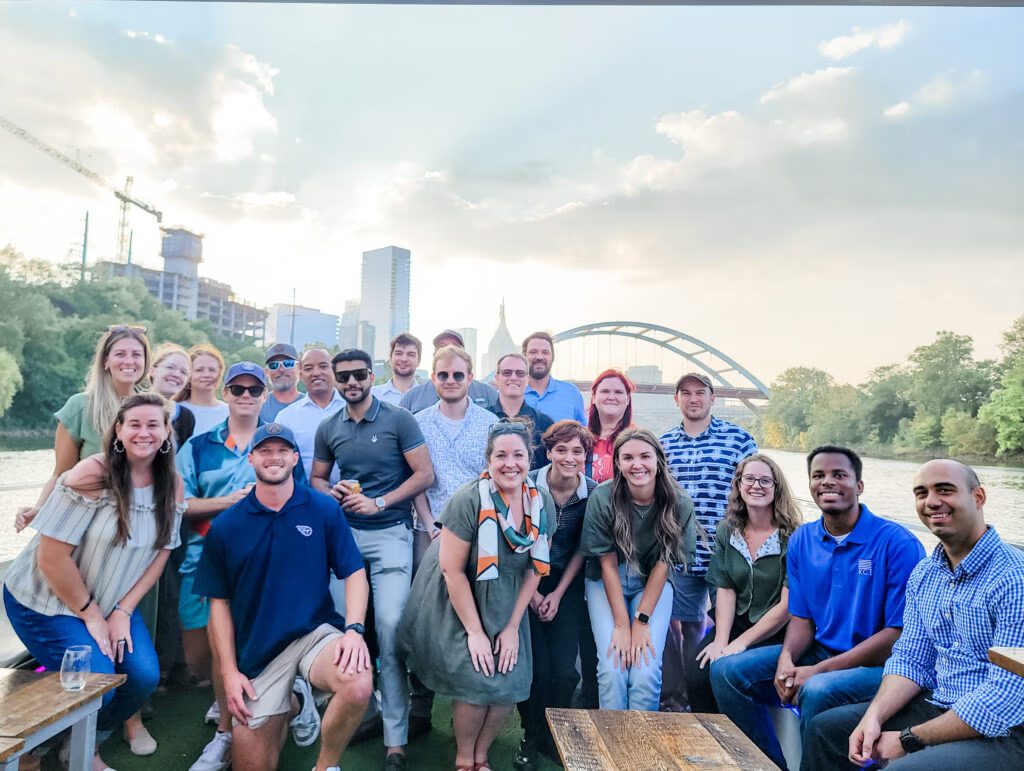
Beyond engineering excellence, KCI’s Nashville office has cultivated a culture centered on collaboration, camaraderie, and community. The team frequently hosts friendly in-office competitions such as office olympics and putt-putt tournaments that strengthen relationships and foster creativity. Outside of work, staff members regularly volunteer with local organizations, coordinate STEM outreach events to inspire future engineers, and organize seasonal donation drives to support families in need during the holidays. These initiatives reflect KCI’s belief that a strong workplace community naturally extends into stronger partnerships with the clients and cities they serve.
Since the Nashville office first opened its doors, the team’s services have contributed to the success of innumerable citywide initiatives. As the office continued to expand through the acquisition of other local companies and the addition of new service lines, transportation-oriented projects rose to prominence. This strategic growth has positioned KCI as a trusted partner in shaping Nashville’s infrastructure, from revitalizing major corridors to advancing sustainability in local neighborhoods. Over the years, the firm has not only earned a reputation with state and government clients for delivering exceptional results and economically considerate approaches, but also delivers tailored, scalable solutions for a wide range of local private sector clients. Leading with this unwavering commitment to excellence, the team’s efforts have been recognized with numerous awards from professional organizations, including the Urban Land Institute’s (ULI) and American Council of Engineering Companies’ (ACEC) Nashville chapters.

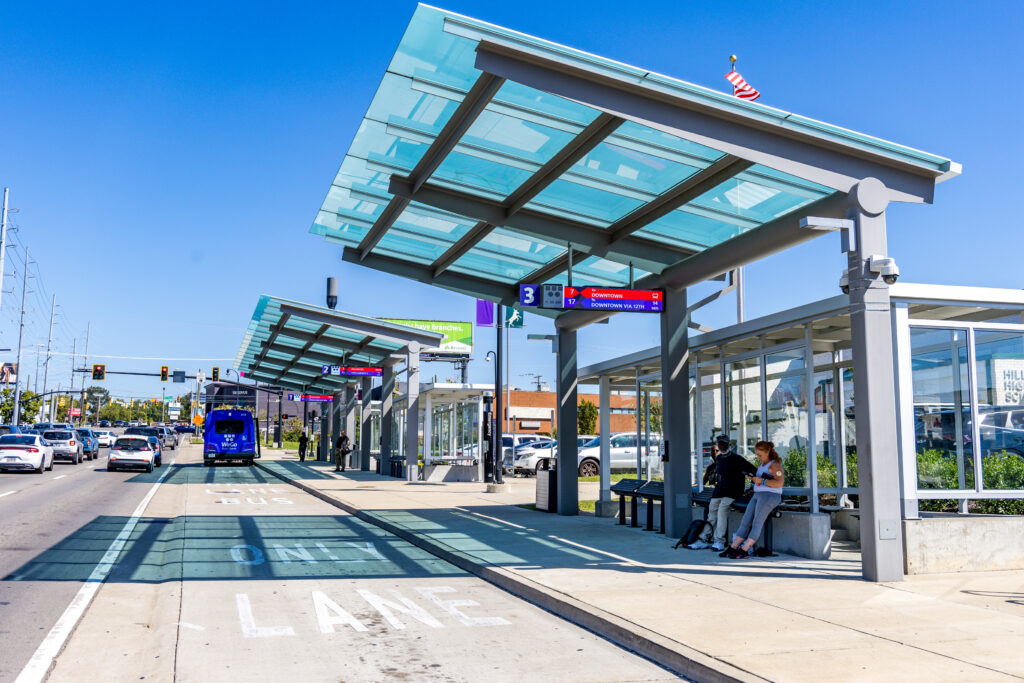
KCI’s long-standing partnerships in Tennessee, which include Metro Nashville and the Nashville Department of Transportation and Multimodal Infrastructure (NDOT), have given the team a deep understanding of local transportation needs. One of the most visible examples of this is the Demonbreun Street bikeway project. As one of the most heavily used bikeways in Davidson County, unauthorized parking and loading often blocked the bikeway and forced cyclists into bustling vehicular traffic, fostering safety concerns for multi modal mobility.
KCI was tasked with developing innovative solutions to protect cyclists while enhancing connectivity and accessibility for local businesses. The team strategically led efforts from stakeholder engagement and conceptual design through final design, permitting, utility coordination, and construction assistance. There designed street shifted parking and loading toward the center of the roadway, creating space for a fully protected bikeway between the parking lane and the sidewalk, thereby improving safety without compromising commercial needs. Additionally, the team oversaw the establishment of fully protected intersections, a pedestrian hybrid beacon for safer crossings, an extended median, and new curb space management strategies, comprehensively addressing a previously challenging corridor. Today, the corridor stands as a model for how smart design and client collaboration can enhance safety and strengthen the community’s connection to its urban core.

As the local transportation network evolves, KCI continues to explore new ways to make mobility safer for everyone. Having earned public recognition, the Nashville team was featured by WKRN News 2 for their work restructuring the city’s pedestrian signal system. With up to 1,000 pedestrians navigating bustling intersections during the busiest time of the day, KCI was tasked with implementing a standardized “Leading Pedestrian Interval,” which allows individuals utilizing the crosswalk a head start, typically between 3 and 7 seconds, to step into the crosswalk before parallel traffic flow is allowed to begin. This increased timing provides advance time for pedestrians to establish their presence in the intersection and be seen by drivers. Since the establishment of these signaling improvements, data have shown an approximate 13% reduction in pedestrian-vehicle accidents.
In addition to traditional transportation infrastructure enhancements, the Nashville team also contributed to NDOT’s first predictive high injury network (HIN). Unlike traditional crash analyses that primarily review outcomes post-event, this approach seeks to proactively identify areas of high risk for crashes before they occur. The study relied on roadway characteristics, adjacent land uses, traffic volumes and speed data, and KCI’s local knowledge to create Nashville’s first Kinetic Energy Risk Factor (KERF) network. By analyzing these factors alongside historic crash data, KCI’s team was able to contribute to NDOT’s first predictive HIN. Information garnered through the study gives transportation professionals a deeper understanding of the inherent risk that exists today and provides insight on how to improve roadway designs to prioritize safety improvements, and better predict the effectiveness of future mitigation strategies.
“KCI’s Nashville team is passionate about finding impactful solutions that meet community needs. Whether it is improving safety, restoring natural spaces, or developing tailored technological advancements, we are dedicated to supporting the well-being of our city.”
– Beth Ostrowski, PE, PTOE, Transportation Regional Practice Leader –
Whether advancing mobility through transportation improvements or preserving the city’s natural waterways, KCI’s expertise encompasses both the built and natural environments to support a safer, more resilient Nashville. The firm offers a broad portfolio of related services, including environmental mitigation crediting, dam removal, environmental planning, stormwater management, and environmental construction, each tailored to meet the evolving needs of the community. By supporting local initiatives through comprehensive ecological expertise, the team aims to encourage a prudent balance between infrastructural development and environmental stewardship, thereby contributing to both engineered advancement and ecological preservation.
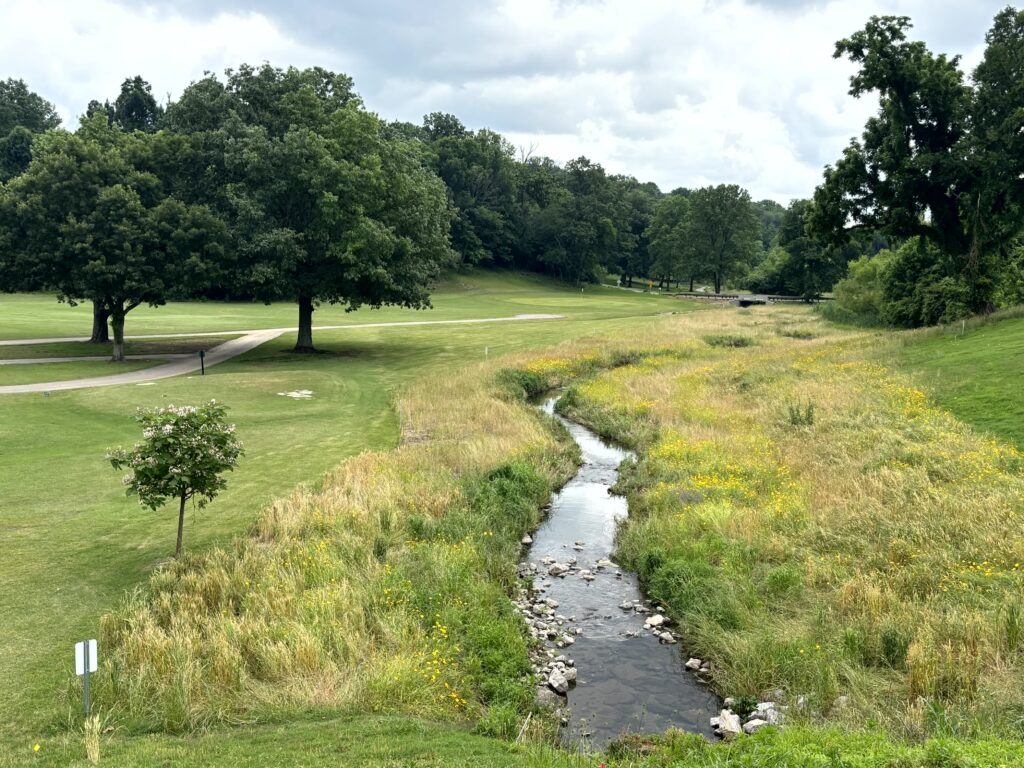
KCI recently participated in a high-visibility natural resources project at Shelby Park. This project contributed to a larger municipal initiative aimed at expanding the city’s water treatment plant by providing stream mitigation to satisfy the project permit requirements. For the stream restoration, KCI led coordination among multiple partners, including Metro Parks and the affected golf course, to identify, design, obtain permits for, and implement nearly 1,500 feet of urban stream restoration. The team ensured the design met state and federal permitting requirements while improving hydrology and ecological function throughout the highly urbanized watershed. The undertaking required creative problem-solving, such as addressing unexpected utilities and accommodating natural springs that emerged during construction, while meeting a strict timeline. Once completed, the restoration project delivered long-term ecological and social benefits for the surrounding community through improved stormwater conveyance, flooding reduction, and more resilient green spaces for members of the community.
As the team continues to evolve alongside Nashville’s growing infrastructure needs, KCI is also redefining how technology supports engineering through solutions like the transformative Model-as-a-Service platform BRYX. The pre-trained computer vision, machine learning, and computation models allow users to utilize emerging technologies without requiring model training or specialized expertise, providing clients with innovation that is both accessible and intuitive. Since its initial launch, the platform has been recognized with an AI Breakthrough Award, earning the title of “Best AI-based Solution for Construction” by leading marketing intelligence organization AI Breakthrough.
For nearly two decades, KCI’s Nashville office has played an integral role in strengthening the city’s infrastructure and enhancing its natural environment. As the team looks to expand its National Environmental Policy Act (NEPA), mechanical, electrical, and plumbing (MEP) design, and construction engineering and inspection services across Tennessee, its focus remains on advancing innovative solutions that support the region’s ongoing growth. Through this commitment, KCI continues to create safer, smarter, and more sustainable communities for generations to come.