The United Nations agency for the world of work.
The ILO was founded in 1919 on the conviction that universal and lasting peace can be established only if it is based on social justice. The ILO brings together governments, employers and workers from its 187 Member States in a human-centred approach to the future of work based on decent employment creation, rights at work, social protection and social dialogue. The ILO’s tripartite membership drafts, adopts and monitors the implementation of international labour standards on key world of work issues i.e. ILO Conventions and Recommendations. The ILO undertakes research and data collection across the range of world of work topics. It publishes flagship reports and a wide range of publications and working papers. Its globally renowned set of statistical databases are maintained and updated with nationally sourced labour market data.
The ILO manages a wide range of development cooperation projects in all regions of the world. Realized in partnership with development partners with activities in the respective countries, these projects aim to create the conditions for advancing social justice, promoting decent work i.e. delivery of the ILO decent work agenda comprising:
- DECENT JOBS – Not just any jobs. The ILO advocates investment in decent and green job opportunities, skills development, and economies that promote sustainable livelihoods.
- SOCIAL DIALOGUE – Strong and independent workers’ and employers’ organizations are central to increasing productivity, resolving world of work disputes and helping build cohesive societies.
- SOCIAL PROTECTION FOR ALL – The ILO promotes universal social protection to ensure access for all people – including families with children – to healthcare and income security, particularly in cases of unemployment, sickness, disability, work injury, maternity, old age, or loss of a main income earner.
- RIGHTS AT WORK – The ILO prioritizes recognition and respect for the rights of all workers, including representation for the most vulnerable. It works to ensure that the international labour legal framework is relevant to a changing world of work.
Respect for Human Rights and International Labour Standards in Lesotho
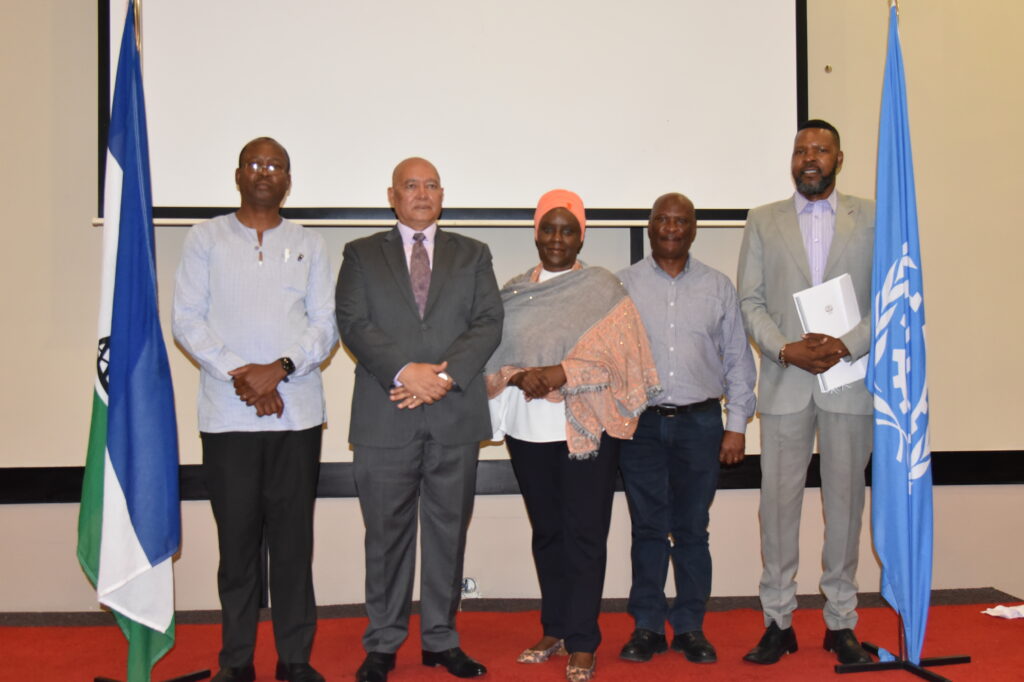
Lesotho has been a member of the ILO since 1966 and has demonstrated its commitment to labour standards by ratifying 26 Conventions, including all 10 of the ILO’s Fundamental Conventions. Today, the ILO provides technical and advisory support to the country to promote decent work, enhance worker’s rights, and improve social protection systems. These efforts aim to support the country’s strides towards aligning labour market policies and legislation with international standards and in fostering an environment that upholds the rights and welfare of all workers.
The country has continued to reinforce the respect for human rights and international labour standards, including the fundamental principles and rights at work, and enhance the inclusiveness and effectiveness of the governance of work.
Lesotho became the 26th ILO Member State, 7th from Africa, and 4th from the SADC region to formally commit to ILO’s most recent addition to International Labour Law, namely Convention No. 190. The instrument, which entails an inclusive, integrated and gender-responsive approach to preventing and eliminating violence and harassment in the world of work, together with its accompanying recommendation (R.206), is one of the first two global instruments on violence and harassment in the world of work. The UN’s technical support to the country has echoed the integrated approach of the convention by bringing together the technical expertise of labour law, equality, non-discrimination, and occupational safety and health.
The concept of Decent Work Agenda was introduced by the ILO for its Member States more than a decade ago to promote social justice in the world of work. The Decent Work Agenda has since been promoted by developing and implementing decent work programmes.
In April 2024, the Government enactment two important pieces of legislation towards improved governance of the labour i.e., the Labour Act and OSH Act.
Decent Work Country Programmes (DWCPs)
DWCPs are the ILO’s main vehicle for the delivery of ILO support at country level. They provide a framework that identifies the priorities of ILO constituents in a country and specifies the planned support of the Office to the achievement of results under those priorities. They are developed with full participation of national governments and employers’ and workers’ organizations and are implemented with their active engagement. Country ownership and results orientation are key aspects of DWCPs.
DWCPs are aligned with national development priorities and with the United Nations Sustainable Development Cooperation Framework. They constitute the ILO’s contribution to the wider UN effort in the country towards the achievement of the 2030 Agenda and the Sustainable Development Goals.
In supporting country priorities identified in DWCPs, ILO programmes build on synergies and complementarity of operations, bringing together diverse sources of funding for the achievement of common outcomes, greater scale and impact.
DWCP III is premised on three programme priorities: (i) employment creation particularly for young women and men; (ii) access to social protection and (iii) good governance of the labour market.

This DWCP III is an outcome of extensive consultations led by the Ministry of Labour and Employment. Consultations on the formulation of this DWCP involved key Government Ministries; Employers’ Organizations and Trade Unions and, selected Civil Society Organizations, United Nations (UN) as well as ILO Technical Specialists based in the Sub-Region and in Geneva.
The DWCP III is aligned to the second National Strategic Development Plan (NSDP II) which is the overarching national development framework for the period 2019 to 2023, and the United Nations Development Assistance Framework (UNDAF) for 2019-2023. To date, consultations on-going on the formulation of the 4th generation DWCP for Lesotho: 2024–2028 aligned to the UN Cooperation Framework for Lesotho: 2024 -2028. The implementation of Development Cooperation projects are an integral part of the implementation of the DWCPs at the country level.
Over the years, the implementation of DWCPs has contributed towards satisfactory progress towards the attainment of decent work outcomes in the country. The Government, in consultation with the employers and workers’ organizations, developed and finalized a number of social and economic policy proposals to advance the Decent Work Agenda in the country.
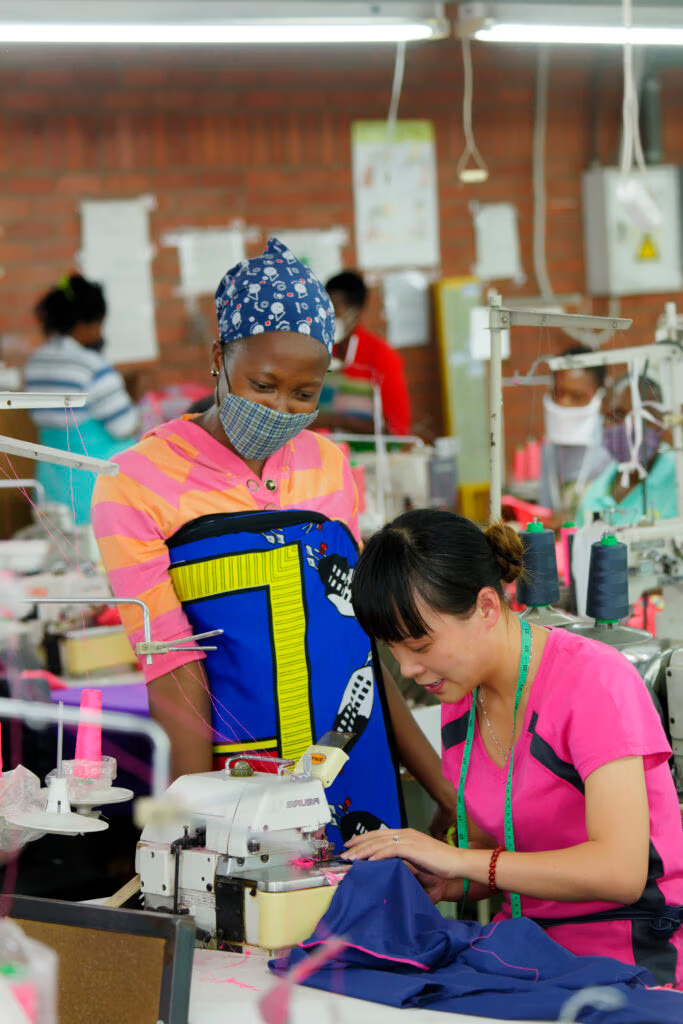
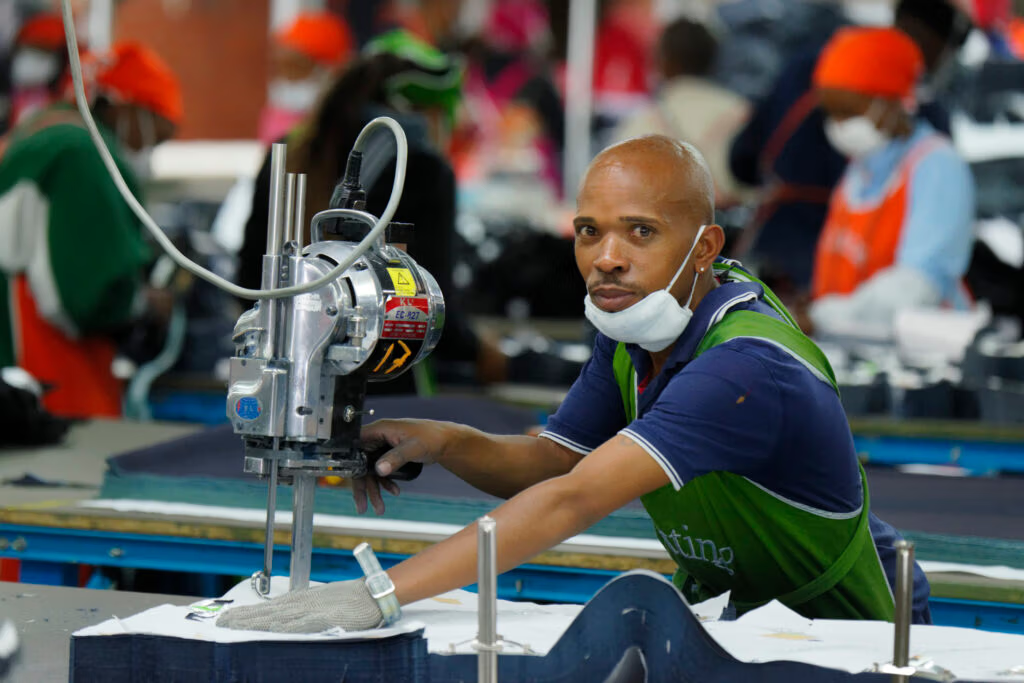
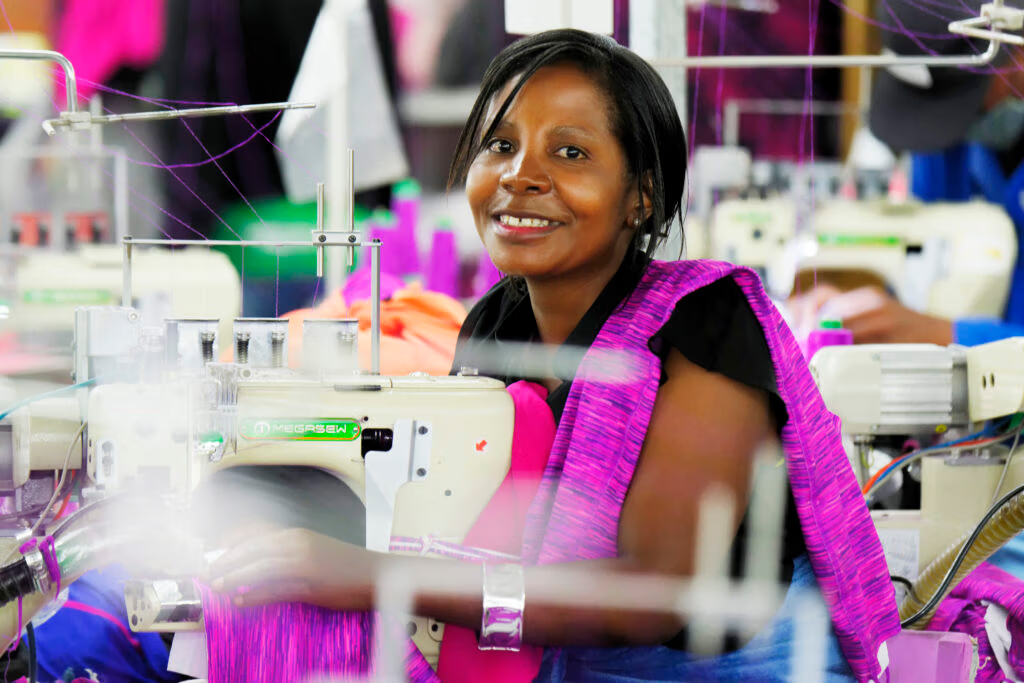
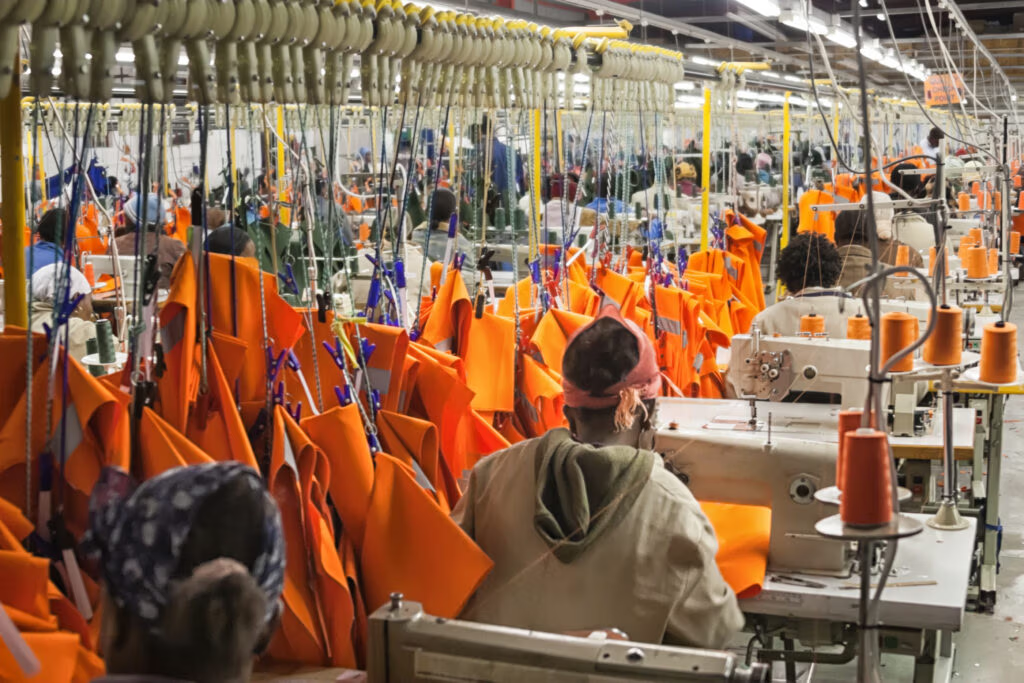
During the first half of 2024, two new Development Cooperation projects were launched in Lesotho i.e., The “Expanding Enterprise Participation in the Global Textile and Clothing Value Chain” Project, which is the sub-component 2.3 of the broader World Bank funded Lesotho Competitiveness and Financial Inclusion (CAFI) Program. The project is signed between the Government of Lesotho and ILO. The project seeks to strengthen the competitiveness of enterprises to take advantage of new market opportunities within the region and beyond. As well as a project on “Supporting Safe and Inclusive Work Environments” funded by the United States Department of Labour (USDOL), which will integrate issues of OSH, GBVH, and anti-discrimination in the world of work.
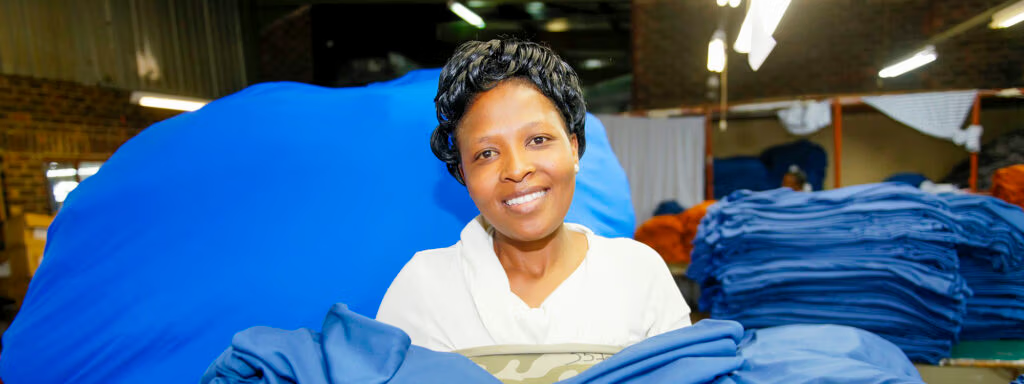
The deliverables of the USDOL funded project are expected to directly contribute to the UUN Cooperation Framework – Ka lebelo la Ntšoekhe, particularly under the pillar on: ‘Good governance and social equity’; as well as the pillar on: ‘People’s well-being and economic development’. This UNSDCF is aligned to the national policy goals and development priorities contained in the Lesotho National Strategic Development Plan. The ILO and the World Health Organization are the two UN agencies directly leading the implementation of the project. However, other UN entities will also contribute to specific activities and elements of the project.
The ILO’s work in future years will give particular attention to the following interrelated priority areas:
- Promoting productive employment, sustainable enterprises and livelihoods as generators of more and better decent jobs for young women and men: this includes employment impacts of policy decisions. Support provided for the Government to take policy and investment decisions with very significant implications for job creation and job quality; women’s economic empowerment; public investments in employment-intensive infrastructure projects, specifically rural roads;
- Developing and expanding Social and labour protection: promoting universal social protection, including through national social protection floors, safeguarding of occupational safety and health; gender equality, non-discrimination and addressing gender-based violence;
- Expanding Social dialogue and freedom of association through stronger social partners and labour administrations, as well as effective and active social dialogue institutions and mechanisms; and
- Promoting rights at work for social justice. New labour law and regulation effectively reflect the integration and application of up-to-date international labour standards, with special attention to promotion of fundamental principles and rights at work in all areas of the economy, and more emphasis to promote employment opportunities for women and young people.
Cross-cutting issues
As a cross-cutting concern, the national partners in Africa have laid particular emphasis on facilitating the transition from the informal to the formal economy; including Gender equality, non-discrimination and addressing Gender-based violence particularly in the world of work.