The Botswana International University of Science and Technology (BIUST) is a research-intensive University and the only specialised University in Science, Technology, Engineering & Mathematics (STEM). It aims to increase:
- Competitiveness;
- Economic growth and sustainable development;
- The number of skilled scientists and technologists;
- Movement of skilled people across national boundaries;
- Demand for access to tertiary education;
- Stimulation of research, innovation and technology transfer and society’s aspirations; and
- To be a more competitive and innovative tertiary education sector.
The mission of BIUST is to produce world-class research and innovation in science, engineering and technology contributing to industry growth and development and advancement of a diversified knowledge-based economy.
The Strategic Plan is entitled a Catalyst for Innovation and Transformation to buttress establishment of BIUST and it is centred on the University developing a strong academic value chain comprising three key elements:
- Teaching and Learning;
- Research and Innovation; and
- Engagement for Development.
ACADEMIC EXCELLENCE
- The reconfigured University’s learning programmes produce market relevant graduates; these include Financial Mathematics, Mechatronics, Actuarial Sciences, Forensic Sciences, Cyber Security and Biotechnological Sciences amongst others;
- 48 percent of our graduates are employed within six months after graduation;
- The University has upgraded all its learning programmes from Bachelors to include Honours Degree qualifications making our graduates more attractive to the global community;
- The academic curricula for the undergraduate programmes cover courses that equip students with business management, entrepreneurship and other soft skills needed for them to be well- rounded STEM graduates, a differentiating factor to brand the BIUST graduate;
- The University Library is pioneering a Presidential Collection as an incubation of the Presidential Collection concept, and this is the first of its kind in the country;
- The BIUST Academic Staff members are PhD holders, with a track record of research, varied professional experiences and are renowned nationally or internationally as practitioners in a specific field or have made impactful contributions to their domains of expertise; and
- BIUST is appointed a National Coordinator for the African Very-long based interferometer Network (AVN) project of Square Kilometer Array (SKA). It is housing facilities that will be used to develop the capacity to operate and maintain an antenna for the telescope. BIUST is also hosting the SADC Satellite Receiver to enhance Botswana’s Geo-Information System through Monitoring for Environment and Security in Africa (MESA) project.
COMMERCIAL ATTRACTIVENESS
- Using the pyrolysis plant, the Chemical Engineering Department has completed the Coal-to-Liquid Conversion project to turn coal into oil, tar, and soap products, using local materials;
- BIUST has received external research funding from the following institutions: Debswana; Botswana Defence Force; Simons Foundations; Botswana Innovation Hub; NEED Project; Innovate UK; Horizon 2020; Future Leaders; Global Challenges Research Fund; and Connect4, European Commission, the O.R Tambo Research Chair Initiative (ORTAChI) and UNESCO Chair on Advanced Manufacturing aimed at promoting international inter-university cooperation and networking;
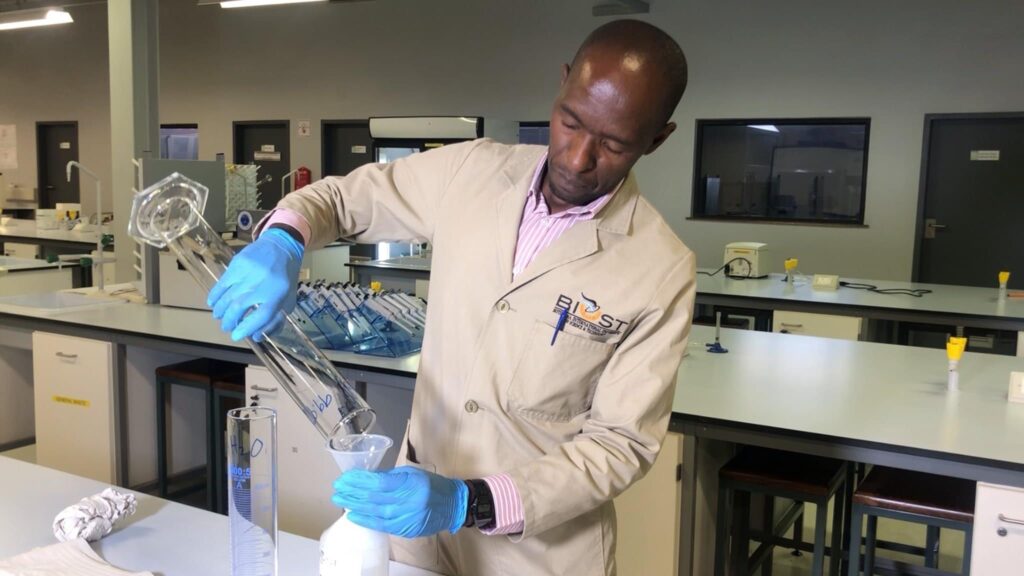
- BIUST has sophisticated research equipment that is currently used mainly by the University for teaching and learning, research and for commercial gain;
- One of the landmark research projects is the kickstart of the BOTS SAT 1 (Satellite);
- The re-engineering of Drones for Health initiative in partnership with the Ministry of Health, United Nations Development Programme (UNDP) and other international corporations such as AVY of Netherlands;
- High Quality Fly-Ash and Slag Bricks research has been completed and ready for investor’s uptake, this product is using locally available raw materials. The Fly-ash and slag brick as an eco-friendly brick made from by-products currently treated by the mining industry. Compared to the conventional brick, it has superior strength and meets the national quality standards;
- Smart Hard Hat – The current hard hats used in Botswana do not incorporate biometric sensors as a safety measure. Currently, there are no locally designed and manufactured hard hats to feed the mining and construction industries hence consumption is fully fed from imports;
- Poultry Litter Pyrolysis Plant – Poultry Litter is a waste product that needs to be properly disposed in accordance with best practice. In the absence of a safe sustainable solution, we have a Poultry Litter Pyrolysis plant that will unlock the value of PL as a resource for our customers, converting it into valuable products (a) Biochar, (b) Biofuel Oil, and (c) Electricity for local consumption;
- Production of Sodium Hypochlorite CLHOR Alkali Process – Botswana is rich with exploitable natural resources among them salt deposits produced from the BOTASH’s operations, the largest producer of natural sodium products in Africa producing about 650 000 tonnes per annum. The salt produced contains about 98-99% Sodium Chloride (NaCl) through an electrolysis or chlor-alkali process to obtain sodium hypochlorite and by-products; Chlorine, Hydrogen and Sodium hydroxide. Sodium hypochlorite, is used for the production of cleaning detergents, manufacturing of polyvinyl chloride (PVC), water treatment and as a disinfectant of medical equipment;
- Off-Grid Secured Smart House – In industry, there is a desire for cost efficiency in the use of electricity. Existing smart home/building systems can provide monitoring, automation, and control of electrical appliances in a building. However, these systems lack an independent power supply, security and access control measures for sockets and switches which leaves them vulnerable to misuse, leading to electricity wastage or damage to electrical appliances and property; and
- Antimicrobial Toilet Seat Mat – Antibiotic resistance is becoming a rundown of global health crisis due to rapid development of resistance to current antimicrobial drugs among them Acinetobacter genus and Staphylococcus aureus. Rest rooms, particularly public toilets mostly harbour pathogenic microbes because of high usage and ineffective cleaning. To address this concern, this project is aimed at synthesising an anti-microbial toilet seat mat to replace conventional disinfection.
SOCIAL RELEVANCE
Outreach and Engagement services take the University to the people and bring the people to the University. The following are some of the University achievements:
- So far, the University trained and graduated:
– 185 Youth Development Fund Beneficiaries in entrepreneurship to support their business initiatives;
– 489 Mathematics and Science Teachers both primary and secondary in a Problem- Based Approach to teaching STEM subjects. - The University has established Pre-University Academic Programmes to promote Social Responsibility. Some of the active initiatives are:
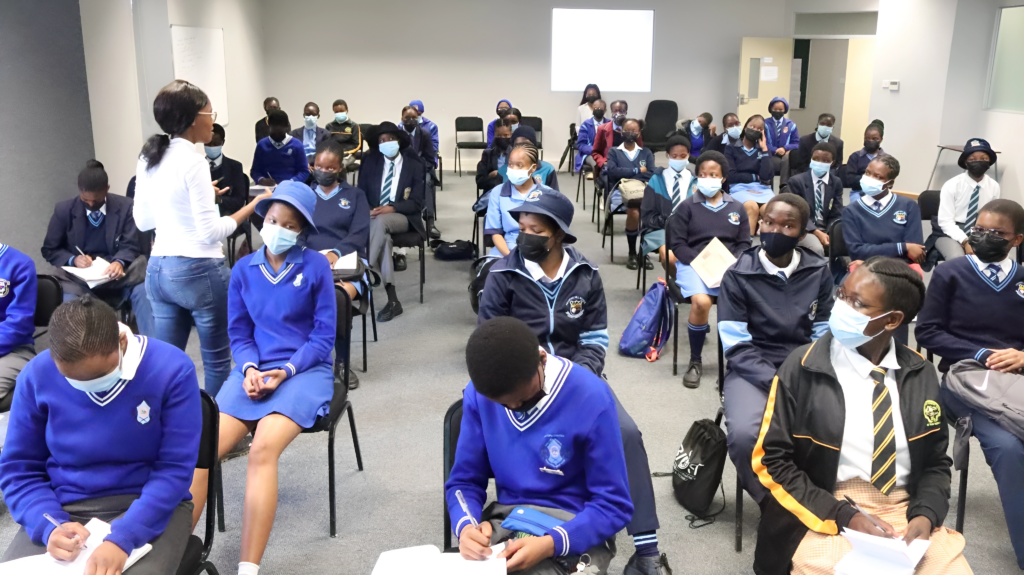
– BIUST circuses programme is a collection of themed science and mathematics demonstrations presented in a fascinating and yet very educational manner to increase concentration, absorption and retention, currently 142,000 students have gone through the programme;
– BIUST STEM festival is about celebrating Science, Technology, Engineering, and Mathematics achievements by showcasing products and or intellectual concepts/ideas to motivate participants to develop more interest in STEM;
– BIUST’s schools’ visitation programme gives primary and secondary school learners an opportunity to talk to academic experts (lecturers and technicians) on the subjects of the learners’ interests or subjects deemed difficult;
– Inquiry Based Science Education project introduces learners to the key elements which are used in scientific research much early in life, such as observation, experimentation, asking questions, making hypothesis, designing investigations, mainly to improve learners’ performance;
– BIUST student mentorship outreach programme involves BIUST engineering students working with pre-tertiary learners of Lotsane Senior Secondary School. The programme seeks to work on the students’ attitude and help them with good understanding of the subjects through motivational talks and tutoring by their peers who are at university level. BIUST Engineering Students Association (BESA) members provide tutorials to the students at specified times, particularly on weekends and holidays;
– BIUST video conferencing STEM support programme with secondary schools whereby BIUST lecturers connect with the school to explain some concepts;
– Botswana Scholars programme involves BIUST postgraduate tutor recruitment and selection; training in teaching and learning facilitated by BWScholars and AccessEd; placement of tutors in local government schools to work with underserved young people to increase insights and progression to University, develop transferrable learning skills and provide professional development opportunities for post graduate students;
– Entrepreneurship programme for youth job shadowing and mentorship program aims at developing the following problem solving, Analytical skills, Critical Synthesis skills; and
– Girls excelling in Mathematics and Science (GEMS) programme: Six remote area senior secondary schools were identified for the GEMS mentorship programme. They include Matsha, Mahupu Unified, Tsabong Unified, Shakawe and Maun. Its objective is to foster a STEM focused pre-university candidate.
CONCLUSION
BIUST has positioned itself to be one of the key drivers for transforming Botswana’s economy from a resource-based to a knowledge- riven economy. Not only is the country now able to produce its own scientists and engineers, BIUST has also developed a strong academic value chain comprising of teaching & learning, research & innovation, and engagement for development.