
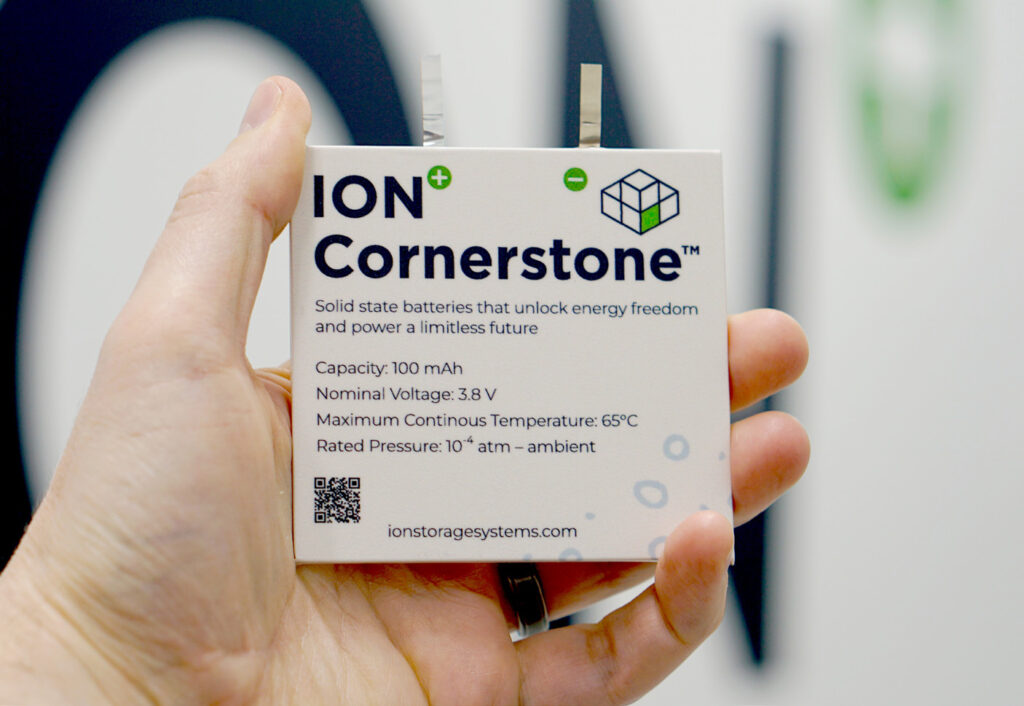
Every year, the devices people rely on ask more from the batteries inside them. Smartphones have become more powerful, electric vehicles continue to push for greater range, and defense systems must operate in increasingly demanding environments. Meeting those expectations has forced researchers and manufacturers to rethink technologies many assumed had already reached their limits. ION Storage Systems stands at the center of that effort.
Research conducted at the University of Maryland by Dr. Greg Hitz and Dr. Eric Wachsman eventually led to the creation of ION Storage Systems and a new approach to solid-state batteries. The organization has spent the past several years developing technology designed to deliver longer runtimes, greater longevity, and enhanced safety without the pressure and swelling challenges that have limited many competing designs.
“We focused on batteries because the world needs better batteries,” says CEO Jorge Diaz Schneider. “People want devices that last longer and perform better. Better batteries make that possible.”
Built on Maryland Innovation
Long before the company occupied its headquarters in Beltsville, work taking place at the University of Maryland had already begun shaping what would become ION Storage Systems. After securing seed funding, the founders incorporated the organization in 2019 and established operations near the university before expanding into larger facilities in Beltsville.
Expansion into those facilities brought research laboratories, engineering operations, and production capabilities together under one roof. What began as university research has steadily evolved into an organization preparing to manufacture at scale.
“We are proud to have built this company in Maryland,” he says. “The support we’ve received throughout the state from all levels of government and organizations like TEDCO has played an important role in helping us reach this point.”
Solving Problems Others Avoid
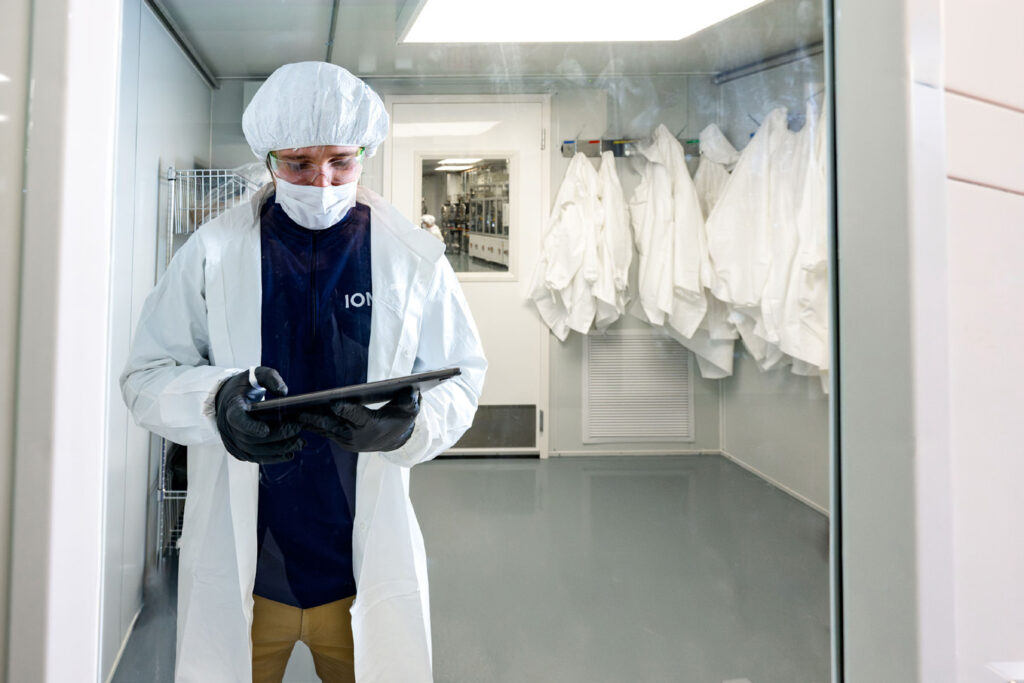
Rapid advances across the battery sector have created constant pressure to improve performance, scale production, and shorten development cycles. Moving from laboratory breakthroughs to large-scale production introduced a new set of challenges. Materials that perform well in small quantities must be manufactured consistently and tested repeatedly before they can reach customers. An intense focus on manufacturing and scalability has become one of the organization’s defining tasks.
“Innovation means finding solutions where others haven’t,” he says. “Sometimes that comes from entirely new ideas. Other times, it comes from recognizing opportunities in technologies that already exist and adapting them in ways nobody expected to accelerate impactful solutions.”
At the center of the technology sits a patented ceramic anode technology featuring both porous and dense layers, a combination that differentiates ION’s approach in the industry. That design allows the company to pursue solid-state batteries that do not require external pressure, expanding their potential use across a broad range of applications. That flexibility broadens the technology’s potential across industries searching for safer, high-performance batteries that can also be manufactured efficiently and helps bring products to market faster in rapidly adopting market segments like consumer electronics.
An Innovative Playbook
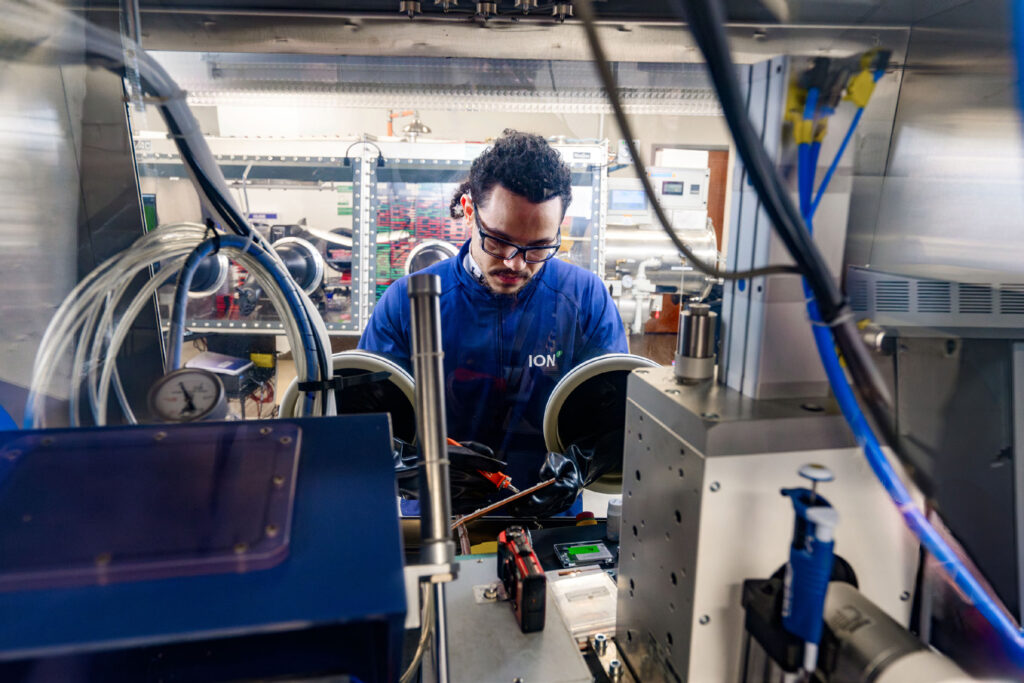
Building a new generation of batteries has required the company to navigate territory with few established rules. Solid-state batteries remain an emerging field, leaving companies to solve challenges that often come without obvious answers. Instead of relying on conventional approaches, the organization has built a culture that encourages collaboration, experimentation, and creative problem solving. Partnerships are pursued whenever expertise exists elsewhere, while internal teams develop solutions when none are available.
“Our playbook is one of focused innovation,” he says, “we collaborate where we can and invent where we have to.”
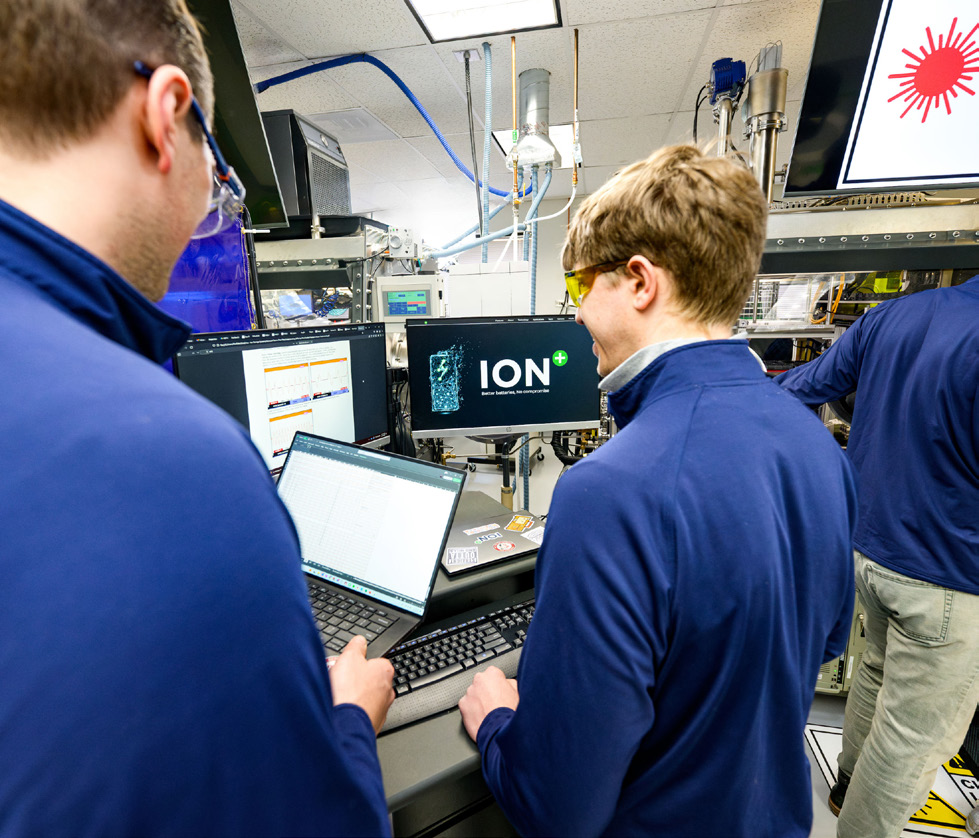
From Research to Real-World Demand
A sampling program introduced the company’s solid-state cells to major players across consumer electronics, defense, and electric vehicles, opening the door to a new stage of growth. Customer response has been strong. Interest in the technology continues to increase as industries search for batteries capable of combining safety, durability, and performance.
“We sent out cells that represent our technology, and the response has been very encouraging,” he says. “We’re focused on supporting our customers as demand grows.”
Attention has now shifted toward scaling manufacturing and expanding production capabilities. “We have a technology that can serve applications ranging from semiconductor manufacturing to smartphones and electric vehicles,” says Diaz Schneider. “We are excited about the road ahead.”
Investing in the Next Generation
Support for the next generation has remained closely tied to the partnerships that helped launch the organization. Collaboration with the University of Maryland did not end once the company left campus. Continued research engagement and internship opportunities expose students to emerging battery technologies, while talent from institutions including the University of Maryland, College Park and the University of Maryland, Baltimore County has helped strengthen the organization.
“We want to help cultivate innovation across the region,” he says. “Supporting the next generation matters because the future of this industry depends on the people who will lead it.”
Powered by Maryland
Progress from the laboratory to the production floor was strengthened by partnerships throughout Maryland’s innovation ecosystem. Organizations including TEDCO and the Economic Development Corporation of Prince George’s County have played important roles in that journey.
“We started here in Maryland, and I don’t think we’d be where we are today if we were somewhere else,” says Jorge.
Demand for safer, longer-lasting batteries continues to grow across multiple industries. From its base in Maryland, ION Storage Systems is helping ensure that some of the next breakthroughs in energy storage are being built much closer to home.