
Early-stage investing is often described as data-driven. In practice, first impressions still decide what gets a meeting and what gets ignored. WiB Capital is building a digital front door to investment that helps startups become investor-ready using AI, while reducing identity-based bias by letting the business case speak first.

The challenge is structural. Founders are expected to compress complex, evolving businesses into clear narratives, often with limited resources and limited feedback. Investors, meanwhile, assess large volumes of opportunities under time pressure and uncertainty. In those conditions, pattern recognition can become a shortcut, and shortcuts can unintentionally amplify bias, leaving strong companies overlooked for reasons unrelated to fundamentals.
WiB Capital is developing a technical digital incubator designed to improve that journey on both sides of the market. The platform combines three elements that are often fragmented across the startup ecosystem: guided incubation, investment-readiness assessment, and investor matching.
“As CEO, my responsibility is to build something that works in the real world. WiB Capital is not a vision of how the market should be — it is a tool for how it actually works.”
– Farideh Wallqvist, CEO, WiB Capital –
The process begins with an AI-driven incubation journey that supports founders as they work toward investment readiness. Rather than relying on scattered advice or inconsistent feedback loops, the platform is designed to provide structure, helping teams strengthen the business case, clarify strategic priorities, and communicate what investors typically need to evaluate an opportunity. The aim is not to “dress up” a company for fundraising, but to help founders build clearer signals in a noisy market.
Once a company completes the incubation journey, WiB Capital’s system evaluates whether the business meets a defined threshold for investment readiness. Only companies that pass this assessment move forward to matching. For founders, this provides a clearer answer to a common question: what does “ready” actually mean? For investors, it can reduce time spent on opportunities that are not yet prepared for professional review.
If a startup is approved as investment-ready, the platform matches it with investors based on objective alignment factors such as sector focus and ticket size. This is designed to create more relevant introductions than broad outreach or chance encounters, helping investors discover companies that fit their mandate while helping founders reach investors more likely to engage.
A defining feature of WiB Capital’s approach is the bias filter built into the earliest stage of investor review. In the initial match, investors see only the business case without identity cues such as gender or origin. They evaluate the opportunity on fundamentals: the problem, the solution, market context, traction indicators, and execution plan. Only after an investor gives an initial approval does the platform reveal full access to the entrepreneur and team.
The design reflects a practical view of how decisions are made under pressure: bias is not only interpersonal; it can be structural, shaped by what information is presented first and how quickly a decision is expected. By removing identity signals at the start, the platform aims to reduce noise and increase the likelihood that the first “yes” is grounded in substance.
“Bias isn’t just unethical, it’s inefficient. We treat it as a design problem, not a personality problem.”
– Carolina Lahdo, Co-founder, WiB Capital –
Lahdo adds that the goal is to create a process where “the business case speaks first,” helping ensure early-stage opportunities are evaluated on merit before background signals influence perception. “We want founders to spend less time performing and more time building,” she says. WiB Capital sits at the intersection of incubation, assessment, and deal-flow infrastructure, using software to standardize processes that have historically been uneven: founder preparation, readiness signals, and early-stage screening. The broader ambition is to make the pathway to investment less dependent on proximity to the “right” rooms and more dependent on the strength of the opportunity.
As entrepreneurship becomes more connected and more digital, the question is not only how quickly capital can move, but how well it can move toward the strongest ideas, from the widest pool of builders. WiB Capital is building a new front door to investment designed to reward fundamentals, reduce friction, and help more companies get a fair first look.
Stop Leaking Talent: Let the Case Speak First
We’re not suffering from a lack of talent. We’re suffering from a leak in the system. And the data makes that painfully clear: in Sweden, roughly 1% of capital goes to female entrepreneurs.
This isn’t about blaming individuals. Most investors I meet are thoughtful, hardworking, and genuinely trying to make good decisions. The challenge is that early-stage investing runs on speed, limited information, and trust. And when a system depends heavily on trust, it naturally leans toward familiarity, shared networks, similar backgrounds, warm introductions. Not because people are bad, but because the system rewards shortcuts.
The cost of that is huge.
When access to capital becomes too dependent on proximity to the “right” networks, opportunity becomes uneven, especially in capital-intensive fields like tech and deep innovation. If you weren’t born into capital, connected to it, or able to take big financial risk without consequences, building a high-growth company becomes dramatically harder. That’s how inequality compounds: the already advantaged get more runway, and the rest are asked to prove themselves with fewer resources and higher stakes.
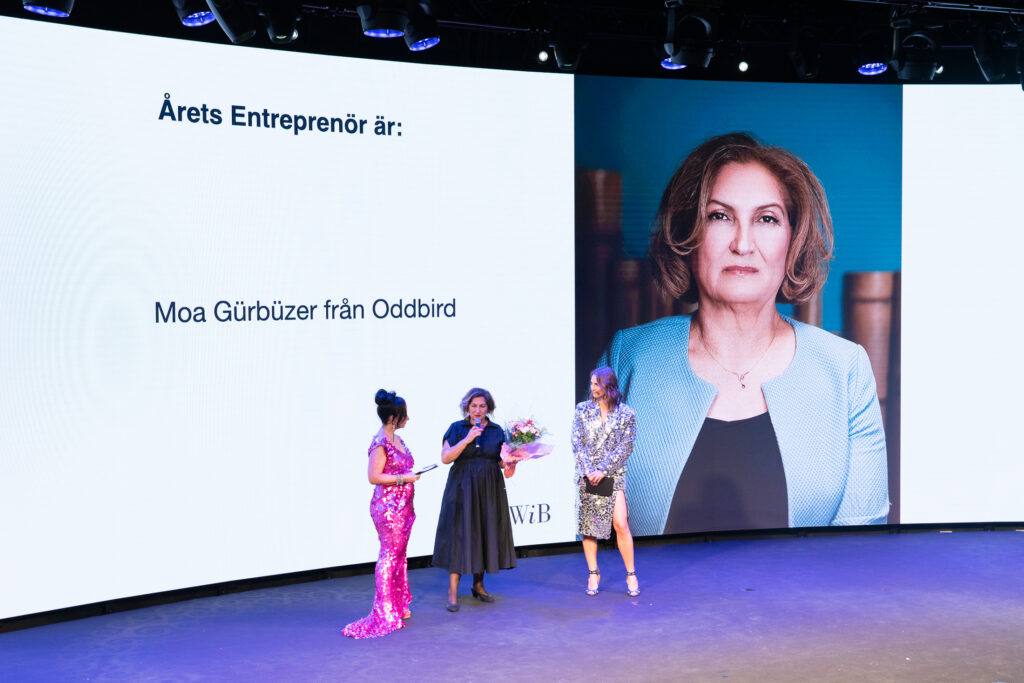
And here’s what we miss when we accept that as “normal”: hunger. Resourcefulness. The kind of grit you only get when you have everything to lose and still choose to build. Some of the strongest founders don’t pursue entrepreneurship as a lifestyle, they pursue it because they have to create a future. That pressure can produce extraordinary focus, speed, and resilience. If we don’t create a fair first door for them, we’re not just being unfair, we’re being strategically shortsighted.
That’s why I believe the next leap in entrepreneurship won’t come only from better founders. It will come from better infrastructure.
At WiB Capital, we’re building an AI-driven digital incubator that helps startups become investment-ready, then evaluates readiness and matches qualified companies with aligned investors based on sector and ticket size. And we add one more step: a bias filter. Investors initially see only the business case—no gender, no origin, no identity cues. Only after they approve the opportunity on fundamentals do they get full access to the team.
The idea is simple: let the business speak before the background does. When we stop leaking talent, we don’t just build a fairer ecosystem—we build a more competitive one.