Claflin University’s enduring legacy of innovation reflects the institution’s long-standing commitment to academic excellence, creativity, and transformative leadership. Founded in 1869, Claflin is the oldest Historically Black College/University (HBCU) in South Carolina. It was the first higher education institution in South Carolina to admit students regardless of their ethnic origin, gender, race, or religion. Throughout its 156-year history, Claflin has fostered pedagogical innovation in the classroom, curriculum development, interdisciplinary research, and experiential learning opportunities that prepare graduates to become transformative visionary leaders. Claflin was the first HBCU to offer architectural drawing classes. Robert Bates, the first African American architect accredited in the United States, and William Wilson Cooke, the first African American senior architectural designer in the U.S. Treasury’s Supervising Architect’s Office, were educated at Claflin University.
Elevation and Transformation of the Legacy
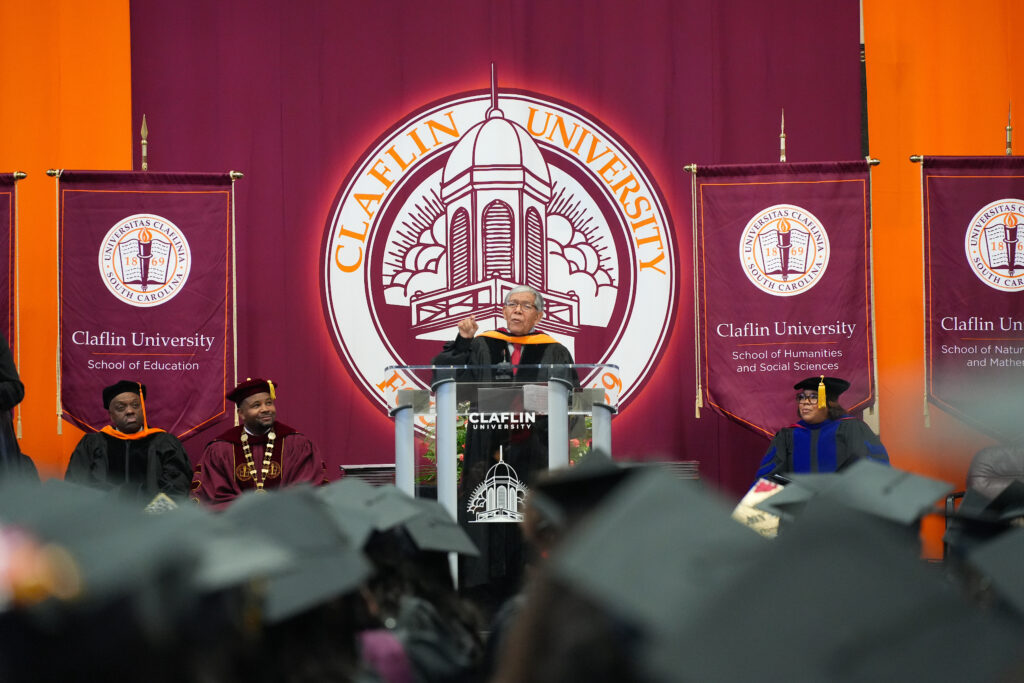
Dr. Dwaun J. Warmack’s appointment as Claflin University’s ninth president on August 1, 2019, ushered in an era of “Elevation and Transformation,” and his vision for a vibrant 21st-century living-and-learning community of scholars.
Warmack recalibrated Claflin’s academic curriculum and reinvigorated student services in response to the rapidly evolving higher education landscape. His dynamic, progressive, and intuitive leadership has catalyzed Claflin’s unprecedented fundraising, campus and community engagement, and results-driven faculty and student research. His tenure has produced significant increases in alumni and corporate engagement, as well as academic partnerships with highly respected colleges and universities both nationally and abroad.
In 2025, U.S. News and World Report ranked Claflin No. 5 among more than 30 South Carolina colleges and universities. U.S. News has ranked Claflin the No. 1 HBCU in South Carolina for 15 consecutive years and among the Top 12 Best HBCUs for 15 consecutive years. Claflin is the state’s No.1 Liberal Arts College/University in Social Mobility – a category that measures the success of Pell Grant recipients. More than 70 percent of Claflin students receive Pell Grants, and many go on to successful careers after earning a Claflin degree. U.S. News ranked Claflin No. 7 among the nation’s private HBCUs.

Innovation in Science, Technology, Engineering, and Mathematics (STEM)
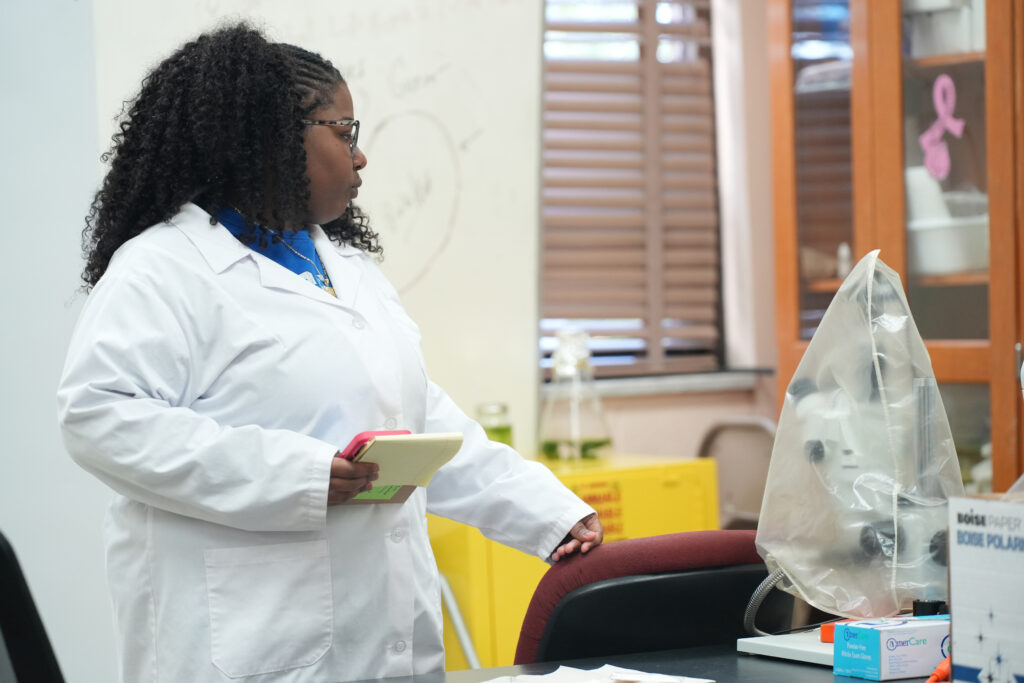
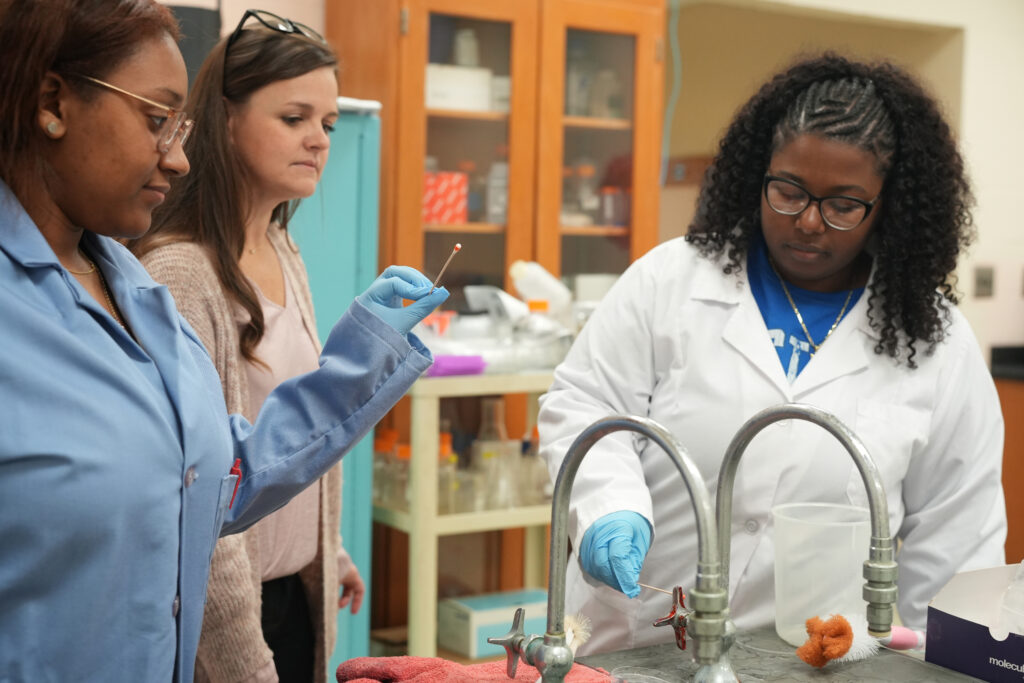
In addition to being recognized as a premier liberal arts university, Claflin has gained increasing prominence for its robust STEM agenda. In 2024, Claflin’s Chemistry Department celebrated 20 years as an American Chemical Society (ACS) accredited program.
“Claflin is one of only 10 South Carolina colleges with ACS accreditation,” said Dr. Verlie Tisdale, vice provost for academic programs and former dean of the School of Natural Sciences and Mathematics at Claflin. “The program first achieved accreditation in 2004,” Tisdale said. “Among the requirements for accreditation is that the program must have a Ph.D. faculty member in each area of Chemistry – Analytical Chemistry, Physical Chemistry, Organic Chemistry, and Biochemistry. Meeting that requirement reaffirms Claflin’s continued commitment to ensure that our Chemistry Department and our graduates are widely respected.”
Preparing Nurses for the Global Healthcare Challenges of the 21st Century
Claflin became the first HBCU in South Carolina to offer the RN (Registered Nurse) to BSN (Bachelor of Science in Nursing) degree when the Department of Nursing launched the program during the 2016 Fall semester. The program provides registered nurses with an accessible path to their bachelor’s degree through flexible, 100% online coursework.
Claflin began classes for its Master of Science in Nursing (MSN) program during the 2021 Fall semester. The program offers degrees in Family Nurse Practitioner (FNP) and Nurse Leader (NL) tracks. FNP prepares nurses for advanced clinical practice and direct patient care across the lifespan, while the NL focuses on healthcare administration and management.
The program’s rigorous curriculum and experiential learning provide Claflin’s nursing graduates with a unique perspective for addressing critical healthcare needs of diverse and underserved populations in rural areas of South Carolina and beyond.
The SmartHOME Initiative
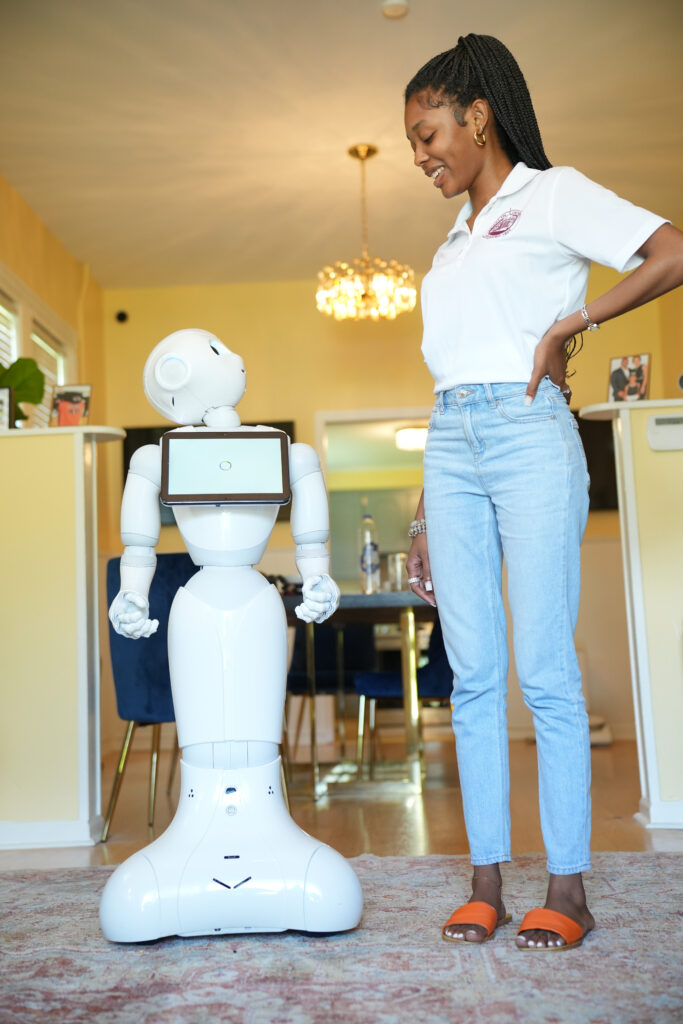
The SmartHOME is an intelligent home environment that monitors and records an individual’s vital signs and collects health information about the people living in the home. The data is used to help mitigate health risks, like diabetes and heart conditions, which are common problems facing many African Americans and are the leading causes of death. Healthcare professionals analyze the vital sign history to review, diagnose, and prescribe a course of action.
Dr. Karina Liles, chair of Claflin’s Department of Mathematics & Computer Science supervises this seminal initiative that integrates cutting-edge technology, sustainability, and applied learning to prepare students for careers in smart systems and innovative residential design. Liles is also an associate professor of computer science.
“SmartHome is providing Claflin STEM scholars with a unique opportunity to explore energy-efficient technologies, automation, cybersecurity, and environmentally responsible housing solutions,” Liles said. “SmartHOME serves as a living laboratory where students engage in hands-on research, interdisciplinary collaboration, and problem solving. It bridges classroom theory with real-world application while promoting sustainable living practices.”
Claflin’s Computer Science program is ABET-accredited (Accreditation Board for Engineering and Technology), which ensures that Claflin graduates are highly qualified for coveted positions in the global technology workforce.
Rebranding the H. V. Manning Library: A Blueprint for Libraries of the Future
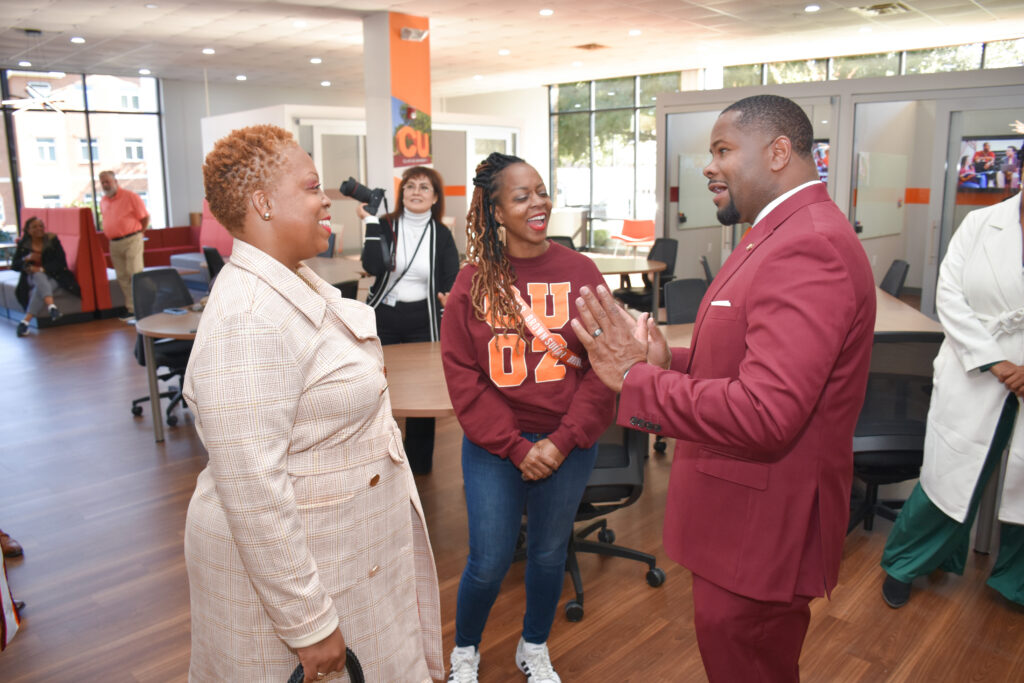
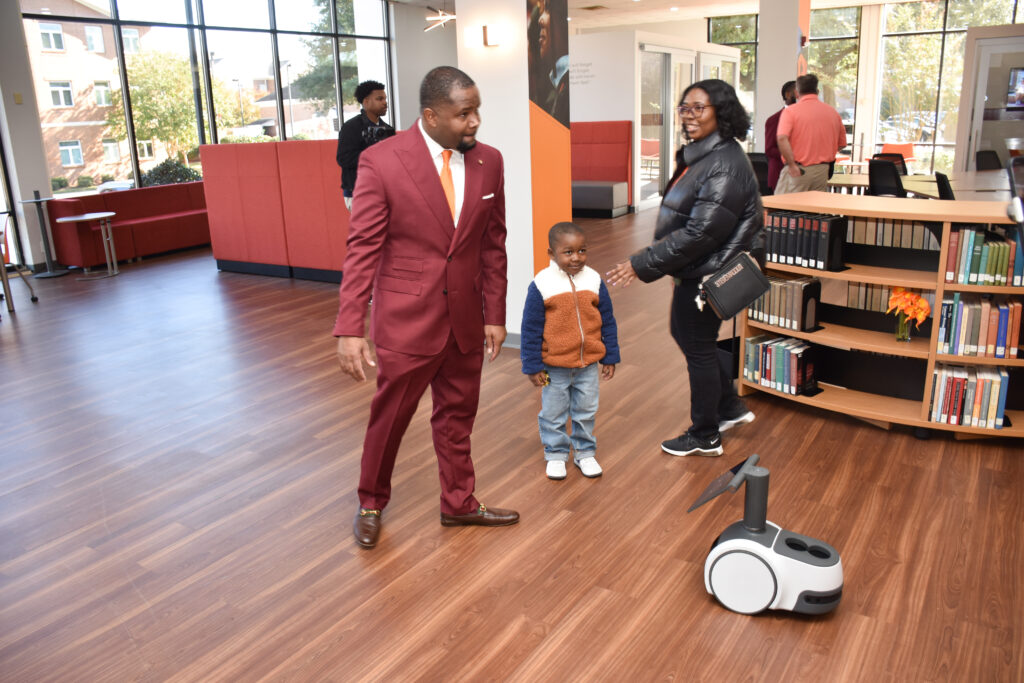
The recent rebranding of venerable H. V. Manning Library at Claflin University provides a blueprint for modernizing and expanding the central resource for academic information and research materials on college campuses. Every student is empowered through advanced technology, reimagined spaces, and new pedagogical approaches that increase engagement and collaboration.
“The H.V. Manning Library now has a new futuristic design that reimagines the facility as a hub for innovation, collaboration, and discovery,” Warmack said during the ribbon-cutting ceremony. “This transformation represent more than just bricks and mortar. It symbolizes our dedication to providing our students and faculty with state-of-the-art resources and spaces that inspire creativity and achievement.”
Among the features of the library are:
- Traditional pods with seating for multiple students that may also be utilized for individual students. These are equipped with magnetic dry-erase boards, Smart TV monitors, with cameras.
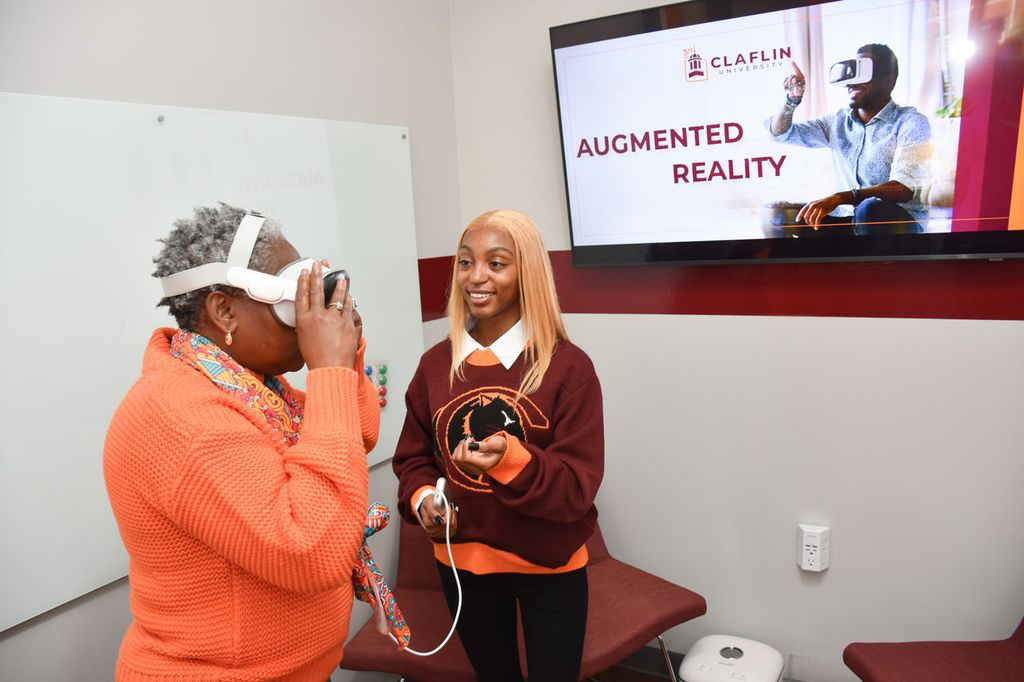
- Two (2) pods dedicated to Augmented and Virtual Reality
- The traditional circulation checkout desk for books is now a student support resource that assists students with using various technologies for research and other projects.
- Additional workstations and “collaboration spaces” throughout the main floor.
- A Panther Podcast Room with acoustic wall panels, a microphone, a greenscreen, and lighting.
“Even with advanced technology and the rebrand, the H.V. Manning Library has remained the place for students to collaborate for class assignments and research,” said Library Director Marilyn Gibbs Drayton. “Our student outreach is thriving, and the library’s numerous resources are also utilized by the faculty and staff who request articles for research and classroom assignments.”
Master of Science in Biotechnology with a Concentration in Climate Change
As Claflin deepens its research focus, it recently introduced a new graduate program that integrates science, technology, and sustainability to address climate change.
The University celebrated its inaugural graduates from the Master of Science in Biotechnology with a Concentration in Climate Change program at the Spring 2025 Commencement Convocation. The first “Climate Change Scholars” were Mr. Zaqueu Antonio (Mozambique), Ms. Brenda Makonyere (Zimbabwe), Mr. Abiud Y. Nyamongo (Kenya), Ms. Glory M. Umoh (Nigeria), and Mr. Kaldrian Moore (United States).
The Master of Science in Biotechnology with a Concentration in Climate Change prepares students to understand, research, and address the environmental challenges impacting local and global communities. Through interdisciplinary coursework, research opportunities, and community engagement, students examine climate science, environmental justice, sustainability practices, and policy solutions. All classes are offered 100 percent online.
“Our program provides students with opportunities to contribute to the workforce and biotechnology as it relates to climate change,” said Dr. Gloria McCutcheon, chair/ professor in Claflin’s Biology Department. “It integrates biology and engineering to create solutions to mitigate climate change.”
Claflin is the only HBCU in South Carolina that offers a Master of Science in Biotechnology with a Concentration in Climate Change.
A Legacy in Motion: Expanding Innovation
Under President Warmack, Claflin’s world-class faculty and highly skilled administrators, the university continues to align academic excellence with technological innovation and interdisciplinary research. Warmack and his leadership team are expanding the definition of innovation beyond technology to include strategic initiatives that promote student success, community engagement, and long-term institutional sustainability. This holistic approach supports Claflin’s commitment to “Elevation and Transformation” and its mission to produce future generations of globally engaged visionary leaders.