In Lesotho for over 50 years and has programmes and a physical presence at district level.
INTRODUCTION:
Currently WFP has three field offices located in Mohale’s Hoek, Mokhotlong and Thaba-tseka districts. WFP has ongoing programmes in all the 10 districts of Lesotho: 1) the National School Feeding Programme, implemented in partnership with Ministry of Education and Training in all the 10 districts; 2) integrated resilience and livelihood activities implemented in collaboration with the Ministry of Environment and Forestry; 3) nutrition support activities implemented in collaboration with the Food and Nutrition Coordinating Office and the Ministry of Agriculture, Food Security and Nutrition; and 4) Emergency operations activities implemented in collaboration with Disaster Management Authority.
WFP activities are guided by the five years Country Strategic Plan (2024-2029) with focus on supporting the Government’s work towards the achievement of Sustainable Development Goal 2. The plan pursues the following strategic outcomes:
- Food-insecure and crisis-affected people in Lesotho are able to meet their essential needs before, during and after crises, including through anticipatory actions and shock-responsive national social protection programmes.
- By 2029, national systems and programmes for nutrition security and school-based programming in Lesotho are strengthened.
- By 2029, populations at risk in Lesotho benefit from strengthened, climate-resilient food systems and sustainable livelihoods.
- The Government, development partners, civil society and private sector organizations in Lesotho have improved access to innovative, effective and cost-efficient on-demand WFP services by 2029.
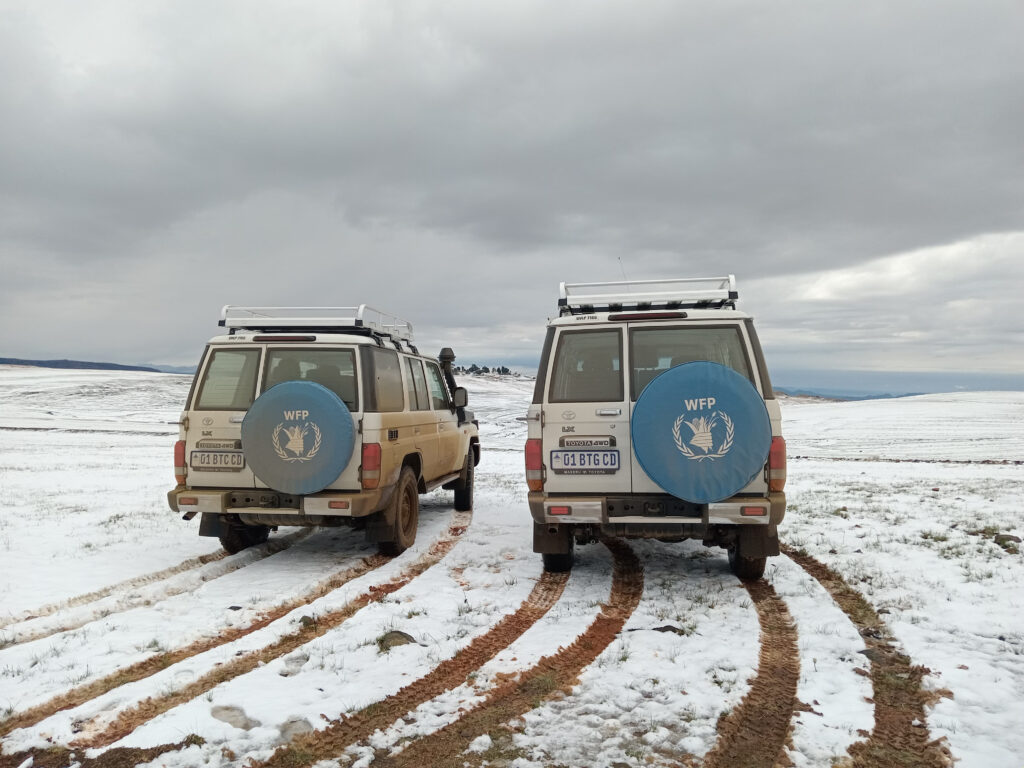
EMERGENCY PREPAREDNESS AND RESPONSE:
Emergency preparedness WFP supports the Government in implementing effective, targeted and inclusive early warning systems, anticipatory action, disaster risk reduction, crisis response interventions and shock-responsive social protection.
WFP has been playing a pivotal role in strengthening the capacity of the Government to implement an early warning system that is linked to social protection systems. WFP continues to provide financial and technical support to Disaster Management Authority to continuously monitor the food security situation including to conduct the vulnerability assessments; crop assessment and annual vulnerability assessment, Integrated Food Security Phase Classification (IPC) analysis and rapid assessment to inform on the food security in the country.
WFP invested in initiatives aimed at strengthening and digitizing the government’s systems for improved data analysis and access to information:
- WFP supported the Lesotho Vulnerability Assessment Committee (LVAC) to develop a dashboard that provides real-time data for evidence-based decision making for food security and nutrition interventions. The dashboard will also allow learning by different sectors that are key for food security and disaster risk reduction.
- Partnering with the United Nations Environment Programme (UNEP) – under the Early Warning Systems II project) – WFP facilitated the procurement of a High-Performance Computing system (HPC) for Lesotho Meteorological Services (LMS) and engaged the Weather Information Solutions company to install numerical software and the Weather Research and Forecasting model with the aims of reducing LMS’s dependence on global and regional models for seasonal forecasting. In addition, WFP worked with the International Research Institute at Columbia University through the Adaptation Fund project to capacitate LMS to develop online mapping services for analysis and visualization of climate information and enhance the climate database for improved seasonal forecasting. As a result, LMS is able to generate winter and rainy season outlooks with better precision.
- WFP contributed to the development of a digitalization strategy at the request of the Government (Office of the Prime Minister), developing and deploying a geospatial platform that will enhance territorial planning, resource allocation and programme monitoring. Combining satellite imagery with local data, the platform supports informed government decision making in agriculture, infrastructure, healthcare, education and sudden-onset disaster response.
WFP is currently implementing urban preparedness project through support of the European Civil Protection and Humanitarian Aid Operations to enhance disaster preparedness and response in urban areas through the development of tools and methodologies.
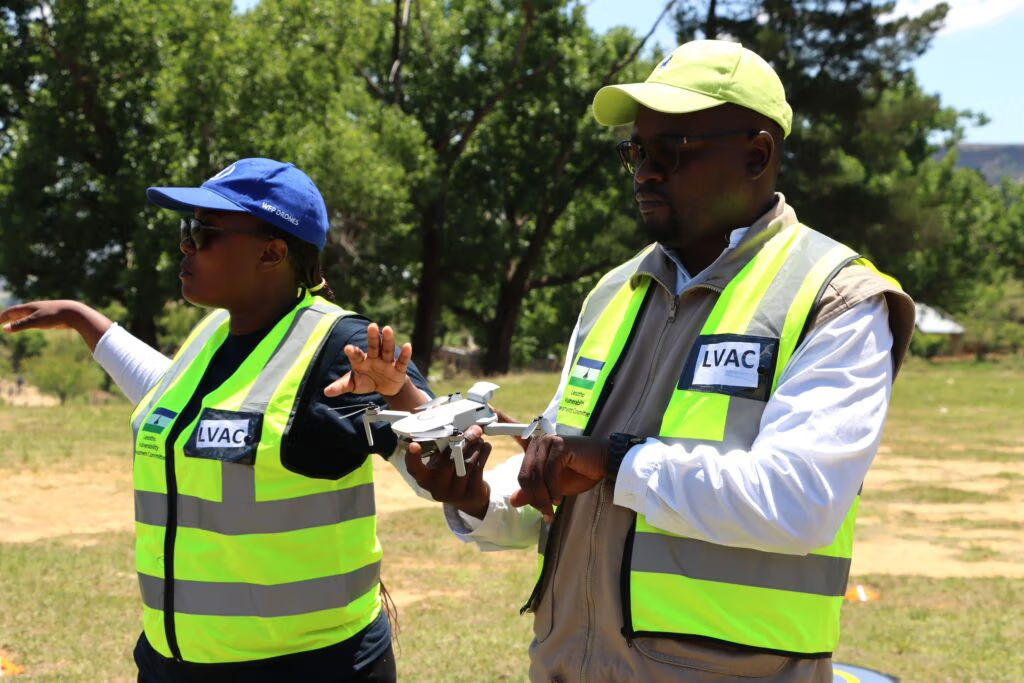
Going forward, WFP plans to enhance the capacity of the government and partners to implement risk-informed multi-sectoral strategies, integrating digital platforms and technologies for improved risk analysis, hazard mapping and anticipatory action. WFP will support the Government to improve shock-responsive social protection targeting and response.
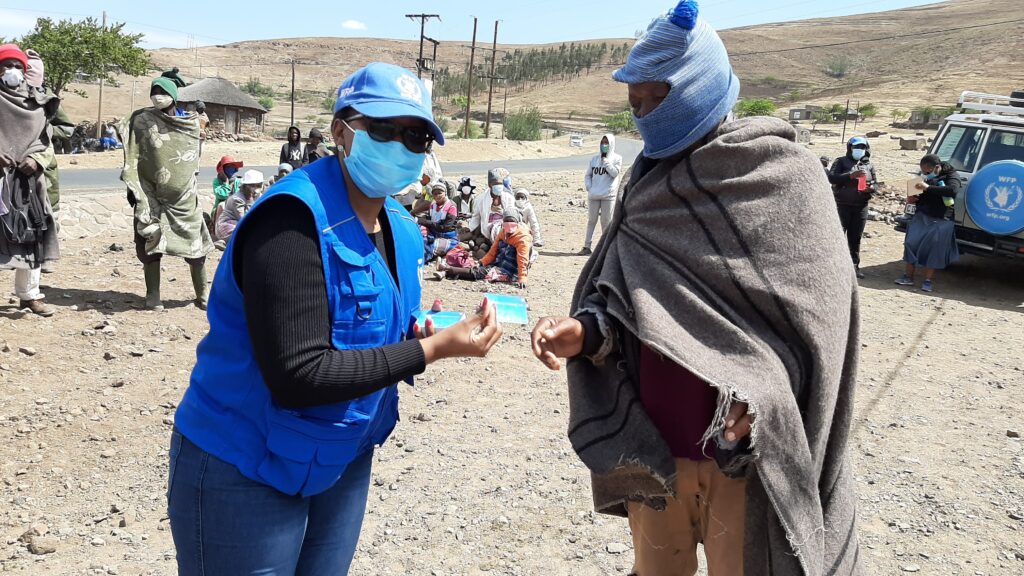
Emergency response: WFP supports the Government’s efforts to ensure that before, during and after crises, targeted affected people in rural and urban areas receive adequate and timely cash or food assistance to meet their daily food and nutrition needs. For the past five years, WFP provided food assistance to more than 646,000 people, working with community leaders and Disaster Management Authority at national and district levels to ensure that the right people receive assistance at the right time.
While providing food assistance, WFP also promotes the consumption of fresh food while also focusing on preventing malnutrition in pregnant and breastfeeding women and girls and children aged 0–59 months through social and behaviour change (SBC) initiatives and nutrition interventions. WFP also integrates advocacy and gender-responsive SBC communication, gender equality and nutrition messaging to help address the staggering rates of gender-based violence in Lesotho and prevent a deterioration of the nutrition status of people at risk.
Building on the succsess and recomendations from the previous Country Strategic Plans, WFP plans to implement humanitarian-development-peace nexus to ensure that people benefitting from cash and food assistance also receive skills training that allow them to implement livelihood activities that will ensure their income and self-sufficiency beyond the duration of WFP’s support. WFP further aims to improve women’s digital financial inclusion through the use of mobile money transfers, utilizing nutrition clubs as entry points for delivering training in digital financial skills.
STRENGTHENING SOCIAL PROTECTION SYSTEMS:
School feeding: WFP provides and support inclusive nutritious school meals in pre-primary and primary schools through school-based programming. Since 1965, WFP has been supporting the Government of Lesotho with provision of school meals at primary and pre-primary schools across the country while building the government’s and partners capacity to plan and implement a gender-responsive and nutrition-sensitive national school feeding programme with linkages to local production. For the past five years, WFP provided school meals to over 478,000 primary and pre-primary school learners across the country.
WFP is currently providing school meals to more than 50,000 learners from an estimated 2,400 Early Childhood Care and Development Centres (ECCDs) across the 10 districts of the country. In 2020, WFP handed over to the government the provision of school meals at primary level.
WFP supported the government through Ministry of Education and Training to formulate the National School Feeding Policy (NSFP) which was approved in 2015. The NSFP advocates for the implementation of home-grown school feeding (local purchasing which was piloted first by the government in 2013 and then by WFP in 2017). The policy also advocates for the implementation of school feeding through private sector companies. WFP further provided financial assistance to the Government in 2023 to review and validate the National School Feeding Policy, articulating an integrated, multi-sector approach to school feeding.
In 2023, WFP launched the home-grown school feeding pilot project in Quthing and Mohale’s Hoek districts, linking smallholder farmers (within the vicinity of the targeted schools) to the school feeding programme and working with local retailers to procure food from farmers and deliver to schools, thus improving the local economy.
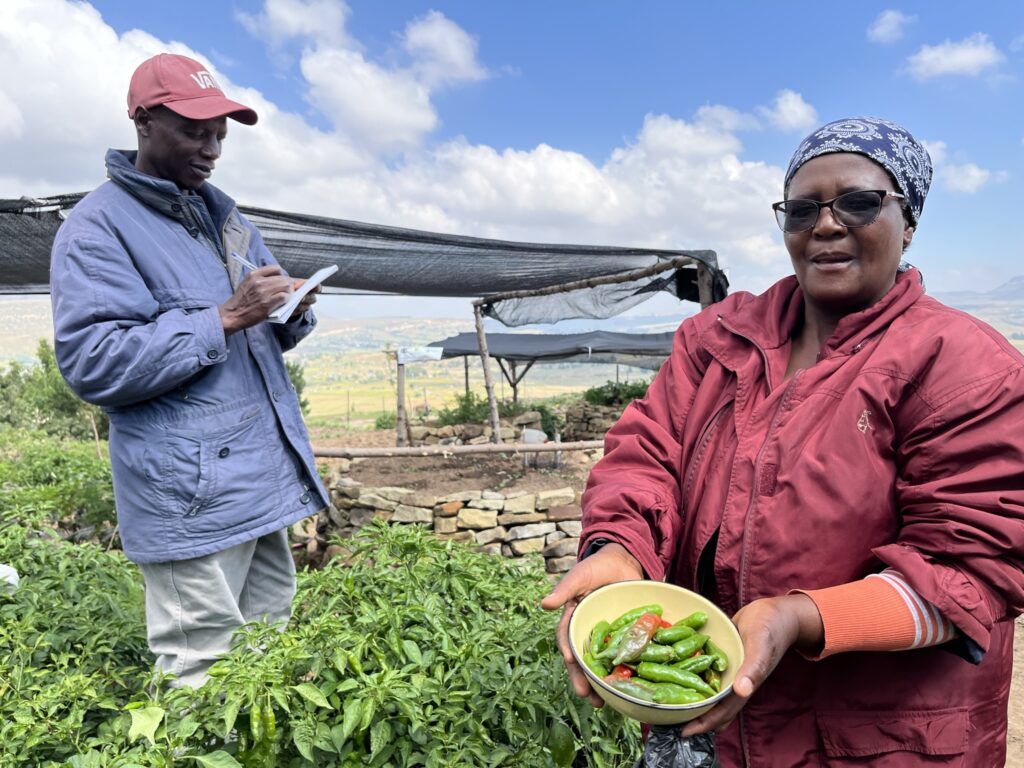
Apart from provision of meals and technical assistance, WFP partners with other actors such as the Ministry of Health and other UN Agencies to implement complementary activities aimed at enhancing dietary diversity, nutrition and hygiene practices. These include facilitation for provision of agricultural inputs for vegetable production, provision of training on Water and Sanitation Hygiene (WASH) as well as trainings on food quality and handling.
Nutrition support: WFP is assisting the Government in the design, implementation and monitoring of policies and strategies that strengthen nutrition programmes.
WFP provides capacity strengthening support to the Government and other actors to improve multi-sectoral coordination, planning, evidence building and implementation of equitable nutrition policies and programmes. Between 2019 and 2024, WFP has strengthened the capacity of more than 1,213 government staff and national partners to enhance national food security and nutrition status in the country.
WFP supported national efforts to generate evidence on nutrition to inform policy dialogue, capacity and programming on nutrition and food security. Working with national stakeholders, WFP launched the Fill the Nutrient Gap (FNG) analysis in 2019 to identify the barriers that affect access to nutritious foods among vulnerable populations and to inform context appropriate multisectoral interventions to address those barriers.

Additionally, WFP took a proactive role in supporting the joint UN REACH mandate of building institutional capacity to support the upscaling of nutrition actions at central and district levels. Through REACH, WFP supported the Government to gather baseline data on core nutrition actions and conducted training for stakeholders on how to undertake nutrition mapping.
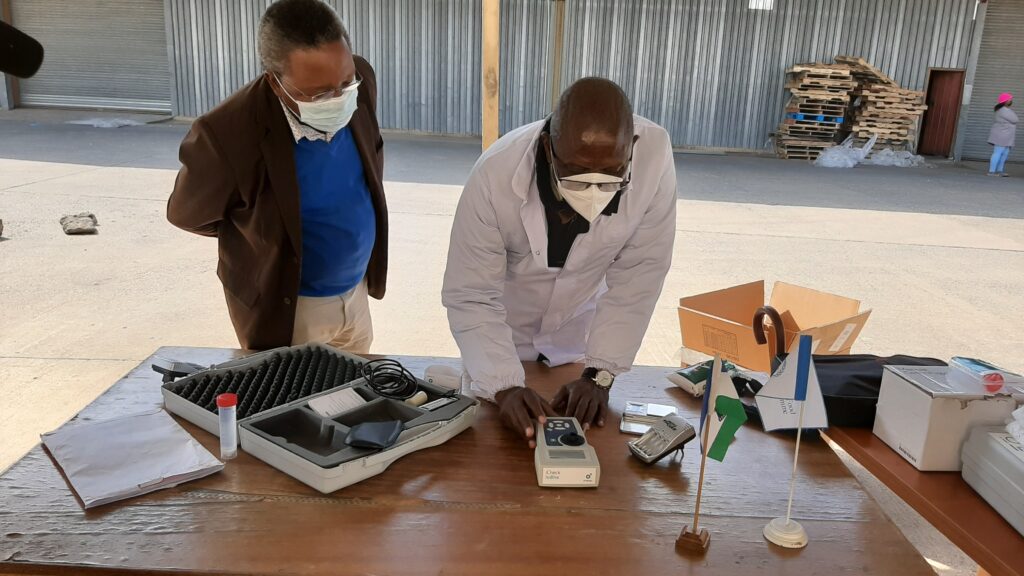
In 2021, WFP successfully provided technical support to the Government through the Food and Nutrition Coordinating Office to develop the food fortification legislation as part of efforts to promote the food fortification agenda. As part of supporting the operationalization of the Legislation and to address the challenge of lack of testing equipment, WFP purchased iChecks worth Euro 22,000 for vitamin A, iodine and iron for the Government to facilitate testing and collection of samples from retail stores, households and port of entries. Also, WFP supported the Government to develop the Advocacy, Social and Behaviour Change Communication strategy that outlines possible interventions to the identified nutrition-related challenges and set the direction for various communication activities to achieve the desired behavioural change and nutrition outcomes.
Further to this, WFP supported the Government to develop a nutrition dashboard as a web-based monitoring and reporting tool that will provide information on food and nutrition activities implemented by various partners at district level.
WFP is currently implementing Component 2-Nutrition of Smallholder Agriculture Development Project II (SADP 11) towards improving nutrition across the country with focus on community-based dietary knowledge, running national advocacy campaigns to enhance knowledge on nutritious diet and investment support for nutrition sensitive food supply chains.
WFP will continue to strengthen and support the Government’s capacity to address all forms of malnutrition throughout the life cycle and implement school meals, especially by scaling up Home-grown school feeding programme to increase the multiple benefits of that intervention.

CLIMATE-RESILIENT FOOD SYSTEMS AND SUSTAINABLE LIVELIHOODS:
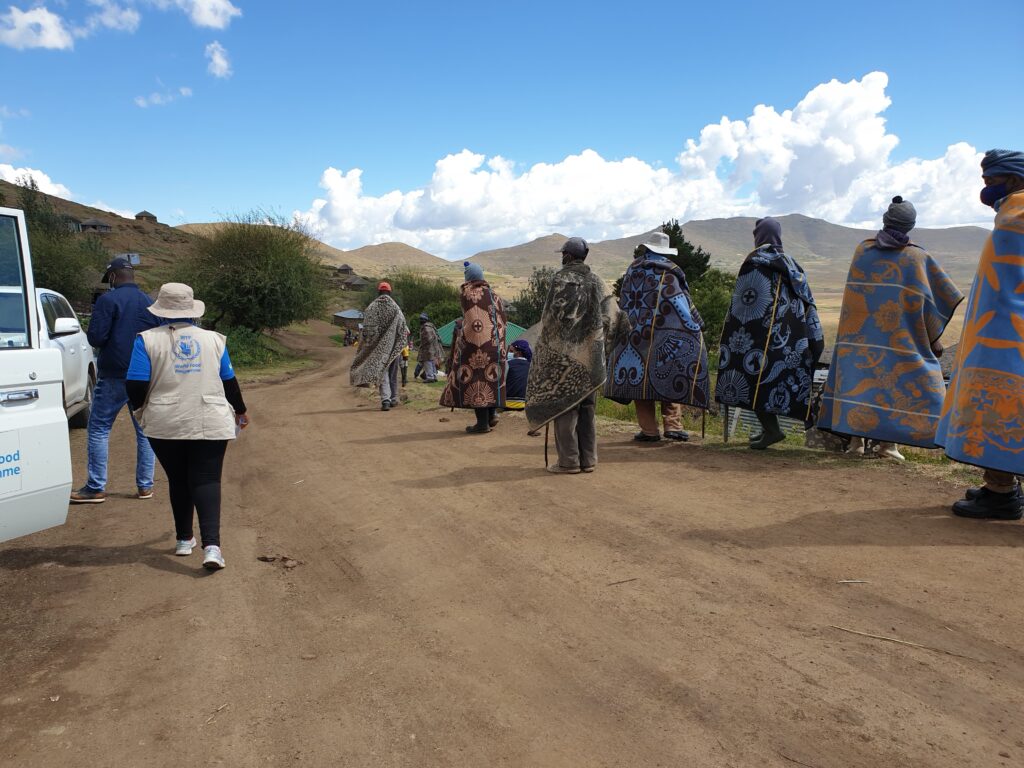
Smallholder farmers support: WFP provides support to value chain and market actors, including the Government, to enable communities at risk to aggregate, add value, access markets, reduce food losses and consume safe and healthy foods. In lieu of this, WFP made efforts to support the enabling environment for smallholder farmer linkages, particularly in relation to evidence generation. WFP conducted market assessment analysis which highlighted gaps in local markets and informing decisions on purchasing for international markets. WFP also played a role in the revival of a local purchase task force, providing oversight and guidance on smallholder farmers’ linkages to local markets, and further supported national market linkage forums to bring together buyers and producers. Between 2019 and 2020 WFP implemented a local purchase initiative, introducing smallholder farmers to the private sector, and through which WFP procured beans from farmers for primary school feeding.
In addition, WFP provided trainings to smallholder farmers on production, post-harvest loss, and marketing to improve food production, quality, processing and consumption and domestic and international commercialization and further promoted farmer profiling, aggregation, storage, and packaging/branding.
Livelihood and resilience building support:
On the other hand, WFP continues to work with the Government and partners to support the design and implementation of assets that are nutrition-sensitive and that improve and diversify the livelihoods of crisis-affected communities and households while strengthening their resilience to better prepare for and withstand shocks. WFP works with communities to create productive assets and promote income-generating activities using community-led, gender responsive approaches across 21 project sites in the three southern districts of Mafeteng, Mohale’s Hoek and Quthing. Through the Food assistance for Asset creation (FFA) initiative, WFP has been able to address the immediate food needs of vulnerable populations through cash assistance while helping to strengthen their livelihoods, reduce the impact of climate-related disasters and build community and household resilience to current and future shocks. Under this initiative, people build or restore their community assets through interventions geared towards supporting agricultural development which includes ecosystem restoration, range management, water harvesting, soil improvement, moisture retention, reforestation and watershed protection. Between 2019 and 2024, WFP provided cash assistance to 91,176 people while helping them build their absorptive, adaptive and transformative capacities to shocks.
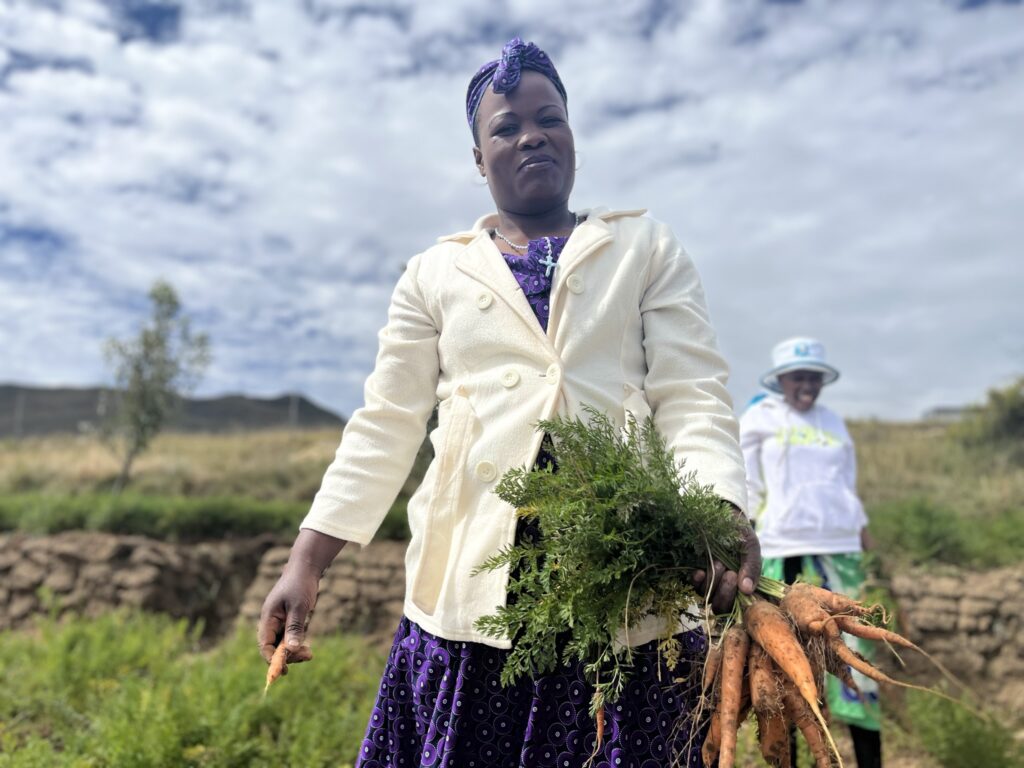
WFP will build on its integrated package of resilience interventions to promote livelihood diversification for at-risk populations, in particular women and young people. Taking a food systems approach, WFP will implement multi-year integrated strategies designed to enhance resilience to climate shocks. Taking into account Indigenous knowledge, these strategies will include the delivery of climate services, asset creation activities, ecosystem regeneration projects, livelihood diversification initiatives and interventions that foster market access and value chain development.
ON DEMAND SERVICE DELIVERY:
WFP provide the Government, development partners, civil society and private sector organizations with on-demand services that promote innovation and expertise in supply chains and other areas.
PARTNERSHIPS:
Across its activities, WFP has engaged with partners from the Government, donors, other United Nations entities, the private sector, civil society, non-governmental organizations (NGOs), women’s organizations and organizations working with local communities and persons with disabilities to understand priorities, gaps and needs and explore partnership opportunities and funding trends.