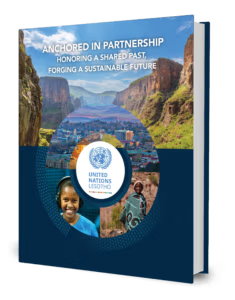
Lesotho became a member of UNESCO in 1967, just a year after gaining independence in 1966. Since then, UNESCO has worked side by side with the Government of Lesotho to develop education systems that provide quality lifelong learning opportunities for all and empower learners to be creative and responsible global citizens. As a laboratory of ideas, UNESCO offers a broad range of expertise in the fields of Education, the Sciences and Culture.
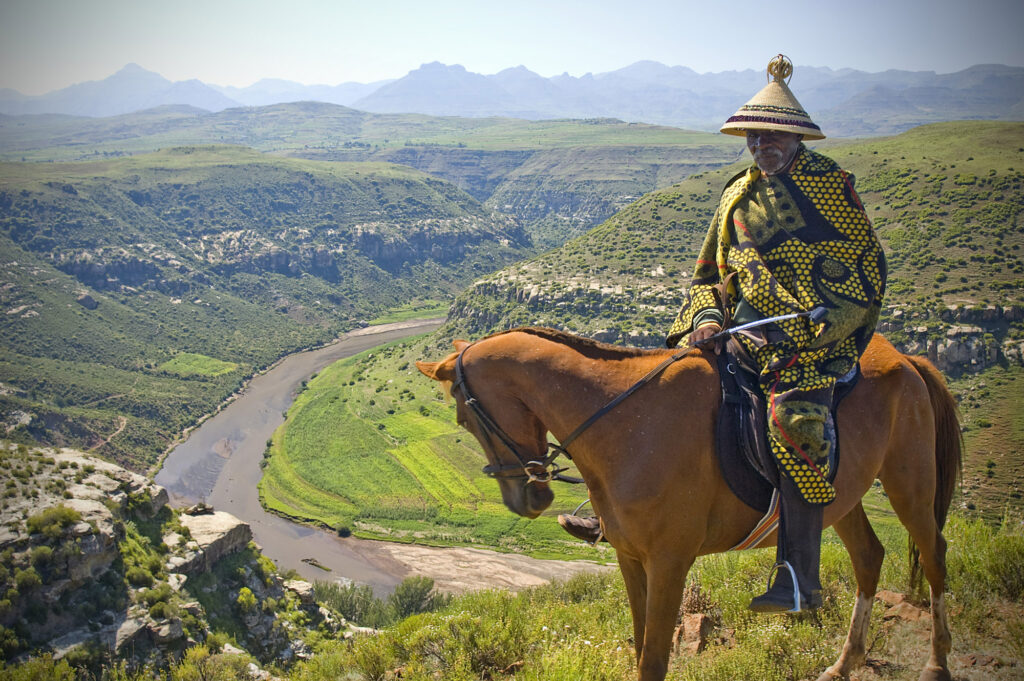
The country has one World Heritage site, The Maloti-Drakensberg Park inscribed in the year 2000 and one Biosphere Reserve, Matseng. This is a place where people and nature learn to live together in harmony. UNESCO-designated biosphere reserves are a living testimony to just how vital better conservation of natural areas will be to maintain the ecosystems on which humans depend and keep global warming within internationally agreed limits. UNESCO works with the Lesotho National Commission for Lesotho established under the Order of 1971, a governmental body attached to the Ministry of Education for the preparation, implementation of UNESCO’s Programme at the national level and cooperation with national organisations and national sections of international non-governmental organisations. The Commission has the mandate to disseminate information concerning UNESCO and its activities and be liaison for other bodies interested in UNESCO’s work at a national level.
CULTURE
Under UNESCO’s Participation Programme of 1981-1983, the Government of Lesotho received advise from UNESCO on the planning and construction of a building to house the National Archives, including technical services, storage facilities and administrative areas. The support also included attention to the legislation and regulations prevailing at the time as well as the structure, functions and activities of its various services.
This culminated in a plan for the development and modernization of the National Archives services and training of professional staff and technicians, in modern techniques such as records management. In 1984-1985, UNESCO spearheaded a purpose-built Museum in Lesotho which was designed by a UNESCO consultant for the National Museum project. UNESCO advised the Lesotho authorities (Ministry of Education, Sportsand Culture) on the creation of a National Museum in Maseru for the safeguarding of Lesotho’s cultural and natural heritage. In1986 there was a military coup which resulted in a delay of some of the museum development. Although UNESCO’s support did not lead to the development of a functioning museum at the time, the key concepts contained within the UNESCO plan were later used as a briefing document for the architectural tender competition which took place in 1999/2000 as the first major step of the current project. The plan highlighted key requirements, most of which remain valid today. In 2017, a design company was appointed as the lead consultants for the development of the Lesotho National Museum and Art Gallery funded by the Government of Lesotho. The first of its kind in the country, this new museum is currently under construction in the capital city of Maseru, which is set between sandstone slopes and grazing land in the western border area of the country. It will become a regional heritage hub that fosters live project-based links with existing heritage centres and sites of resonance within the country and beyond.
Under Southern African Intangible Cultural Heritage Lesotho benefited in Domesticating the 2003 International Cultural Heritage Convention by translating it into Sesotho language as it is a widely spoken language in Lesotho (2019). Market Research and Market Trends on Lesotho Cultural Industry Products for integration within the e-Commerce Platforms for Lesotho Cultural Industry was done. Development of the Online Platforms – Selling Platforms and PR Platforms (social media networks platforms for public awareness and advertising purposes) 2022.
“Beyond Mayibuye | Southern African Liberation Movements Heritage: Museums and Cultural Centers as Places of Learning”: The “Beyond Mayibuye” project, a collaboration between UNESCO, ICOM, and the Javett Art Centre, brought together museum and education professionals from Southern Africa to develop a toolkit promoting innovative and participatory learning experiences in museums. Led by a working group that included Lesotho nationals Bopane Rampeta and Lineo Segoete, the project culminated in a regional symposium and the creation of a toolkit titled “Beyond Mayibuye: Co-creation with the public.” This toolkit, validated by stakeholders and the Lesotho government, will be piloted in museums across the region, along with continued networking opportunities facilitated by UNESCO.
Reclaiming Our Heritage – Harnessing Educational Pathways for the Return and Restitution of Cultural Property in Southern Africa: UNESCO, the African Union Development Agency – New Partnership for Africa’s Development (AUDA-NEPAD) and the University of Pretoria, are launching this regional program to help Southern African countries including Lesotho to recover stolen cultural artifacts. The program will train experts to negotiate the return and restitution of stolen or displaced cultural property and support higher education institutions in these efforts. In October 2024, stakeholders will convene to elaborate on a proposal for this higher learning programme and chart a roadmap for its successful delivery.
Supporting Southern African Member States in increasing the number of inscriptions on the World Heritage List: UNESCO is assisting Southern African countries, including Lesotho, in adding more sites to the UNESCO World Heritage List from 2024 through 2025. One key Outcome over the next years is for Lesotho to successfully nominate Thaba-Bosiu National Monument for inscription and to build national capacity for future nominations.
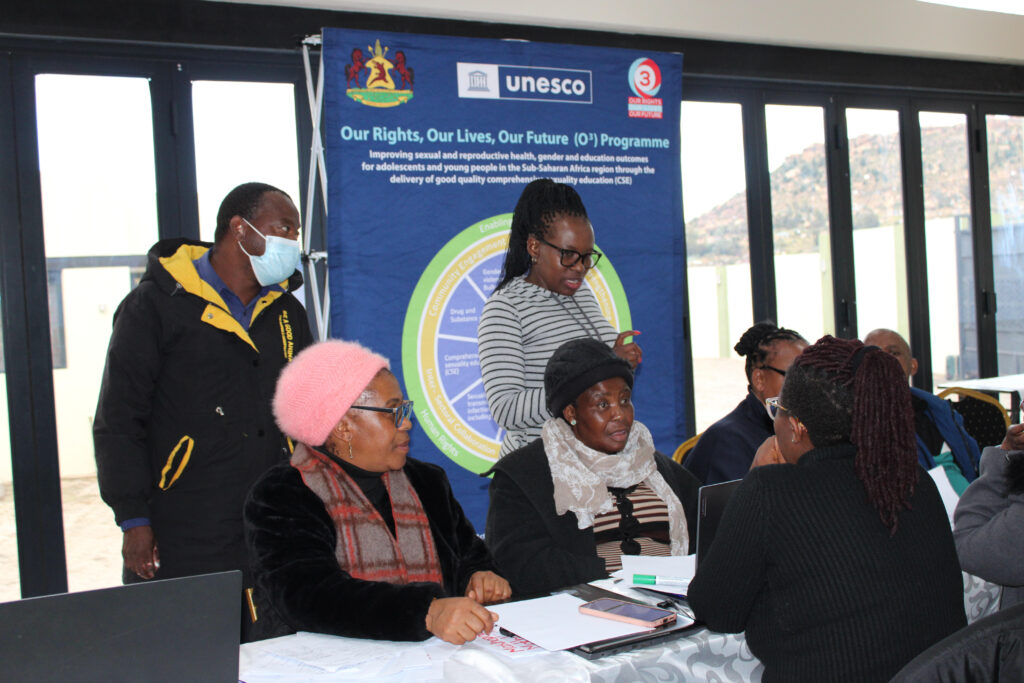
EDUCATION
In 1985, at the request of the Government of Lesotho, the Director-General of UNESCO sent a mission to Lesotho to assist the government in the establishment of a National Book Development Council. The perimeters of the support included advising the government on the objectives and functions of a Council, drafting the Council’s Constitution, advising on the staffing and budget and preparation of a detailed work plan of the Council as well as its administrative and management plan. A book development council is a nationally created or established, non-commercial agency charged with the promotion or development of the writing, design and illustration, printing or production, distribution or selling and use of books with special emphasis on the early formation of the reading habit throughout the nation. The Lesotho Ministry of Education in 1992 published its first education indicators in an initiative supported by the UNESCO International Institute for Educational Planning. The publication, designed to be rolledout on an annual basis gave data on the performance of the education system in Lesotho a critical element for monitoring progress, coverage, efficiency, effectiveness and bottlenecks of the system. Under the auspices of UNESCO, the Korean National Commission for UNESCO through the BRIDGE Programme established three Community Learning Centres in Lesotho between 2013 and 2017:
- Ha Motsu in Maseru
- Liphiring in Mohales’hoek
- Ha Teko in Maseru
The Community learning centres are important sites for on-going literacy programmes, Early Childhood Care and Development (ECCD), technical and vocational training. These Centres are still active and on ECCD part Lesotho Government has made a commitment to absorb them into their Early Childhood Care and Development Programme, which means feeding for the learners, training and a livelihood for Care givers.
More recently, UNESCO spearheaded a five-year programme in 11 countries in the Sothern African Development Community (SADC) region for capacity building for teacher educators on Education for Sustainable development. Education for Sustainable Development is meant to impart and prepare teachers with socio-ecological knowledge, skills, values ad attitudes necessary for sustainable living. With funding from the Swedish International Development Cooperation Agency (SIDA), between 2019-2023, UNESCO strengthened the implementation of ESD in teacher training institutions, from the Early Childhood Care and Education (ECCE), primary, secondary and Technical Vocational Education and Training (TVET). For Lesotho, this was done in 2020. During this period, three institutions with 17 first beneficiaries benefitted, leading to 33 Community of Practice Members in various institutions. In turn, 688 learners were reached in participating institutions through Change Projects and ESD teaching activities and 180 institutions were reached through the Change Projects (schools, industry, governments, community organisations. In addition, over 6000 learners were reached in schools through Change Projects and ESD teaching activities and over 1000 community members were reached through the same change projects. UNESCO has been actively promoting STEM education in Lesotho through various initiatives, including a STEM bootcamp. The bootcamp aimed to enhance students’ and teachers’ skills in science, technology, engineering, and mathematics, focusing on practical applications and innovative technologies. Activities related to robotics, micro science, and 3D printing were conducted. This bootcamp is part of a broader effort to equip young people with the skills needed to address local and global challenges using Fourth Industrial Revolution (4IR) technologies.
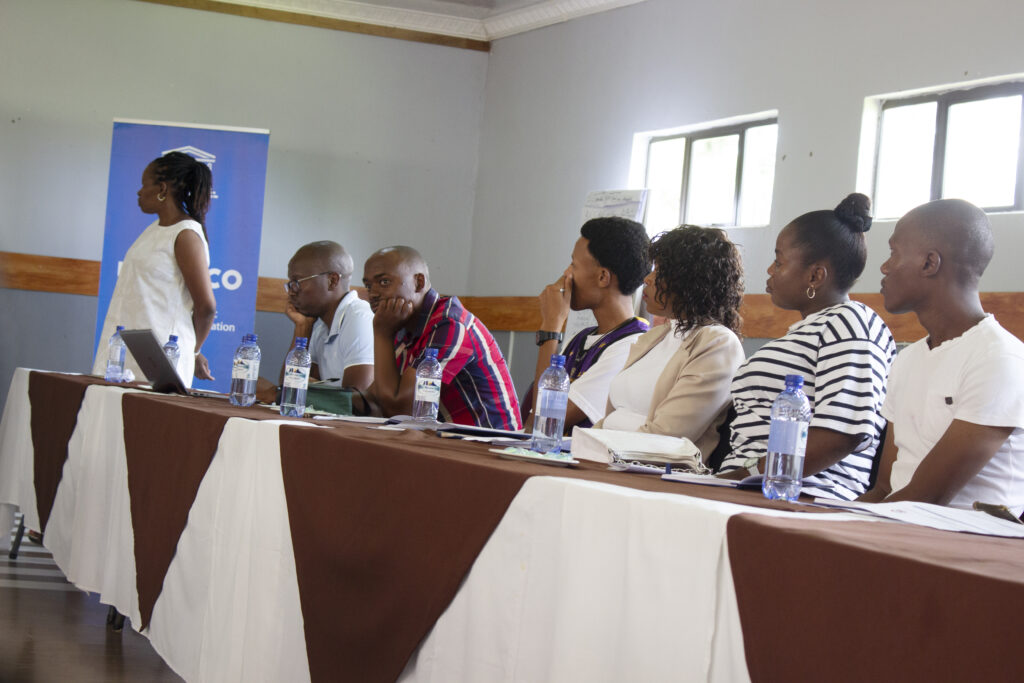
Education for Health and Wellbeing
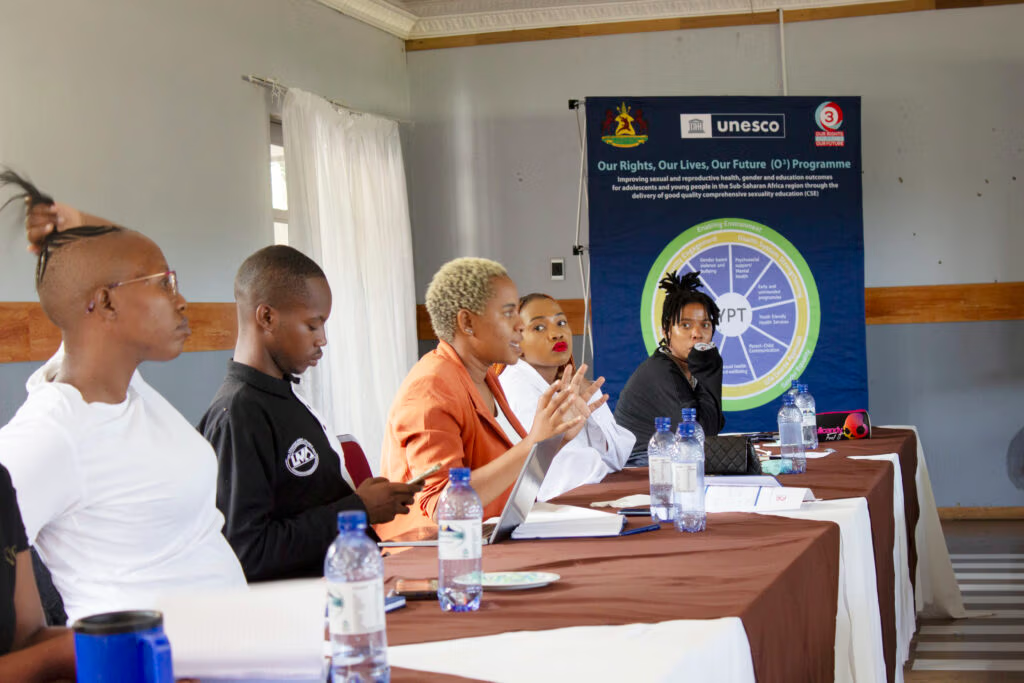
UNESCO supports the government of Lesotho within the framework of multi-sectoral approach as defined and funded by UNAIDS in the HIV response in the education sector including through policy development, capacity development and evidence generation. The policies include The Education Sector HIV and AIDS Policy which guides the interventions towards prevention and management of HIV impact in the sector, National School health and Nutrition Policy (2018) to strengthen learner retention in schools through effective school health programming and Prevention and Management of Learner Pregnancy Policy anchored within the Education For All (EFA) principle to ensure retention of learners through prevention and management of learner pregnancy. To ensure increased comprehensive HIV prevention knowledge and strengthened health services for young people, UNESCO with SIDA’s financial support advocated for endorsement of the East and Southern African Ministerial Commitment (2013 and 2021) by Ministers of health and Education on provision of quality Comprehensive Sexuality Education and strengthened adolescent friendly health services.
This endorsement resulted in the institutionalisation of Comprehensive Sexuality Education (CSE) in Lesotho fully supported by UNESCO from 2014, with up to 75% of schools providing CSE and prevention of school violence and school related gender-based violence in 2018. More than 1,700 Secondary school teachers and more than 4,000 Primary schools received in-service teacher capacity development in quality delivery of CSE. Being a compulsory subject in the Lesotho school curricular, CSE has reached an estimated 311,000 primary school learners and 112,000 secondary school by 2023 through UNESCO and financial support from SIDA.
UNESCO further commissioned several studies including the Situation Analysis on Early and Unintended Pregnancies (EUP) in Lesotho Secondary Schools and Case Study: Leave No Child Behind, Boys Disengagement from Education, to establish the magnitude of EUP and the disengagement of boys from education respectively. The two studies have successfully informed appropriate interventions and budgeting. As a result of the study on the magnitude of EUP in Lesotho, UNESCO supported the development of the above-mentioned pregnancy prevention policy. To ensure quality data on HIV, UNESCO supported inclusion of HIV sensitive indicators in the Education Management system.
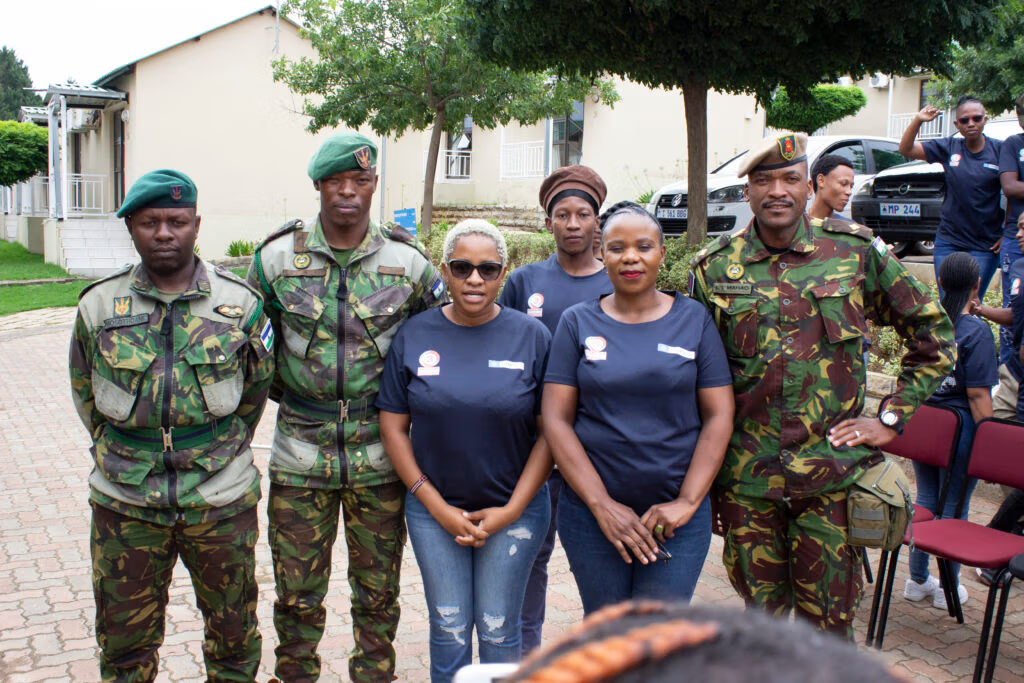
UNESCO’S endeavour to engage multi-sectoral approach on full access to adolescents sexual and reproductive health and rights include the affirmation of Gatekeepers’ SRHR Commitmentin 2014. UNESCO collaborates with the institutions of higher learning in Lesotho on different programmes including introduction of CSE for teacher trainees as the National University of Lesotho and Lesotho College of Education.
In the mid-1990s, UNESCO supported establishment of organisations for youth and teachers infected and affected by HIV in Lesotho named Young Positive Generation of Lesotho (2014) and Teacher Organization Responding to HIV and AIDS in Lesotho (TOREHA-LES). The organisations aimed to empower youth and teachers living with and affected by HIV to live positively and collaborate on the fight against discrimination. UNESCO further supported the organisations to be advocates for uptake of anti retroviral therapy.
In 2022, The UN Secretary General called countries to conduct national consultations in preparation for the Transforming Education Summit. UNESCO led and provided technical guidance for the national consultations which resulted in the country commitment which was presented by the Honourable Prime Minister of the Kingdom during the Summit in October 2022. The Ministry of Education reviewed the Curriculum and Assessment Policy (2009), resulting in the Lesotho Basic Education Curriculum Policy (2022) through continued technical support from UNESCO.
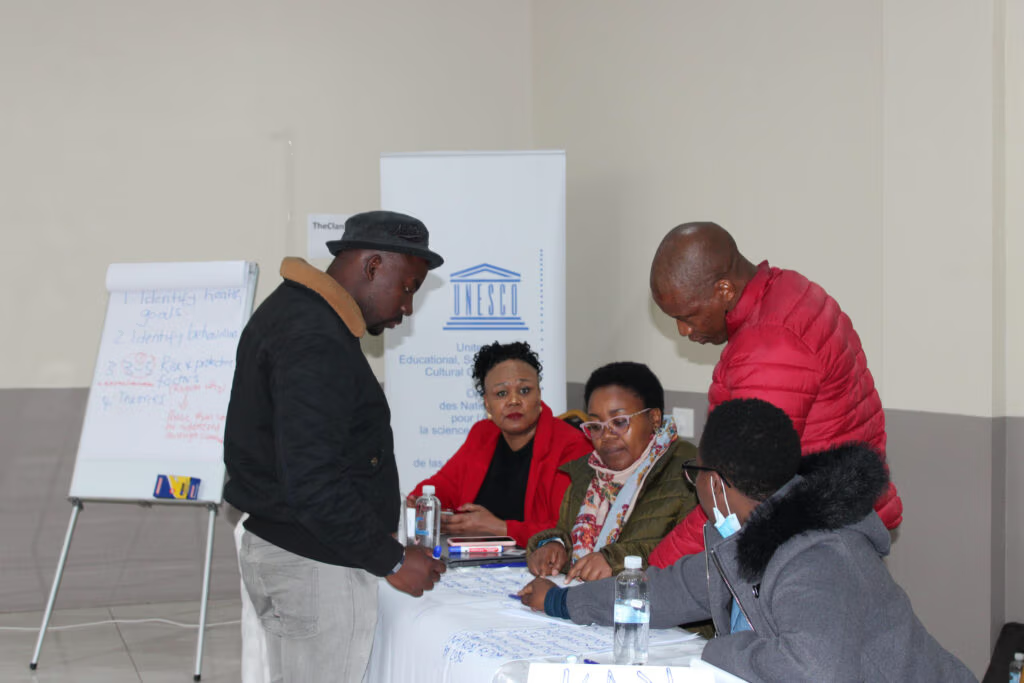
Communication and Information
UNESCO supports Lesotho on several fronts related to media and communication. In 2009 the first Community Radio (Mafeteng Community Radio) in the Southern part of Lesotho was established with funds that came through the Participation Programme for the Lesotho National Commission for Lesotho and UNESCO has been adding more funding in various ways to build on the initiative. The second community radio (Moeling Community Radio) in the Northern part of Lesotho is called Butha-Buthe.
UNESCO supported Community Mobilisation for the Establishment of Berea Community Radio Station (still under progress).
The country now has 10 Community radio stations and though not all founded through UNESCO, they are a beneficiary of on-going support and capacity building through UNESCO. Another key area of support is the media capacity building on ethical election reporting and addressing disinformation and misinformation and the safety of journalists during elections. To date, one journalist has been killed in Lesotho while executing their duties. UNESCO will continue to support Lesotho media in future elections. In collaboration with MISA Lesotho, UNESCO will support the development of a handbook for the media during elections in support of media’s ethical reportage of future elections in Lesotho. Future support includes capacity building of civil servants in Lesotho in Digital Transformation and Artificial Intelligence (AI) competency skills in response to a request from the Ministry of Information, Communications, Science Technology and innovation. Linked to this, UNESCO will support Lesotho in its foundation laws for digital transformation and AI by supporting stakeholders’ consultations for the national media and information Literacy policy. UNESCO supports the monitoring of SDG 16.10.1 (Safety of Journalists and Media professionals) through the annual State of Press Freedom Report in Southern Africa and monitoring of SDG 16.10.1 (Citizens Access to Information) through Annual surveys on Access to Information in Lesotho. Support to modern challenges on Media viability caused by internet platforms and big technology through assessments, studies and research. The most recent study that involved Lesotho is the Study on Media Viability in Southern Africa.
During 2022-23, Lesotho received support for community engagement processes that led to the formation of Media and Literacy Network, Lesotho Chapter. This was one very effective process as the communities took part very actively.
Natural Sciences
Together with the United Nations Industrial Development Organization (UNIDO), the United Nations Conference on Trade and Development (UNCTAD), the United Nations Commission on Science and Technology for Development (CSTD, stakeholders and partners, UNESCO supported the development of Lesotho’s first Science and Technology Policy 2006-2011. This was developed to promote the use of science and technology as a 21st tool for economic development. Under the auspices of UNESCO, the German National Commission for UNESCO (DUK) assisted Lesotho to establish its first Biosphere Reserve under the Man and the Biosphere Programme of UNESCO, Matšeng Biosphere Reserve was designated in 2021.
Climate Action
Arts, Culture and Technology for Climate Change or ACT for Green Social Entrepreneurship Innovation Youth Project, implementation of Sustainable Development Goals 1, 4, 5, 13, 15 and 16 in Lesotho. It pursues an inclusive approach which creates collaborative platforms for youth in and out of school for Life on Land initiatives, encouraging youth and women to lead green initiatives for strong community networks that enhance awareness on the impact of environmental changes such as climate change on agripreneurship, which is the main source of livelihood for both community members and animals. ACT 4Climate Change Initiative has been running for three years (2021-2023) successfully. It has managed to have a national coverage working with 32 schools (primary and high schools) where over 3,000 fruit trees have been planted to address food security issues and mitigating green gas emissions. In addition, it has partnered with local organisations such as Limomonane Trust to plant 10,000 local trees and shrubs to help in land reclamation matters. GEM Institute partners with Lesotho National Commission for UNESCO and the World Food Programme (WFP) to strengthen efforts at local level to advocate for Life on Land issues through the Environmentally Sustainable Development (ESD, Man and the Biosphere) by UNESCO Participation Programme and Communication for Climate Change by WFP.