The Office of the Resident Coordinator’s Support to Lesotho

Strategic Leadership and Coordination
The United Nations Resident Coordinator Office (RCO) plays a pivotal role in supporting the work of the UN Resident Coordinator, who leads the UN Country Team (UNCT) in consultation with the Government of Lesotho. Together, they define and agree on the UN’s strategic response to the nation’s development priorities, encapsulated within the UN Cooperation Framework (CF).
The UN Cooperation Framework: A Collective Vision
The CF serves as a medium-term results framework, articulating the collective vision and response of the UN system to Lesotho’s development priorities. It outlines how the UNCT will contribute to achieving these results, drawing on a common country analysis and leveraging the UN’s comparative advantage.
Coordinated Programming for National Priorities
The RCO coordinates activities related to common programming, including Agenda 2030, joint programmes, joint programming activities, and development coordination work. These efforts align with the Government’s objectives and priorities, as well as the mandates and objectives of various UN agencies. This coordination ensures a harmonized and effective approach to addressing Lesotho’s development challenges.
Core Functions of the Resident Coordinator Office
The UN Resident Coordinator Office’s support is anchored in six core functions:
- Strategic Planning: facilitating the development of strategic plans that guide the UN’s support to Lesotho’s development agenda.
- Economic and political analysis: providing economic and political analysis and insights to inform policy and programme decisions, ensuring they are grounded in sound principles.
- Human Rights support: provides critical support for human rights initiatives, ensuring that all programs and policies uphold and promote the fundamental rights and freedoms of individuals in Lesotho.
- Partnerships and Development Finance: Strengthening partnerships and mobilizing resources to support sustainable development initiatives. This includes working with a broad spectrum of stakeholders, from international donors to local communities.
- Data and Results Management and Reporting: Ensuring that development efforts are data-driven and results-oriented. The RCO supports robust monitoring and evaluation systems to track progress and inform decision-making.
- Communications and Advocacy: Leading efforts to communicate the UN’s work and advocate for issues critical to Lesotho’s development. This includes raising awareness about the SDGs and engaging with various audiences to foster a shared commitment to sustainable development.
RCO’s value addition to the UNCT and the Government of Lesotho
Working together as One UN in Lesotho, the RCO provides invaluable economic and political analysis, which has been instrumental in addressing the developmental challenges faced by the country. Guided by the Common Country Analysis of 2022, the collaborative efforts of the RCO have significantly shaped the strategic direction for the 2024-2028 period. The CCA has proven pivotal in steering both policy development and strategic interventions for the UN and the Government of Lesotho.
Economic Analysis: Shaping Policy and Strategic Interventions
Economic analysis provided by the RCO offers critical insights into the country’s economic landscape. This data-driven approach ensures that the interventions are effective and aligned with the national development priorities, thereby enhancing the impact of the UN’s work in Lesotho. For example, RCO in Lesotho assessed the socio-economic impact of COVID-19 on key development sectors and vulnerable groups, providing recommendations to support recovery and inform targeted policies, including poverty mapping and food insecurity evaluations with sex-disaggregated data. The RCO together with other UN agencies supported the development of the Integrated National Financing Strategy (INFS), aligning Lesotho’s financial framework with the NSDP II, UN Agenda 2030, and AU Agenda 2063 to mobilize resources from diverse sources for SDG implementation. Furthermore, the RCO supported Lesotho’s SDG Summit efforts by facilitating an in-depth analysis of Lesotho’s development realities, working to define pathways for achieving the SDGs, grounded in the country’s national priorities by exploring the interlinkages between various SDG targets, assessing potential synergies and trade-offs. These assisted the government to set new targets for reducing poverty and inequality by 2027, while guiding policy investments to accelerate progress toward the 2030 agenda.
Political Analysis: Navigating Lesotho’s Dynamic Landscape
Political analysis plays a pivotal role in guiding the UN to adapt its programming to the evolving political landscape of the Kingdom of Lesotho. To this end, the UN regularly provides in-depth political updates and analysis to its leadership, ensuring that strategies remain relevant and effective. Strategic advice and dedicated support are also extended to various UN programmes and projects, aligning them with the nuanced realities on the ground.
By embedding a deep political and contextual understanding into its initiatives, the UN significantly enhances the likelihood of achieving its goals, fostering positive change across the nation. On the global level, UN Lesotho contributes valuable insights to the political reading and contextual analysis conducted at UN headquarters, ensuring that decisions are made. During 2023-2024, a facilitated dialogue process contributed to building peaceful relations between key actors at the national level. Support takes into account the political realities and complexities of the country informed by the complex realities and unique challenges that Lesotho faces.
Conflict Prevention and Peacebuilding
The UN is committed to being conflict-sensitive in ensuring that all of its programmes and activities, meaning interventions are conflict-sensitive, are carefully designed to avoid inadvertently creating conflict and instead, when, and whenever possible, to foster peaceful relations and social cohesion. Through several joint programmes who have directly contributed, the UN has made significant contributions to peacebuilding, particularly in the areas of governance and the national reforms, violence reduction and security sector reform, with human rights and gender perspectives.
The Resident Coordinator plays a crucial role by facilitating dialogue and mediating conflicts. As an example, the UN in Lesotho working closely with the Department of Political and Peacebuilding Affairs, in the past facilitated a multi-step dialogue process that significantly improved peaceful relations among key national actors as part of good governance.
This proactive approach to understanding and addressing political dynamics ensures that UN interventions are supportive of a peaceful and stable environment – an essential foundation for sustainable development.
Looking towards the future, the strategic planning facilitated by the RCO, grounded in robust economic and political analysis, will continue to guide the UNCT and the Government of Lesotho. The insights from these analyses are integral to the development of the next Cooperation Framework, ensuring that it is responsive to the current and emerging needs of the country.
The RCO’s provision of economic and political analysis adds significant value to the UNCT and the Government of Lesotho. By ensuring that interventions are both economically sound and politically sensitive, the RCO helps create a foundation for sustainable development and peace in Lesotho. This strategic support is essential for building a more prosperous and cohesive society, aligning with the overarching goals of the 2030 Agenda for Sustainable Development.
Ensuring a Human Rights Centered approach to Development
Our CF is emphatic on the use of human rights lenses to development. We continually work with the UN Country Team (UNCT) to integrate human rights into their programmes and activities. To this end, we have undertaken human rights assessments; provided technical advice to national institutions; and conducted human rights capacity-building for a range of governmental and non-governmental actors.
Our coordination has in the past year supported the development and implementation of a regional Joint Program on the prevention of violence against women and children. This program, broadly aimed at ending GBV and creating a safer and more equitable Lesotho has resulted in part, in the refurbishment of a multi-purpose centre that shall at its completion offer shelter and auxiliary services that women and children made vulnerable by violence need. We supported the initiation and conceptualisation of a joint youth empowerment program with UNICEF, UNDP, WFP and other agencies and stakeholders. This program, that is now the Prime Minister’s flagship program is a response to the plight of youth unemployment and one of the key pillars of the national strategic development plan which aims to transform Lesotho from a consumer based to a producer and exporter based economy. Our role was ensuring a coordinated, inclusive and representative program for all.
Working with UNDP, UNWOMEN, and OHCHR we have coordinated a project supporting the implementation of National Reforms Process. This project, was intended to support and ensure a peaceful and inclusive reforms process for sustainable peace. Working with other agencies, civil society, stakeholders and the government, our work on human rights ensured that the products of the national reforms process are varied and reflective of all with a particular focus on women and LNOB groups. From policies, amendments of various laws including but not limited to The Counter Domestic Violence Act 2022, Harmonisation Of The Rights Of Customary Widows With The Legal Capacity Of Married Persons Act 2022, and ultimately the current amendment of the constitution through the 10th and 11th amendments. The 11th amendment will create the National Human Rights Commission for Lesotho, thus broadening the official languages of Lesotho to include groups that were excluded in the past. The process has already birthed three major legal shifts improving the status of women in inheritance, and ensuring the protection of women against violence. These cumulatively will improve the status of women and has already shifted their enjoyment of everyday rights.
Our coordination of High-Level Visits from human rights special mechanisms have been successful and impactful for the different mandate beneficiaries. From the Special Rapporteur on the right to development, the Special Representative of the Secretary-General on Violence Against Children and the Independent Expert on the rights of persons with albinism. These visits focusing on communities have elevated their individual and collective issues and ensured that their rights are back at the centre of primary and high level engagement.
Business Operations of the UN House
The UNCT in collaboration with the Operations Management Team (OMT) produced a medium-term business operations strategic (BOS) plan that aligns with the Delivering as One (DaO) approach which aims to provide an efficient and effective support services to the UN programs through inter-agency coordination and cooperation on support service functions. As the UN Globally is working toward the establishment of a Common UN Premises and Business Operations Strategy, the UN Lesotho has achieved significant milestones in those initiatives.
On 1 November 1995, the UN agencies moved into the one UN House donated by the Government of Lesotho, today operating from One Common Premises is one of the core efficiency initiatives countries strive to achieve, this significant achievement has unlocked the opportunities in different operational services which includes establishing common ICT, common compound security and cleaning services, environment and energy efficiency initiatives such as installation of solar energy, energy saving automated LED lights, zero ozone depletion Air Conditioning System, and physical accessibility features.
The UN Lesotho is one of the few countries that piloted the implementation of the Business Operations Strategy in 2014. Through the UN agencies operating together, the UN Lesotho has achieved significant economies of scale, increased efficiency, and established common business systems, policies, and procedures focusing on monetary savings, reducing transaction costs and duplication of efforts by establishing long term agreements with services providers and leveraging from each other’s comparative advantage.
The future looks greener for the UN House as there are plans to embark on the waste separation initiative and expand the solar energy supply. The UN Lesotho has started to walk the talk when it comes to disability inclusion, there are plans in place to ensure that everyone is welcome to the UN building by expanding disability-friendly features within the building to make it easy to navigate for everyone.
Overall, the BOS2 provides a strategic roadmap for the UN development system in Lesotho to work together effectively and efficiently, maximizing resources and efforts towards achieving the UNSDCF goals.
Strategically Communicating: Communications Support
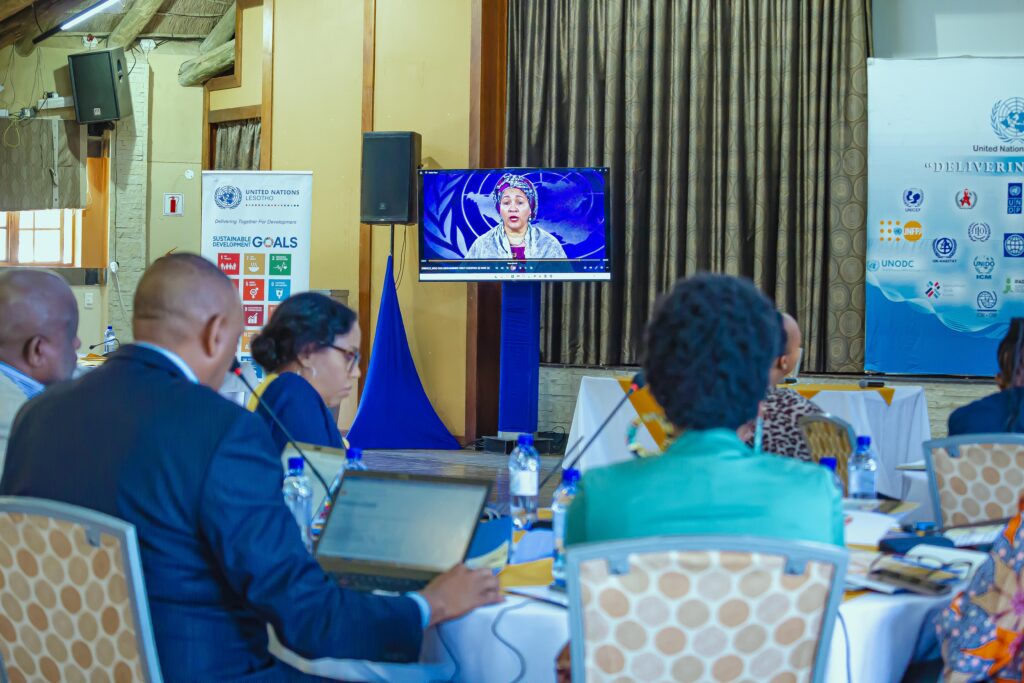
The UNCT has been a committed partner to the Government of Lesotho, working through the United Nations Communications Group (UNCG) coordinated by the RCO. This collaboration has been crucial in advancing the 2030 Agenda for Sustainable Development, with a focus on effective and unified communication strategies.
As Lesotho works to achieve the SDG’s, communication plays a pivotal role. It is essential that people, businesses, civil society, and governments understand what the SDGs entail and how they can actively participate in creating a sustainable future. The most disadvantaged populations must be involved in shaping decisions that impact their lives.
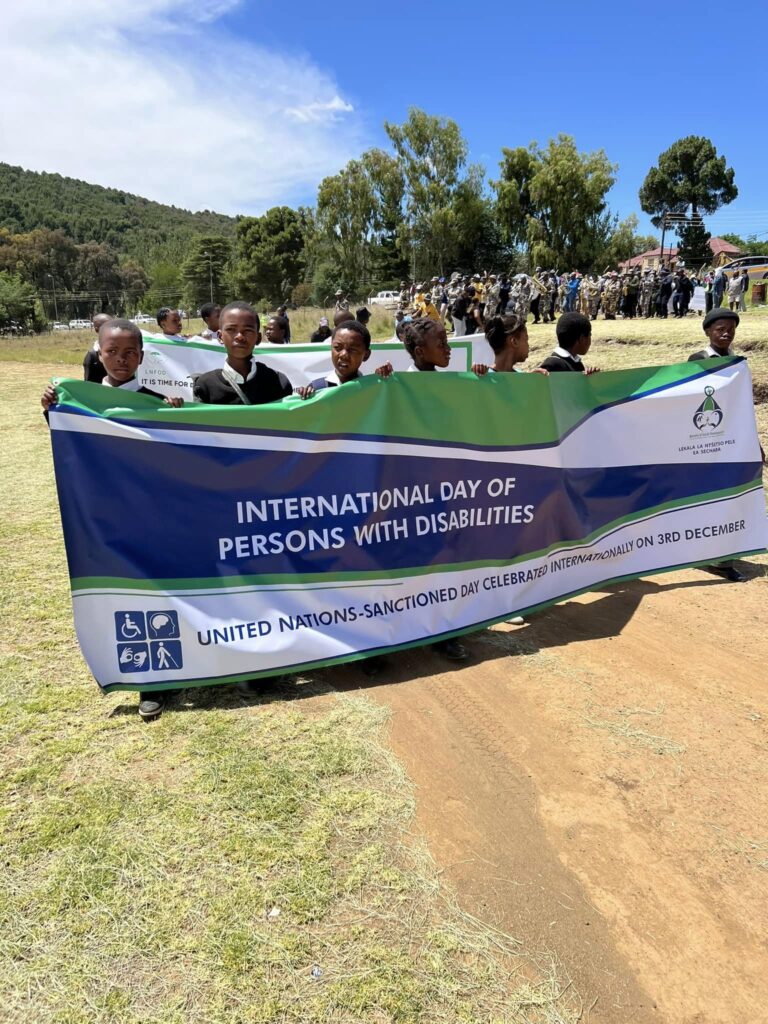
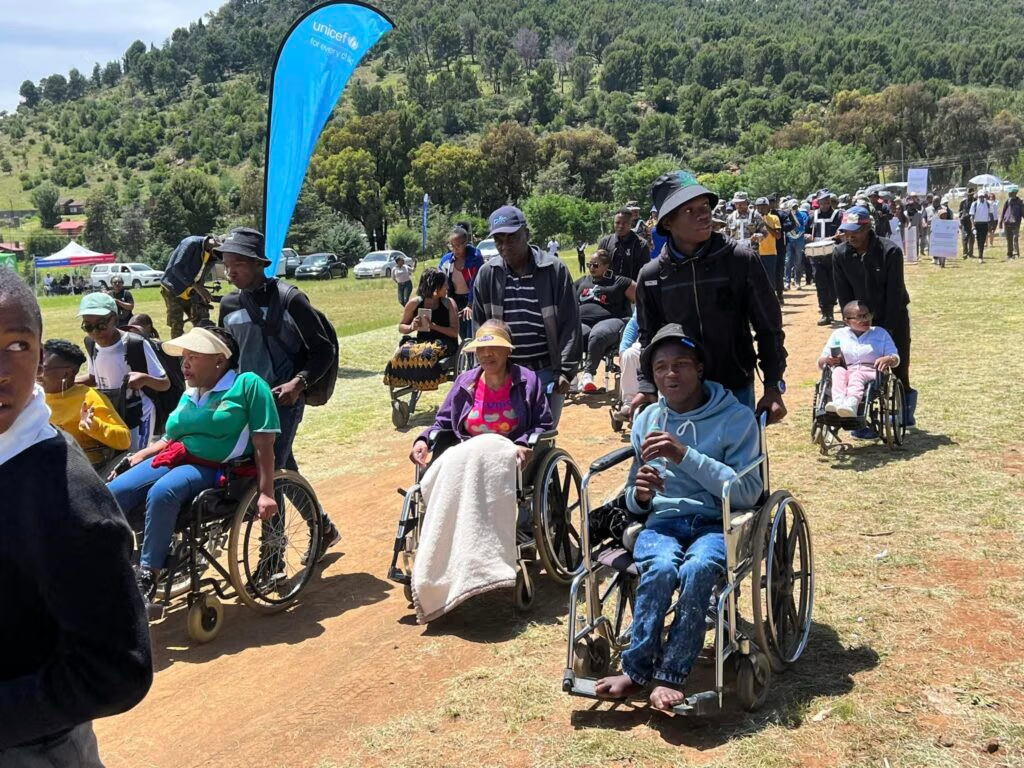
Over the years, the UNCG has worked closely with the Government of Lesotho to amplify and raise awareness on various critical issues. Through commemorative days such as the 16 Days of Activism against Gender-Based Violence, International Women’s Day, Human Rights Day, International Day of Persons with Disabilities, and United Nations Day, the UNCG has engaged with communities across the nation. These events have been instrumental in fostering dialogue, raising awareness, and promoting action on key issues, including gender equality, human rights, and social inclusion.
The support from the UNCG has extended to initiatives focused on youth, women, migration, health, and all areas covered by the SDGs. By leveraging the vastly changed communications landscape, the UNCG has embraced the opportunities presented by digital platforms. Social media, in particular, has enabled direct dialogue with diverse audiences, allowing for real-time engagement on issues of concern. This digital engagement has been a game-changer, facilitating the dissemination of information and the mobilization of communities.
The UN’s support to the Government of Lesotho is framed within the Cooperation Framework, which guides the work of the UN at the country level. This framework underscores that change towards development objectives can be supported and driven through digital channels, effectively integrating communication into programme planning and delivery. Communications and public advocacy are no longer merely tools for promoting results; they are integral to achieving them.
Looking at the journey ahead, the partnership between the UNCT and the Government of Lesotho promises to continue driving progress towards the SDGs. By fully integrating communications and public advocacy into programme planning and delivery, this partnership will ensure that the voices of all Basotho are heard, and that sustainable development becomes a reality for everyone.
This collaborative effort highlights the importance of partnership and innovation in communication. As we move forward, the UNCT remains committed to supporting the Government of Lesotho, ensuring that together, we can build amore sustainable, inclusive, and prosperous future for all.
Partnerships and Resources Mobilization
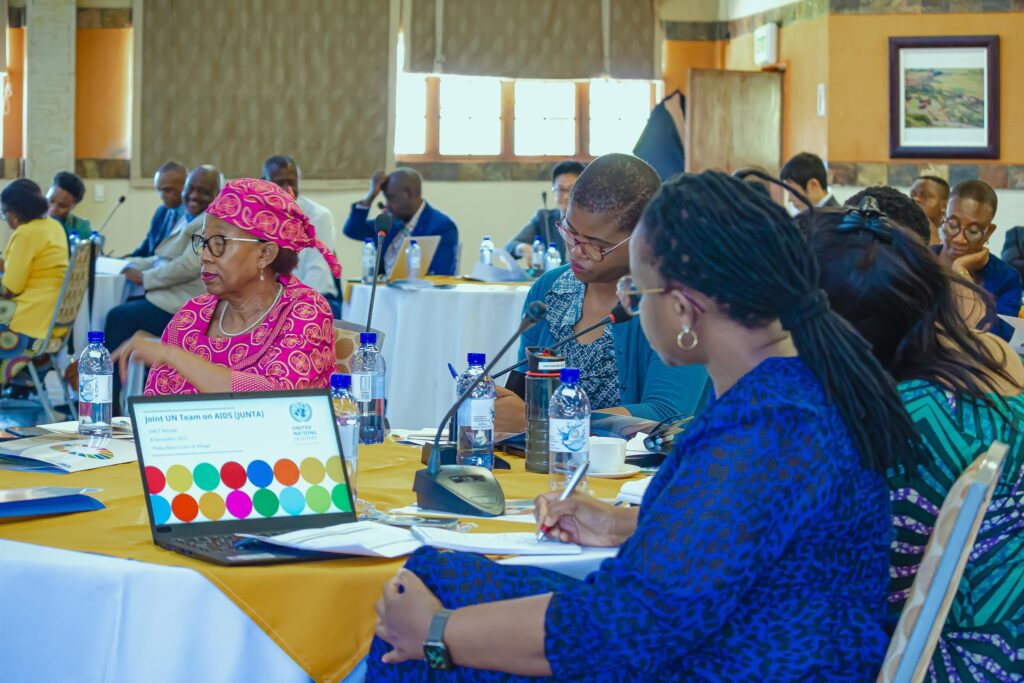
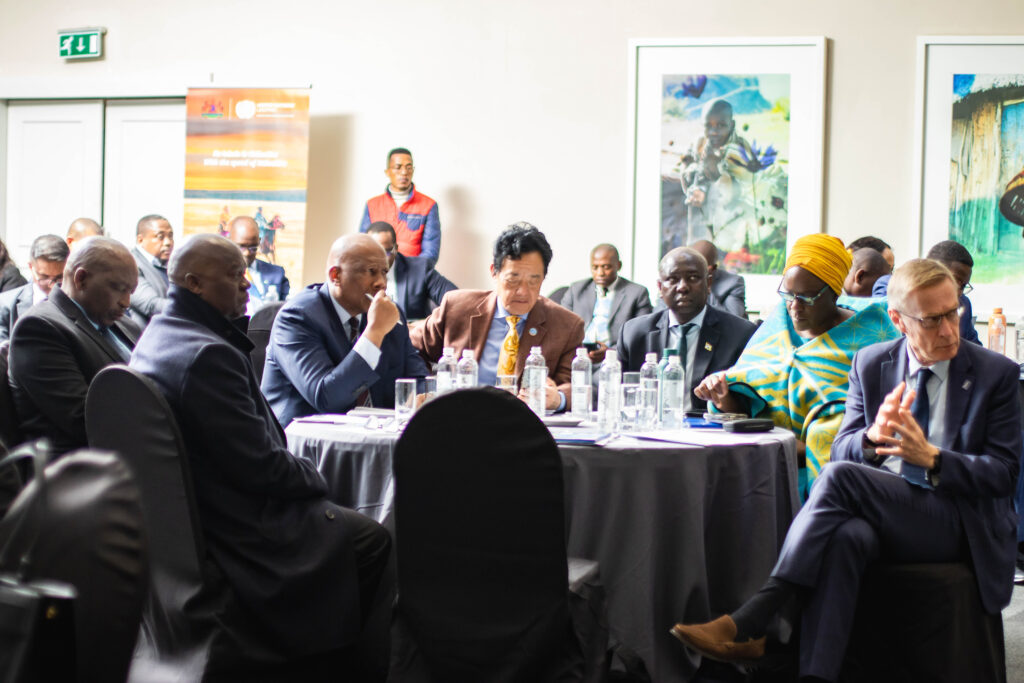
The UN strategic collaboration and partnership with partners and stakeholders including the Government ministries, civil society, development partners, private sector, academia, disability organizations, youth, local authorities, and trade unions led to a highly inclusive UN Sustainable Development Cooperation Framework that is well aligned to the pillars of the National Strategic Development Plan (NSDP II). Partners and stakeholders inputs were engaged from identification of the challenges to prioritisation of development priorities and interventions as the UN Cooperation Framework stands today. As part of Delivering as One, UN has made successful joint efforts to mobilize resources for the different pillars of the UN Cooperation Framework. For example, UN agencies have jointly responded to a number of calls for funding from multi-lateral organizations such as African Development Bank, Multi-partner Trust Fund, SDG Fund, Disability Partnership Fund, etc.
Some of the partnerships and resource mobilization efforts have brought positive results. In an effort to promote disability inclusion USD 70,000.00 was mobilized from the Disability Partnership Fund. Lesotho is characterised by harsh climatic conditions which often lead to poor agricultural production hence chronic food and nutrition insecurity. The level of food insecurity in 2024 has warranted the declaration of state of emergency on food insecurity disaster, and appeal for support from development partners. UN Lesotho has made efforts to mobilize some of the resources to support a response to the call. For example, UN Lesotho developed and submitted to the AfDBa joint funding proposal on Climate Action Window focussing on adaptation. Of the 3,700 submissions, UN Lesotho was among 37 proposals that were approved for funding for a USD 37,000,000 project. In a similar note, a total of USD 2,000,000 has been secured from the Central Emergency Response Fund (CERF) for emergency response on food insecurity.
To be more systematic and deliberate going forward, UN Lesotho has launched the development of the Communication, Advocacy, Partnerships and Resources Mobilization Strategy. The strategy is designed to communicate priorities and efforts, influence policy change through advocacy, forge strategic partnerships and mobilize resources for the realization of the CF priorities.
Championing Disability Inclusion
The RCO role of advocating and coordinating for disability inclusion within the UN’s work has been pivotal in influencing one UN which is also disability sensitive and representative, interms of policies and, practices, physical infrastructure as well as organisational culture, as has been recommended by the UN Disability Inclusion Strategy (UNDIS).
The OHCHR supported OPDs in 2020 in their mission to advocate for the enactment of the Persons with Disability Equity Act of 2021. The support was in the form of finances as well as technical capacity.
Based on the same intervention, the same organisations successfully mobilised high participation of persons with disabilities during the 2022 national elections, and as a result, at least one individual was elected into parliament and eventually appointed as a minister for Gender, Youth and Social Development.
The RCO has recruited a UNV with a disability serving as Disability Inclusion Officer (DIO), whose main responsibility is to advocate and support mainstreaming of disability related needs into the UN’s work across various programs. This therefore has added some quality on our work in terms of Leaving No One Behind. It also means one good step forward in creating a disability representative UN as per indicator number 12 of UNDIS.
We have also sensitised various interagency structures on the urgent need to take lead in mainstreaming the human rights in question, and few examples of such structures are OMT, PCT and at least two ORGs in 2023 and 2024. As result, OMT has decided to support disability inclusion work both financially and implementing some of the recommendations from the accessibility Audit Report of 2023.
More importantly, the OMT HR working group trained 32 individuals with disabilities on how to apply for UN jobs and pledged the provision of reasonable accommodation of their needs during application for UN jobs. The group further started sharing UN job adverts with Organisations of Persons with Disabilities (OPDs) for dissemination to their individual members.
In addition, some agencies like WFP, UNICEF, UNAIDS, UNDP and IOM have demonstrated their intention to employ some members of the said community by attaching statements in their job adverts, specifically encouraging professionals with disabilities to apply. This has been observed in adverts published from 2023.
During this period UNAIDS and UNDP have advertised two UNV jobs specifically targeting individuals with disabilities and as a result the recruitment is in the pipeline. It is equally important to note that more than 40 applications were received from the community in question.
Some of the agencies like UNDP also consult with Disability Inclusion Office where they need to include either the needs or participation of persons with disabilities in their initiatives. Consequently, during its call for applications for 2024 STEAM projects, more than 140 applications came from disabled candidates and out of these, 10 qualified for selection.
The PCT has recently endorsed the Disability Inclusion Marker with the intension to ensure that all programs and projects systematically respond to disability needs and rights and are thereby striving to achieve disability inclusive SDG results. This is one of the biggest commitments that UNCT Lesotho wants to take, and the process is heading in a good direction.
The UN through the lead from Common Services office has installed the elevators with some accessibility measures in place, such as: brailed buttons and audio description. The tactile blocks are also anticipated to be installed on some of the floors in the UN building.
These achievements demonstrate the positive change within the UN in terms of the policies, attitudes/practices, and UN culture in line with the UN guiding policy documents like UNDIS and Business Operation Strategy (BOS).
Coordinating Joint Programmes
The UN has been actively involved in implementing various joint programs to address critical socio-political, socio-economic, and health challenges in Lesotho. These collaborative efforts have resulted in significant progress towards sustainable development and social well-being.
One notable program is 2gether4SRHR, which aims to fast-track the attainment of Sustainable Development Goal (SDG) 3 (Good Health and Well-being) and SDG 5 (Gender Equality). The primary goals of this program are to improve health and well-being for all ages and achieve gender equality and empower women and girls.
Another significant initiative is the Joint Programme on Improved Governance for Optimized Public Service Delivery in Lesotho (2023-2027). This program addresses the need for enhanced governance and efficient public service delivery. Its goals include promoting effective leadership and management in the public sector, enhancing efficient resource allocation and utilization, establishing e-governance for improved service delivery, institutionalizing national accountability mechanisms, and implementing public service reforms.
The Joint Programme on HIV focuses on supporting people living with, at risk of, and affected by HIV in accessing equitable HIV prevention, treatment, care, and support services. The primary goal is to ensure equitable access to and benefits from HIV-related services.
The Joint Programme on Economic and Financial Management Integration for the Achievement of SDGs supports the government in establishing a functional and sustainable integrated planning and financial system for sustainable development. The main goal is to accelerate the attainment of the SDGs through improved economic and financial management.
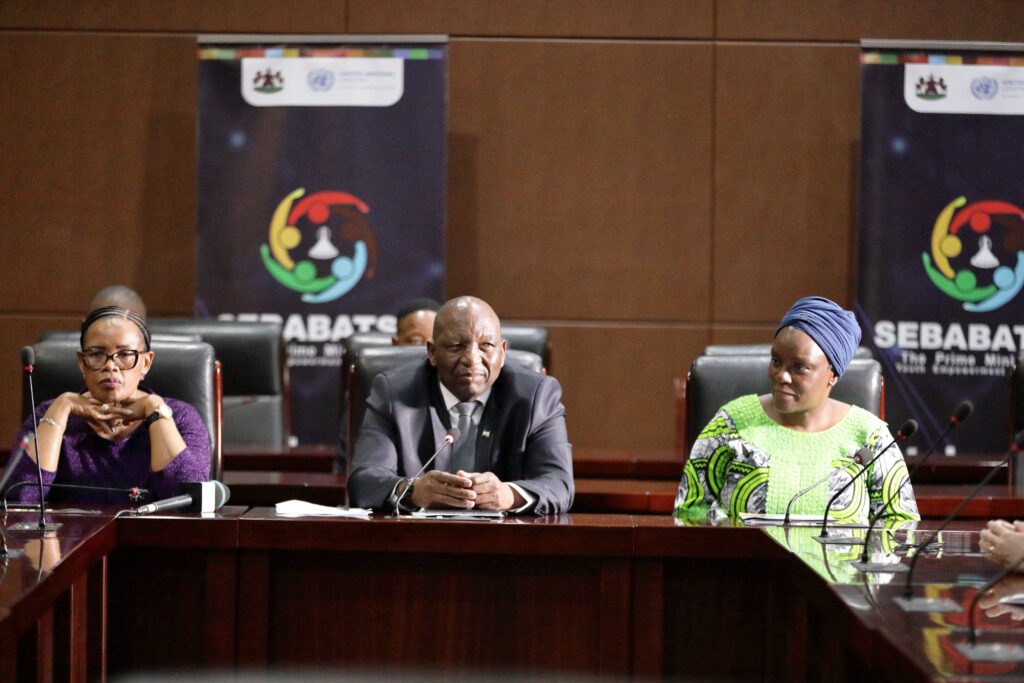
The Sebabatso Initiative addresses economic hurdles faced by young entrepreneurs in Lesotho. Its goals are to promote and expedite the growth of innovative youth-driven businesses, establish an annual national platform for youth entrepreneurs, empower young innovators, especially in STEAM fields, to propose community-centered solutions, and help young entrepreneurs pitch their innovations to attract investment.
Looking ahead, the UN has several joint programs in the pipeline. The Joint Programme on Youth focuses on youth economic empowerment, employment opportunities, and civic participation. Its goal is to empower youth and enhance their participation in economic and civic activities.
The Joint Programme on Development Data and Innovations aims to support the Government of Lesotho in bridging national development data gaps. Its goal is to strengthen national statistics through innovative approaches and the use of administrative data systems from various government ministries.
Finally, the 2gether4HIM program focuses on enabling access to Sexual and Reproductive Health and Rights (SRHR) services for men and boys. This initiative aims to improve SRHR services and outcomes for this demographic.
Support for UNCT Monitoring and Evaluation and Data Initiatives
In the light of the UN Secretary-General’s Data Strategy and ongoing UN Reforms, the UN Monitoring & Evaluation (M&E) initiatives in Lesotho have been focused on supporting the government to bridge critical national data gaps, particularly for reporting on both national and international frameworks. Through coordinated efforts of the UN and government Outcome Results Group governance structures, joint planning, monitoring, and reporting mechanisms is done yearly in support of national priorities.
A key milestone in this collaboration has been the development of the United Nations Sustainable Development Cooperation Framework (UNSDCF) for 2024-2028, in partnership with the Government of Lesotho and a diverse array of stakeholders.
This inclusive, multi-stakeholder framework aligns the UN Country Team’s (UNCT) objectives with national development priorities while integrating global goals. The framework is underpinned by the adage Ka lebelo la Nts’oekhe—symbolizing rapid, efficient delivery—and is structured around a Results Framework that translates high-level goals into measurable outcomes. This results-based approach ensures that UN initiatives meaningfully contribute to both local and international development targets.
To enhance transparency and improve monitoring, the UNINFO Platform has been implemented, playing a crucial role in tracking UNCT activities in real time. By consolidating the efforts of all UN agencies, development partners, and national implementing partners, this platform ensures that projects are aligned with Lesotho’s development priorities and facilitates more effective coordination and resource utilization.
In partnership with the Ministry of Finance and Development Planning, the M&E team has also proposed a Joint Programme on Development Data and Innovations, aimed at strengthening Lesotho’s national statistics system. This initiative seeks to address key data gaps, which are essential for effective reporting on NSDP II, Agenda 2030, AU Agenda 2063, and the SADC Indicative Plan.
Looking to the future, the UNCT will provide substantial support to Lesotho in preparing for its Voluntary National Review (VNR) 2025 as the country reports progress toward the SDGs. As 2030 approaches, the M&E team’s data-driven strategies will ensure Lesotho can accurately showcase its achievements and challenges in advancing sustainable development.
In an effort to address challenges of food and nutrition insecurity, environmental degradation and mismanagement of natural resources, UN Lesotho developed three joint programmes under the auspices of Food systems. The three joint programmes aim to achieve the outcome 2 of the Cooperation Framework 2024-2028 through:
- Tackling agricultural production and productivity through a joint food systems approach in Lesotho.
- Sustainable and equitable food systems for improved nutrition.
- Climate, Natural Resource Management, Environment, Resilience and Disaster Preparedness and Response.
Efforts have been made to mobilize partners and resources to implement the joint programmes. Partners such as AfDB and CERF have pledged resources to partner interventions to address food and nutrition insecurity, WASH, protection (GBV) etc. In the end the expected results will include; enhanced inclusive food and nutrition security resilience; enhanced land and water management for agriculture; and strengthening institutional capabilities on climate budget management.