Background
The World Health Organisation (WHO) was established on April 7, 1948, and formally began its work on September 1, 1948. It incorporated the assets, personnel, and duties of the League of Nations’ Health Organization and the Paris-based Office International d’Hygiène Publique, including the International Classification of Diseases (ICD).
WHO is the United Nations agency that connects nations, partners, and people to promote health, keep the world safe, and serve the vulnerable – so everyone, everywhere can attain the highest level of health.
WHO leads global efforts to expand universal health coverage. We direct and coordinate the world’s response to health emergencies. We promote healthier lives – from pregnancy care through old age. Our Triple Billion targets outline an ambitious plan for the world to achieve good health for all using science-based policies and programs.
The Kingdom of Lesotho as a Member State of WHO has endorsed global instruments that seek to achieve the Sustainable Development Goals (SDGs). The SDGs underscore the key role health plays in assuring the world’s future, with SDG 3 calling on all stakeholders to “ensure healthy lives and promote wellbeing for all at all ages.”
The work of WHO Lesotho is guided by a medium-term Country Cooperation Strategy (CCS) jointly developed by the WHO and the Kingdom of Lesotho to respond to the country’s needs and priorities in line with WHO’s 13th General Program of Work (GPW) 2019-2025.
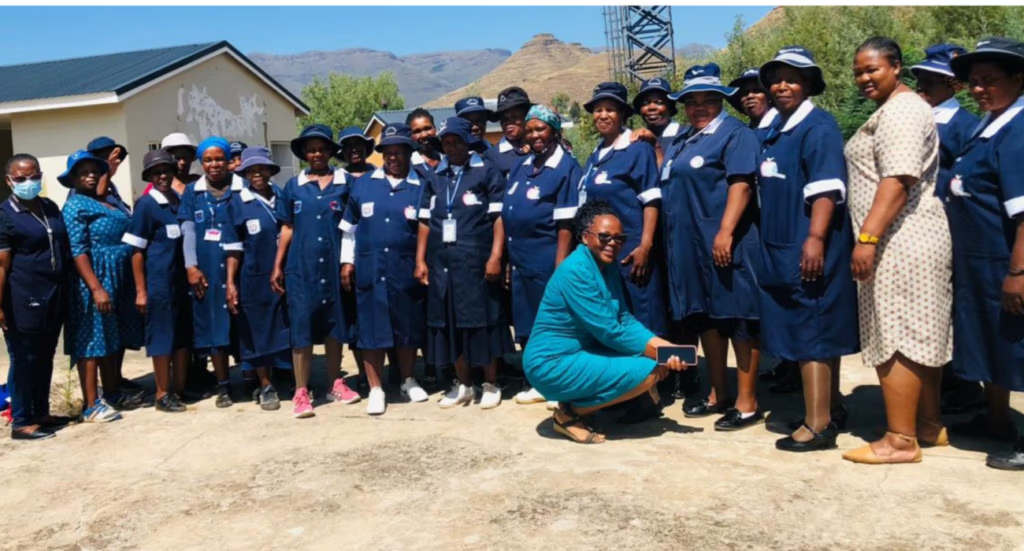
WHO staff are professionals committed to integrity and excellence in health. With a spirit of collaboration and a steadfast commitment to science, WHO advises the ministries of health and other sectors on public health issues and provides support to plan, implement and monitor health programmes.
WHO in Lesotho believes that success will be driven by a shared commitment by all, to ensure that no one misses the opportunity to live a healthier life. Through effective use of limited resources, the organization focuses on delivering real changes at the country level and integrating transformative actions towards achieving Universal Health Coverage, addressing health emergencies, and promoting healthier populations.
Collaboration is at the heart of all we do. From governments and civil society to international organizations, foundations, advocates, researchers, and health workers, we mobilize every part of society to advance the health and security of all.
Working with 194 Member States across six regions and on the ground in 150+ locations, the WHO team works to improve everyone’s ability to enjoy good health and well-being.

WHO LESOTHO ACHIEVEMENTS
Childhood immunization
Vaccines have emerged as a cornerstone of public health, preventing the spread of deadly diseases and saving countless lives. The Expanded Programme on Immunization (EPI), an initiative launched by the World Health Organization in 1974, stands as a global endeavor to ensure equitable access to life-saving vaccines for every child, regardless of their geographic location or socioeconomic status. Over the past five decades, EPI has evolved and achieved remarkable milestones that reshaped the global health landscape.
The Expanded Program on Immunization aimed to vaccinate children worldwide against diphtheria, pertussis, tetanus, measles, poliomyelitis, and tuberculosis. WHO Lesotho and other UN Agencies have been supporting the EPI program since its establishment in Lesotho. A lot of strides have been made to ensure that all eligible children in all corners of the country receive life-saving vaccines.
The 50th anniversary of EPI in 2024 provides a pivotal occasion to celebrate the programme’s achievements, highlight its impact on lives saved, and catalyze renewed efforts to strengthen routine immunization initiatives.
Polio eradication
In 1988, WHO formulated an ambitious plan to achieve global eradication of poliomyelitis by 2000. This goal was not met, but efforts continued with the goal of polio eradication.
Diseases of lifestyle
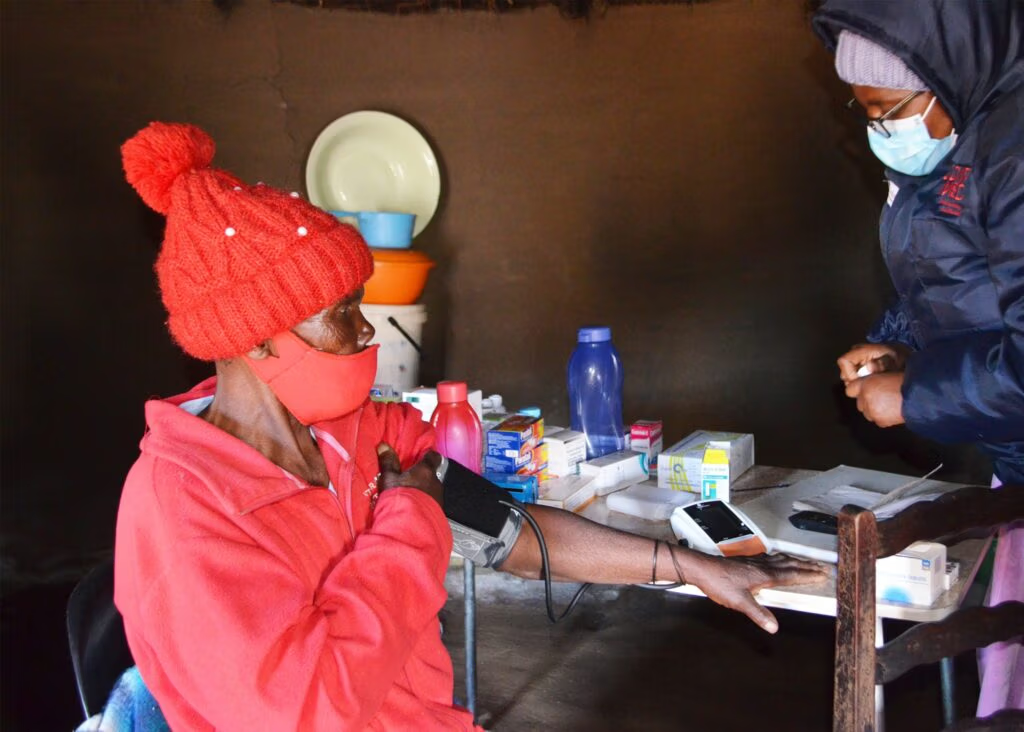
In the 1990s, growing awareness of the threat of “lifestyle” diseases, such as cardiovascular disease, cancer, and diabetes led WHO to launch programmes promoting healthy living and tobacco-free societies.
Smallpox eradication
In 1958, the USSR proposed a WHO-led smallpox eradication programme. By 1977, the last confirmed case of smallpox was identified in Somalia. WHO Lesotho supported efforts to eradicate smallpox through the vaccination of children throughout the nine districts of Lesotho. In 1980, the Global Commission for Certification of Smallpox Eradication recommended a halt to routine smallpox vaccination.
Disease control and eradication
In the 1960s WHO promoted mass campaigns against different diseases including, but not limited to syphilis, leprosy, and trachoma. The practice continues even today where mass campaigns are held regularly against diseases such as measles and rubella, among others. Over the years, WHO has supported the government of Lesotho to campaign against such diseases in the country.
COVID-19 Response
During 2020-2021, WHO led the largest-ever global response to a health crisis, working with 1600 technical and operational partners, and helped galvanise the biggest, fastest and most complex vaccination drive in history. The Organization spent US$1.7 billion on essential supplies to the COVID-19 response.
HPV Vaccination Campaign
Lesotho successfully administered Human Papillomavirus (HPV) vaccines to more than 139 000 girls between the ages of 9 and 14. This equates to 93% coverage, surpassing the 90% target set at the campaign’s outset. This was achieved with support from World Health Organization and other partners.
Over 32,447 Children Vaccinated Against Measles-Rubella in Lesotho
For over two centuries, vaccines have safely reduced the scourge of diseases like polio, measles, and smallpox, helping children to grow up healthy and happy. In Lesotho, more than 20,000 children aged 9-59 months got vaccinated against Measles and Rubella during the Africa Vaccination Week (AVW) in 2023 and 2024.
In 2021 and 2022, Lesotho sustained high coverage of under-five vaccination, above 80% in seven out of 10 districts, despite the impacts of COVID-19.
Since its launch in 2014, the African Vaccination Week has proven particularly effective in bridging the vaccine access gap by reaching populations with limited access to regular health services. It also provides the opportunity to integrate child survival interventions with immunization services. African Vaccination Week showcases the importance of vaccines in our lives, and how they protect us, young and old, against more than 25 vaccine-preventable diseases.
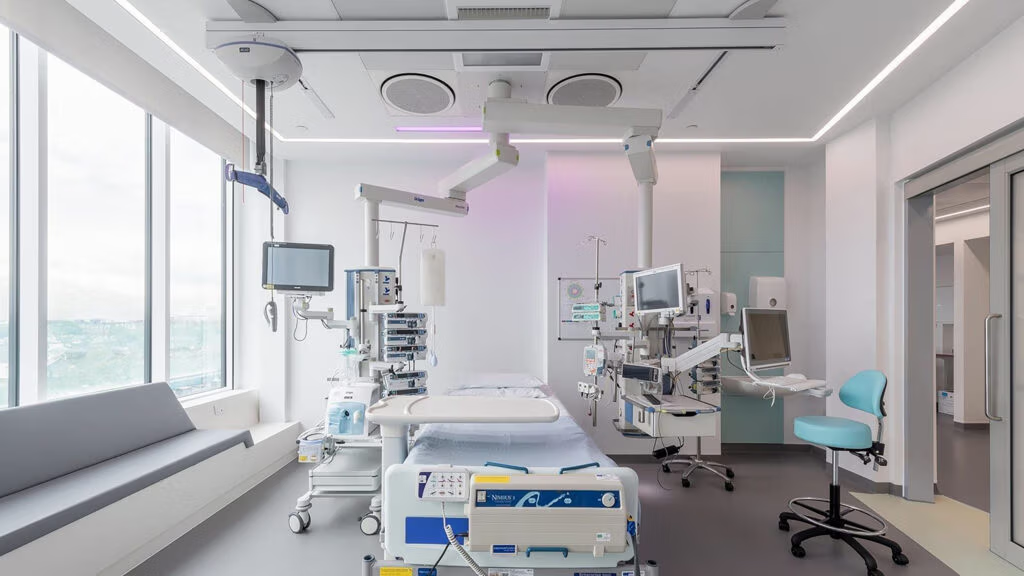
Strengthened ICU bed capacity
Thanks to collaboration between the government, World Health Organization (WHO) and other partners, the number of intensive care unit (ICU) beds has almost quadrupled, from 10 to 38, since 2021.
30 clinicians received short-term critical care training and 47 health care providers attended basic emergency training. All the trainings are WHO-certified, and accredited either by the Africa Institute of Emergency Medicine or the European Society of Intensive Care Medicine.
The new intensive care units at public hospitals aim to alleviate the care burden of trauma, diabetes, obstetric complications, HIV-related complications, and current COVID-19 cases as well as ensure critical care patients in Lesotho save on energy, costs, and time used to travel to South Africa to receive treatment.
Strengthening Health Security through Multisectoral Collaboration
To advance the implementation of the National Action Plan for Health Security (NAPHS), the Ministry of Health, with support from the World Health Organization (WHO) recently conducted a multi-sectoral resource mapping exercise to facilitate the identification of financial and technical resources, needs, and gaps in Leribe District. A total of 291 operational NAPHS activities have been identified from the different technical areas with a total NAPHS cost of $53,277,248.
Lesotho recently joined other countries in Africa to setup the AVoHC-SURGE responders. With support from the World Health Organisation and Africa CDC, the Government of Lesotho endorsed and launched the Emergency, Preparedness, and Response Flagship Initiative Roadmap in March 2024.
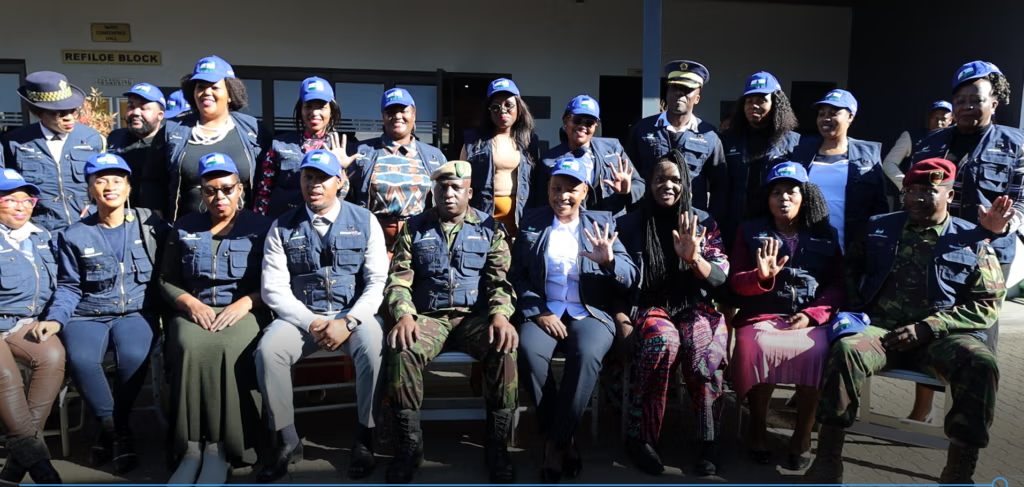
In 2023, the country enrolled in the WHO EPR Flagships initiative. The overarching goal of the Emergency, Preparedness, and Response flagship initiative is to promote health security in the African Region and contribute to achieving Sustainable Development Goal 3 – “ensure healthy lives and promote wellbeing for all ages.”
The three Emergency, Preparedness, and Response flagship initiatives are (i) promoting the resilience of systems for emergencies (ii) transforming African surveillance systems, and (iii) strengthening and utilizing response groups for emergencies.
Establishment of Environmental Surveillance
To improve the sensitivity of polio detection and response, the Ministry of Health with technical support from the World Health Organisation (WHO), recently established Environmental Surveillance (ES) for the country.
Environmental Surveillance is the regular collection of sewage or waste water that is contaminated with human faecal matter and testing the samples for the presence or absence of polio virus. Environmental Surveillance can detect polio virus transmission even in the absence of polio cases among humans and can provide additional justification for the elimination and certification of polio virus transmission.
3,455 Community Leaders and Village Health Workers Trained on Event-Based Surveillance
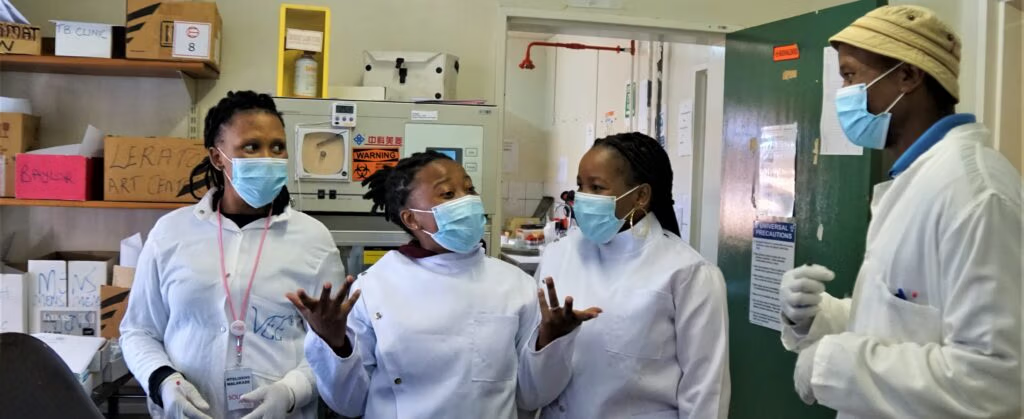
To address the delays in detecting and responding to health threats, the World Health Organisation (WHO) recently conducted an event-based surveillance training for 3,455 community leaders and village health workers in Mohales Hoek, Butha Buthe, Qachas Nek, and Thaba Tseka Districts.
Event-based surveillance involves systematically collecting, monitoring, and assessing information related to events that may threaten public health. These events could range from disease outbreaks to environmental disasters and other health-related incidents. Event-based surveillance strengthens public health preparedness and response mechanisms by proactively identifying and managing health events, enabling timely intervention and control measures.
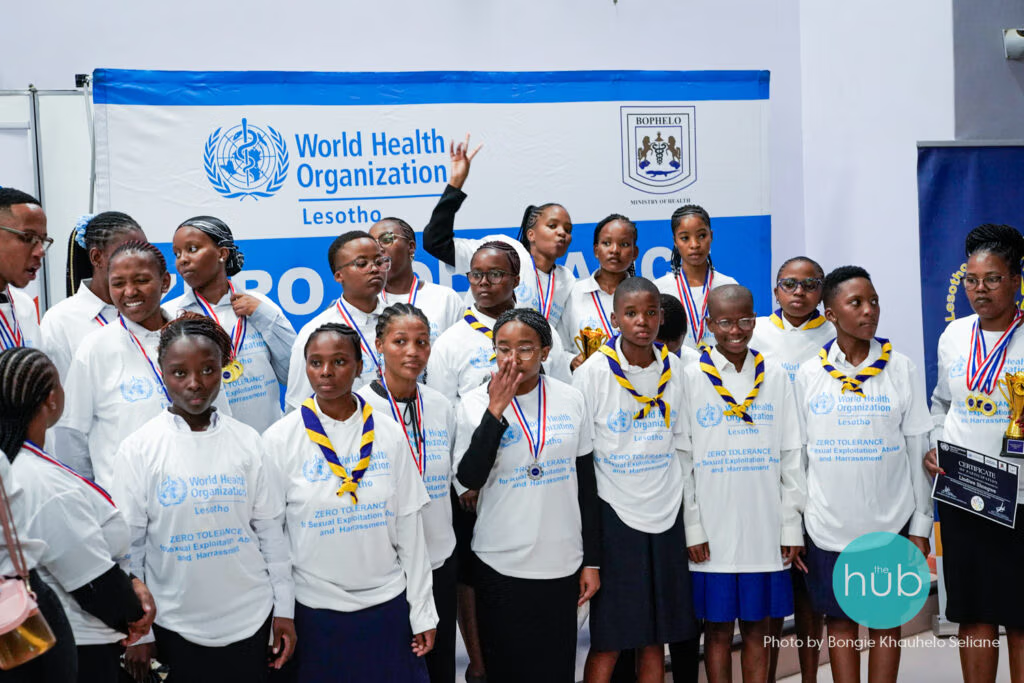
IMPLEMENTING WHO’S ZERO TOLERANCE POLICY AGAINST SEXUAL MISCONDUCT
WHO has zero tolerance for any form of sexual misconduct, for inaction, and for retaliation against those who raise complaints or bear witness. Our work prioritizes the rights and needs of victims and survivors.
WHO’s new Policy on Preventing and Addressing Sexual Misconduct (PASM), which came into effect on 8 March 2023, enhances WHO’s legal and accountability frameworks for achieving zero tolerance for sexual misconduct and in action against it. The umbrella term “sexual misconduct”, as introduced in WHO by the PASM policy, encompasses all forms of prohibited sexual behaviour by the Organization’s staff and collaborators. Sexual misconduct includes, but is not limited to, sexual exploitation, sexual abuse, sexual harassment, and any form of sexual violence.
Implementation of the PASM policy is supported by the three-years strategy for preventing and responding to sexual misconduct. This strategy has been adopted by WHO country offices, and in Lesotho, WHO has played a crucial role in combating GBV in Lesotho by supporting the health sector, enhancing data collection and analysis, and promoting community-based interventions to change harmful social norms.
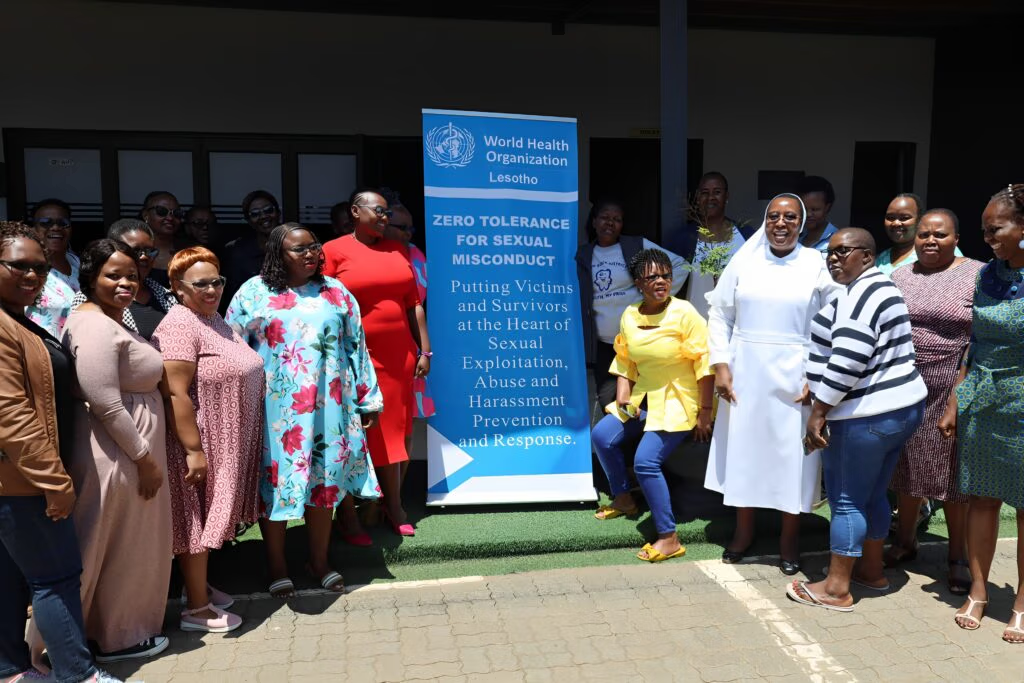
These collective efforts aim to create a safer and more equitable environment for all individuals in Lesotho. WHO’s efforts include supporting the health sector to provide better services for GBV survivors, enhancing data collection and analysis to inform policies, and promoting community-based interventions to change harmful social norms. Additionally, WHO collaborates with other UN agencies and local partners to strengthen the overall response to GBV, ensuring that survivors receive the necessary medical, psychological, and legal support. These combined efforts by the United Nations and its agencies are vital in creating a safer environment for women and girls in Lesotho, promoting gender equality, and fostering sustainable development.
Victims and survivors first
Whenever possible we listen to the needs and wants of victims and survivors to shape our work. And we take a victim and survivor-centred approach throughout the safeguarding cycle.
Safeguard our operations
WHO is able and accountable for taking measures for safeguarding against sexual misconduct in our programmes and operations by our personnel and our implementing partners.